
How AI Changed Go Study: Benjamin Teuber on AI Sensei

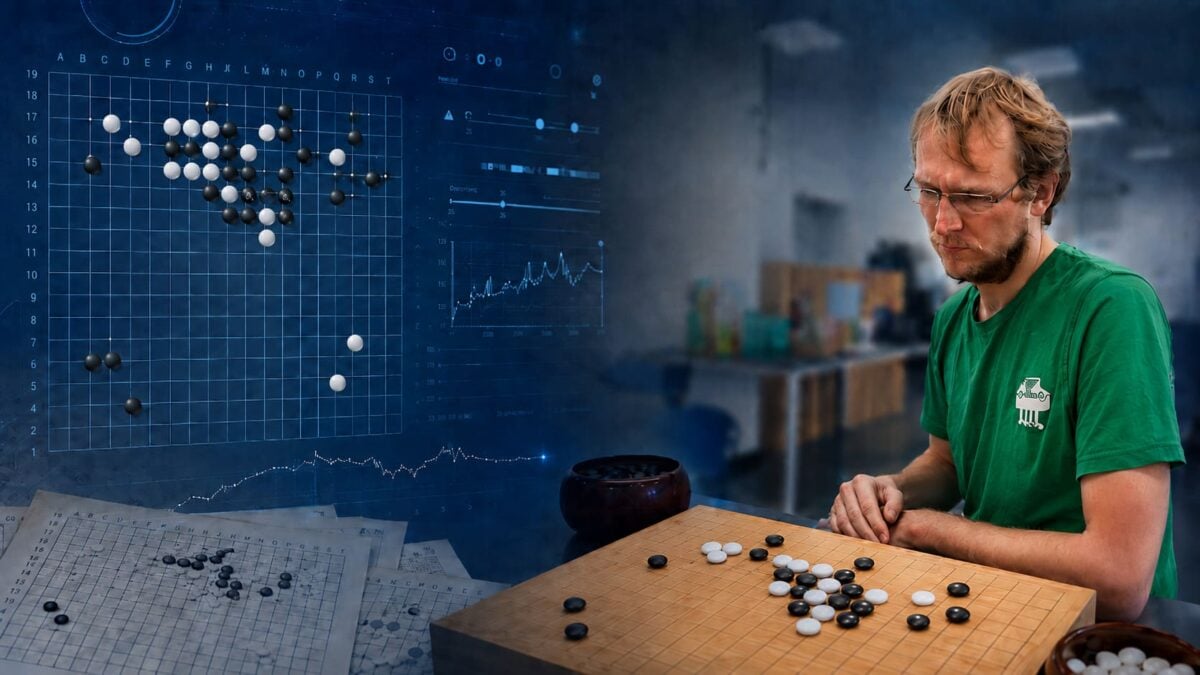
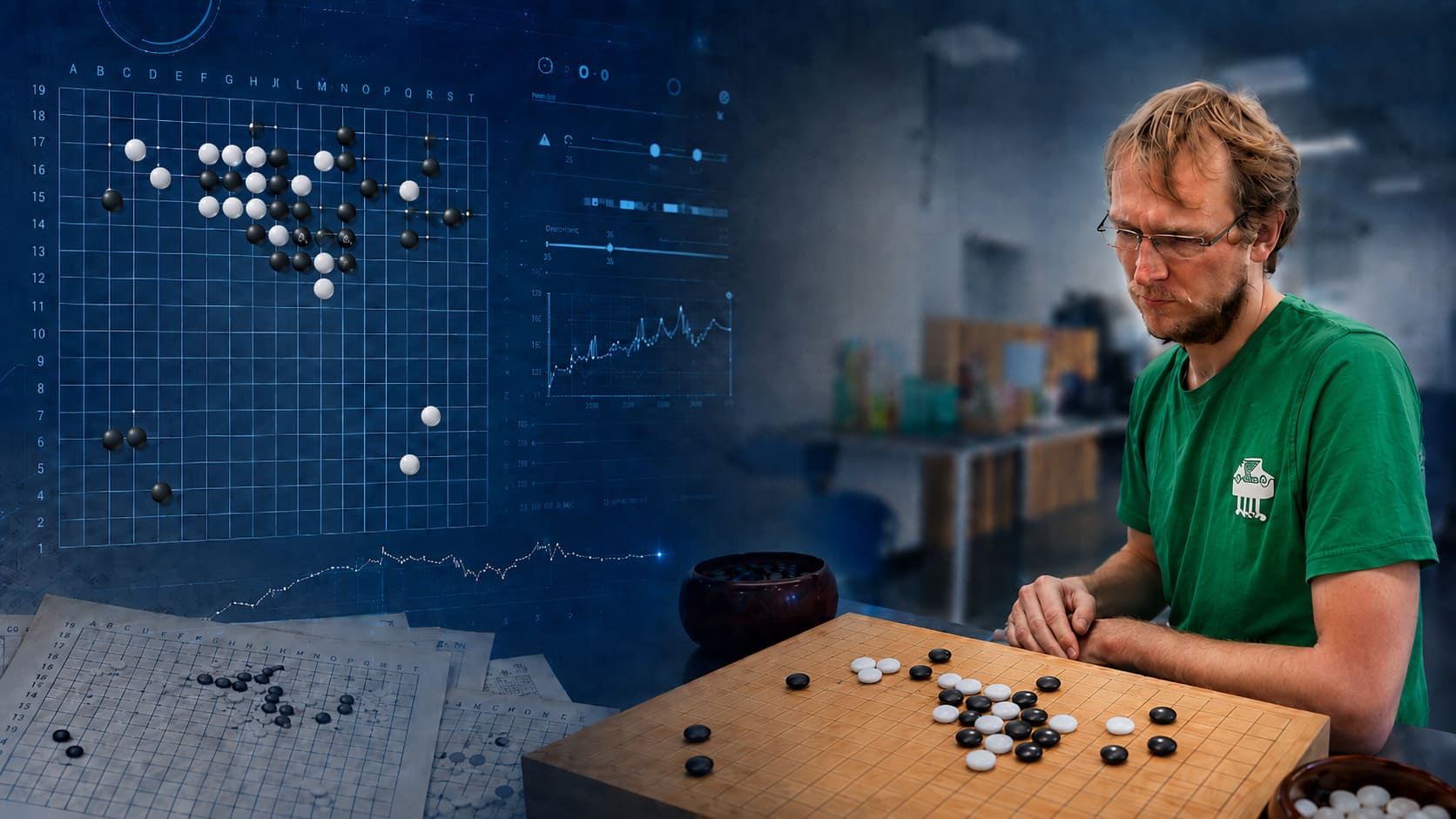
This is an edited adaptation of an All Things Go podcast interview. The original episode can be heard here: All Things Go podcast
The text below keeps the interview format while removing repetitions, false starts, and nonessential filler.
How Benjamin Teuber Discovered Go
Travis: Benjamin Teuber, you gave me a little background before the interview. You are a 6 dan amateur player with the European Go Federation, a two-time German champion, a multiple-time youth champion, and a German Pair Go champion. You started Go when you were 12 and became a dan-level player at 14. You also spent time studying in Japan and Korea, including a period as an insei.
Can you tell us how you originally got into Go?
Benjamin Teuber: Sure. I heard a theory that most players start playing Go on their second contact with the game, and that was true for me as well.
My first contact was random. My mother’s boyfriend liked going to flea markets, and he brought back a Go board with a small rule book. It was quite ugly, with plastic stones and everything. We read the rules and tried to play a couple of games, but of course it was mostly about capturing stones and missing ataris on the 19×19 board. It was kind of crazy. I got bored and left it in the cupboard for a couple of years.
Then, by coincidence, we were having breakfast in a nice cafe on a Sunday. Next door there was a public building where many clubs met, and they had a children’s festival. You could play table football and other things. I dropped by, played a bit, and then saw people playing this game I had seen before.
I told them, “This is cool, I know about this.” They asked whether I wanted to play, and they started teaching me properly on a 9×9 board. That was when I really got hooked. After that, my mother had to take me to that place twice a week in the evening and pick me up.
Becoming German Champion and Learning Not to Chase the Result
Travis: It sounds like you improved very quickly. You became a dan-level player within about two years. In some of your videos about how to get stronger at Go, you talk about the challenges you had on the way to becoming German champion. That is helpful for many Go players, because we all know what it feels like to have a losing streak or become overly focused on rank.
Am I right that you were runner-up in the German championship nine times?
Benjamin Teuber: Nine or ten. At some point I stopped counting. It took me a lot of attempts.
Travis: Can you talk a little about that, and about how you overcame it?
Benjamin Teuber: I think I wanted it so badly that, whenever I was close to the goal, my mind started spinning. I was thinking, “Now I can really do it,” and, “I have to be careful not to mess it up.” I was full of thoughts about the championship, and I could not focus enough on the game itself.
The first time I actually succeeded was much later, when I had almost given up on it for that year. I had not practiced much for the tournament, my thoughts were on completely different things, and I just thought, “I will give my best, whatever happens.” I focused on something else, and somehow that worked best for me.
Travis: In your video you connect that with mindset: breathing techniques, remembering that it is just a game, and remembering that you are not a professional who needs this for income. I also liked your focus on the ten-second rule — pausing before you play a move.
Benjamin Teuber: It can still happen, no matter how experienced you are. Sometimes you see a move and immediately want to respond, almost to prove your point and show your opponent that they are wrong and you are right.
But you almost always have time to think for at least ten seconds, unless it is a lightning game. So you should just do that.
I also want to say something about focusing on ranks. I think it is much worse today than it used to be. When I learned Go, there may have been some Elo systems somewhere, but we did not pay much attention to them. Basically, you declared your own rank. When you decided you had beaten enough 5 kyus, you called yourself 4 kyu.
There was much less pressure around that. When I went to a tournament, I was probably thinking a little about my rank, but mostly I just wanted to play. Then I might win four or five games and think, “Great, now I’m 14 kyu. That’s the best thing ever.” It was not, “In one month I want to be three ranks stronger, and then this, and then that.” I was more focused on winning the next game.
Japan, Hans Pietsch, and Finding a Teacher
Travis: You visited Japan many times, starting around age 14, and became a student of the late Hans Pietsch and his teacher, Kobayashi Chizu. You said Hans became almost like a father figure to you. Can you talk about that relationship and how it formed?
Benjamin Teuber: I think I first met him at my first Go Congress, when I was 13. It was in Abano Terme. My mother was busy buying a house and could not join me, so a nice woman from the Go club took me with her and looked after me during that week.
I had heard a lot about Hans Pietsch because I was learning from his teacher in Bremen, where I lived at the time. My teacher told me, “If you study really hard, maybe you can also go to Japan, like he did.” I had never seen Hans, but to me he was like a football star.
Then I heard that Hans Pietsch was at the congress. I was super excited. At some point I happened to run into him. There was this big blond man, and he immediately started talking to me: “Ah, you must be Benjamin. I heard a lot about you.” I was speechless. It was like Cristiano Ronaldo talking to you.
He commented on some of my games, and that was very motivating for me. A year later, at the congress in Marseille, he was there again, and Kobayashi Chizu was also there. I played a teaching game with her, and then she officially invited me to come to Japan. The next Easter vacation I went, and after that I flew to Japan for almost every Easter vacation to study there for three or four weeks.
Travis: What was that experience like the first time, and then going there many times afterward?
Benjamin Teuber: It was crazy — a completely new world. The top professional players, and Kobayashi Chizu was one of the top female professionals, lived a bit like high society. There were restaurants and clubs, and she had a Go club where every member had to be a company president or something like that.
Of course, the culture was different as well. It felt like being in a completely new world, almost like Harry Potter arriving at Hogwarts, with everyone being nice to him.
Korea, Japan, and Different Study Cultures
Travis: You went to Japan every Easter, and then you also had an opportunity to go to Korea for about a month. What was that like compared with Japan?
Benjamin Teuber: It was quite different. I feel that the Koreans, and also the Chinese, were even more serious about it. They really studied almost all day in the school.
In Japan, at least when I was an insei, it was a bit more relaxed — or maybe not relaxed, but more self-study. You had official games once a week on Saturday and Sunday. There was no longer a school where children lived. Japan had that at some point, but when I was insei, it had already stopped for several reasons.
The insei stayed at home with their parents, or sometimes in a teacher’s house, and joined a study group once or twice a week, maybe three times if they were lucky. They had games on two days and study groups where they could show and analyze maybe one game each. The rest they had to do by themselves.
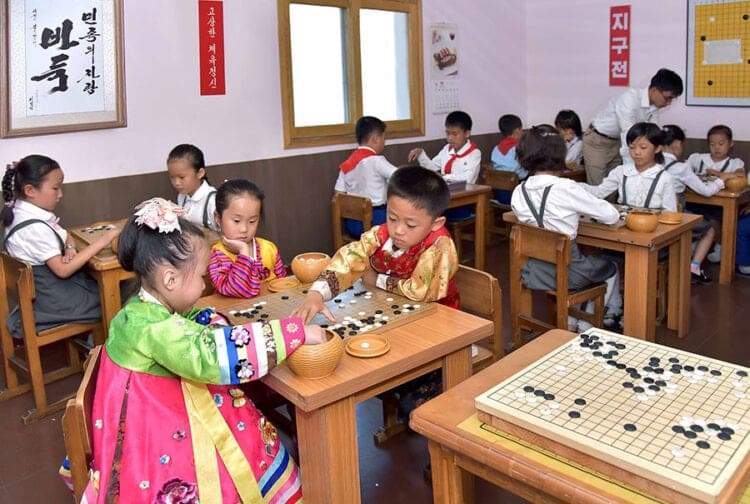
In Korea, and also in China, you were always in the school. You were always playing with others and getting reviews from teachers. It was more focused and more controlled, but also tougher.
Back then, in Korean culture, physical punishment was still more common. If children did not behave, someone might pull their ears or hit them with a ruler. That was strange for me because I had never seen anything like that growing up.
Why a Teacher Helps — But You Still Have to Think
Travis: On Sensei’s Library you have a layout of how to become stronger at Go. In your videos, too, you say that having a Go teacher is important, but you also emphasize that it is important to think for yourself and not rely too much on a teacher. Can you say more about that?
Benjamin Teuber: There are several layers to it. One is during the game, and another is during analysis.
It is important to understand, and you can only understand if you question things. You should not just think, “Okay, I will copy that.” Maybe you understood only part of it.
I still fall into this trap. A few days ago I played some online games, and my opponent played a joseki I did not really know. I thought I had seen that shape in a Go problem and thought, “Okay, this is the atari, I play from here.” I just thought I had seen it and played it — and of course it was not correct in that situation.
I used to do this much more, but I still sometimes think, “I know this, so I play it.” You should always use your head, question the position, and ask: is this really the best move in this unique board situation? What are the follow-ups? What are the variations?
Travis: You lay out some key ideas: play games, because that is the main way to get stronger; do life-and-death problems and tsumego; analyze your games; do more tsumego; and maybe review professional games, but not blindly copy the moves. Really try to understand what is happening. After that, you can go to books and similar resources.
Maybe this is a good place to transition to your work with AI Sensei.
From Faxed Game Records to AI Review
Benjamin Teuber: Because of the breakthroughs in AI, it is now much easier to analyze your games.
I can tell you a story. When Hans was already my teacher and I had visited him many times in Japan, I played some tournament games — German championship qualifiers or something like that — and I wanted reviews of those games. I was already 5 dan, so there were not many strong players around who could comment on them.
So what did we do? I sent my kifu to Japan by fax.
Travis: Oh my god. Are you serious?
Benjamin Teuber: Yes. My mother’s phone bill was exploding. I had manually written game records, sent them to Hans, and then he reviewed them and sent me back text comments on my moves. So I got professional game reviews for maybe €30 of phone calls on both sides.
That was how I was sometimes lucky enough to get really high-quality game reviews. Now you upload a game to AI Sensei and you are done.
Of course, you cannot completely compare the two. Hans explained why something was a mistake. AI Sensei does not really do that yet. We are trying to work on it, but it is not an easy task.
Still, it is very useful to know where your mistakes were and what you should have done instead. Many times you understand it yourself, and sometimes you do not. The weaker you are, the less you will understand why; maybe you can accept the AI move and try to copy it. But it is still helpful to have a teacher explain why a move is better — if the teacher can understand it. With AI, sometimes that may not be possible either.
How AI Sensei Started
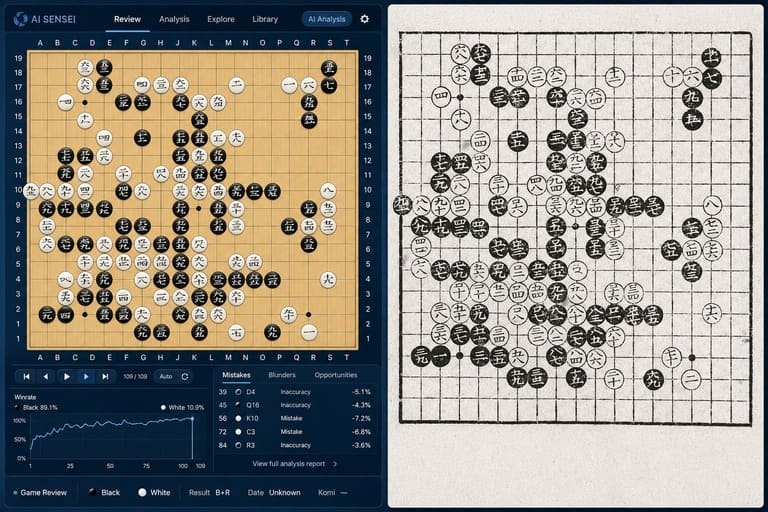
Travis: You started working on AI Sensei around 2018. At first you were working with Eric, doing a lot of the work yourself, and later two other co-founders joined. How did it start? Was there a moment when you thought it would be great to have a better interface for AI review?
Benjamin Teuber: It started with AlphaGo. I remember getting up very early to watch the games with friends.
Around that time, the Go AIs that normal players could use also started getting stronger. They were nowhere near professional level yet, but not long after the AlphaGo match I first managed to lose against an engine I had. I think it was Leela — not Leela Zero, but the previous Leela. The second I lost to it, I thought it would be nice to have it as a teaching tool.
We did some experiments back then, maybe in 2016 or 2017. We wrote a prototype where you could upload an SGF file, pipe it into Leela in the cloud, and then use its output to generate another SGF file you could download. It had explanations like: this move loses this many percent, and you should have played this variation instead.
We tried it and showed it to a few people. We got positive feedback, but I was not completely sold. It still messed up many elementary life-and-death problems. Even though I sometimes lost against it, it did not feel like something I wanted to release to the Go community.
So we stopped for the moment. Maybe two years later, when Leela Zero became strong enough to be professional level or superhuman, we took the old code out of the drawer and tried again. People liked it a lot. I liked it a lot too, and we kept working on it.
At the time I was freelancing for a company in Hamburg, where I was living after university. I took three months off to focus on AI Sensei and build a prototype before the Go Congress in Pisa. We still did not make much money, but the reception was very positive, and we liked it ourselves.
After I went back to work, it did not feel as exciting as working on my Go project. I guess that is where my love is, and where I have always been inspired. So at some point I quit completely and decided to focus on AI Sensei.
That was possible partly because I was also working for Pandanet as a freelancer, doing maintenance and sometimes new features. That gave me a basic income, though not a full-time one, and I could focus on AI Sensei.
The first couple of years we made almost no money, and it was a bit hard. But I had some financial reserves, and now we are getting to a point where I can live from it. That is pretty cool and very satisfying.
I also feel, in a way, that I am meant to do this. At some point I asked Hans how I could ever thank him for everything he had taught me and done for me. He basically said, “Don’t do anything for me. Try to pass the knowledge on to the next generation of Go players.”
I do teach sometimes. But because I also love programming, it feels more natural for me to build a tool that can teach thousands of people instead of teaching a handful of students directly.
Real-Game Problems and the Training Feature
Travis: The interface is incredibly thoughtful. I do not have a coding background, but I know it takes a lot of work to remove bugs and build a good user interface. I especially like the review section and the training feature.
You can make quizzes out of your own board states — the positions you want to improve — but now you can also benefit from other people’s board states. That has been really fun.
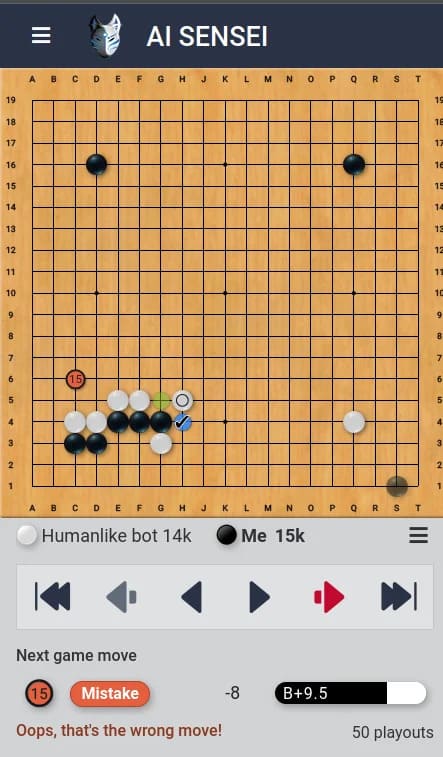
Benjamin Teuber: We had the idea for a while, but we were busy with other things. The biggest inspiration was that I got a bit into chess. Not that much, but at some point I created a Lichess account. What I liked most was not playing, but doing their real-game problems, where you get a rating and, after the problem, you can vote whether you liked it.
We thought we should do that too. It also made sense because on AI Sensei you could already create your own problem collection and practice from it. That is great if you want to remember what you learned from a particular game, even a year later, and try not to repeat your mistakes.
But people who are starting out also want problems, and they may not have many games of their own. It is natural to offer problems from other situations too. We could consider adding life-and-death problems or isolated local problems at some point. But I also like that we have this unique whole-board, real-game problem format. It is quite different from traditional tsumego.
Travis: That is interesting because my Go teacher does something similar. He takes snapshots of whole-board situations from my games or from other students’ games and gives them as homework. Having that in one place on AI Sensei, being able to review your own positions, click “remember,” and shuffle saved positions, is very helpful.
Local life-and-death problems are important, but they always exist in the context of the board. If there is a life-and-death situation in the corner and I get hyper-focused on living there, AI might say, “I know you want to live in the corner, but this other thing on the board is more valuable.” You also have a tool where you can restrict the area of the board and ask the AI to look only at that area, which is powerful.
Are there new features or new things you are working on now?
What AI Sensei Is Working On Now
Benjamin Teuber: There are a couple of things.
One major thing may not be very interesting to users because it does not create shiny new features: restructuring our internal database and how everything works. The tools you use for a fresh website with only a few users can be quite different from what you need when you have thousands of users uploading tens of thousands of games every day.
We also focused a lot on Google infrastructure. That was nice when we started, but it is starting to get expensive and is not so flexible. For example, if we considered doing something in the Chinese market, that would be impossible with a Google firewall. We would need to get rid of that completely, which is a lot of work.
So we are trying to move to a more traditional database where we at least have the option to be less coupled to Google. We hope that might reduce costs, improve performance, or give us other advantages.
We have also recently done more for beginners. Traditionally you might say that AI tools are not the best for beginners. The weaker you are, the more you need a human teacher. So we never really focused on beginners. Maybe we thought it made sense from 10 kyu upward.
But many beginners want to learn the game, play against the machine, and learn something, even if the tool cannot explain everything. This happened almost by accident. We started working on an Android app for AI Sensei. It is not very sophisticated — mostly the web browser in an app, doing the same things as the website, with some extra features that make it easier to upload games from other programs on your phone.
Ever since we released the app in the Play Store, even though we did not advertise it to our own users, we got a big stream of registrations. I am not sure why. We can see they are not coming from the app itself, but somehow it is connected to the app being there. Maybe it is Google magic, or search engine optimization.
Since we uploaded the app, we have had about 50 additional new registrations every day compared with before, and they all seem to be beginners. When I look at some of their games, they are playing against a 15 kyu bot, clicking randomly, and not understanding the rules.
I also started getting emails saying, “This is a nice website, but how do you play the game?” I had never seen a message like that before, so it must be related.
We thought: if many beginners are coming to the website, we should do something for them. I started working on a Go tutorial. It is interactive and hands-on. We try not to have too much text, and instead use problems so that players experience things themselves — almost throwing them into the water.
I like it a lot. It has eight chapters, each with about eight to ten steps, including problems and a few explanations. That is there now for new players.
We probably want to follow up on that. If someone now knows how to play and is around 25 kyu, they are not ready to play a 15 kyu bot on 19×19 and take move recommendations without further explanation. We should probably have ranked 9×9 games where they can level up from 25 kyu to, say, 15 kyu.
We should also work on more explanations. At least for some patterns. If you make a move that causes your group to die, we can detect that. Right now we have sad smileys when your groups are dying.
Travis: Those are very helpful.
Benjamin Teuber: But we could add text: “Now this group dies, and this move would save it instead.” Or we could teach basic shapes. If something is an empty triangle, or if a good move has a certain shape, we could explain that.
For me, the next important thing is to have more basic explanations for weaker players, so that they can somewhat study by themselves. I would still recommend a human teacher in addition.
Point-Loss Thresholds, Ranks, and What AI Review Can Miss
Travis: Even as a lower-ranked player who is not a beginner, I find the visualization helpful. The happy and sad faces may seem basic, but they help because I am not always aware of what is happening to the strength or weakness of a group.
The loss functionality is also helpful. Sometimes I do not realize that a group has become very weak or is close to being lost.
In the AI review part of the site, you have a slider that changes how many mistakes you see in a game. You can move it from beginner all the way to high dan, and it seems to correlate with how big the point-loss mistakes are. How did you think about tying point loss to rank?
Benjamin Teuber: It was something in between careful design and just needing a way to start. In the first version, we had a slider where you could set the point threshold yourself, but that was not very instructive. I saw many double-digit kyu players setting the slider to one point, half a point, or something like that, because they just wanted to know everything.
We thought it would be more helpful to make it more abstract and give concrete recommendations. Of course, we tried to figure out what made sense by looking at sample games from different ranks.
But you should take it with a grain of salt. These are arbitrary thresholds, and point loss is not really a good measure of strength. It can help, but a strong professional might misread a very complicated life-and-death situation and lose 50 points with one move. That happens, but it does not make the move a 30 kyu mistake. On the other hand, you might make a basic shape mistake that a 10 kyu should know, but it loses only two points.
So it is not perfect, and we are thinking about better ways to do it.
You said analysis is 99% of what AI Sensei does, but actually I would say it is more like 80%, because many people also enjoy playing against the bots on the site. They may analyze most of those games, but not all of them. About one third of the analysis we have comes from games played against the AI.
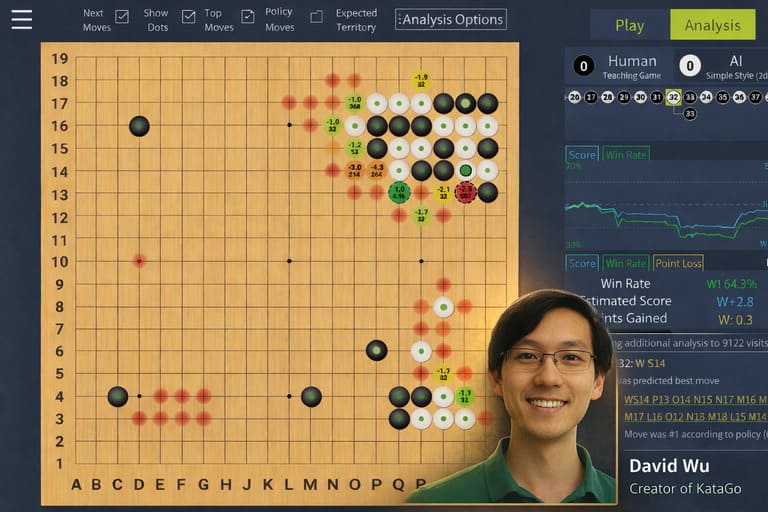
That has become a big driver. We were also the first to come up with these “human-like bots,” as we called them. That was fun because it was my first own artificial intelligence research project, so to speak. With KataGo, and before that Leela, I build on top of other people’s work. They do the smart AI, and I build the interface, the cloud, the database, and everything around it.
But users wanted bots that felt more natural to play against, not just superhuman KataGo where you need many handicap stones to have a game. So we started trying to train a neural network on 5 kyu games from users.
I think we found a smart shortcut that made the bots more realistic. We used KataGo too, because if you train only on visual patterns, it is hard for the bot to understand the whole-board situation. We know KataGo already has that understanding, so we plugged these networks into the output of KataGo. The Go knowledge was baked into the input.
That meant we could use fairly small networks, train them on average hardware, and do it in a short time. People liked them a lot. It is one of the features that gets the most praise nowadays.
Now KataGo also has a human-like feature, so I think that is one thing they copied from us, not the other way around. They are doing it in a much more sophisticated way, with many more games and more independence from the KataGo setup, but still.
This could also be useful for review. You could say: this mistake is very likely for a 5 kyu bot to make, so maybe it is acceptable if you are 8 kyu. But this mistake would be avoidable even for a 15 kyu bot, so maybe a 5 kyu player should not be making it, and we should emphasize that one more.
Travis: So there is a kind of filtering back and forth. You train human-like AI bots on games from different ranks so that they play more like humans. Then, when a human reviews a game, that information can help show whether a move resembles a mistake from a certain level of human-like bot.
Benjamin Teuber: It could also be used for suggestions. If the AI wants to play a super-crazy move that is hard to understand, but there is an easy human move that is only 0.1 points worse on average, maybe that is the move we should recommend. It is clear and understandable, and almost as good as the perfect AI move, if you can even call it that.
When the Biggest Teaching Moment Is Not the Biggest Point Loss
Travis: That feels important for users who are not dan-level players. As a double-digit or single-digit kyu player, I often see AI moves and simply do not understand what the AI is trying to accomplish.
Sometimes, when I upload my games, I do not have many huge mistakes. There may not be a 10-point or 15-point loss, but there are many four-point losses. If I set my review dial to the same place every time, that game might not show many mistakes unless I move the slider higher. How do you think about that?
Benjamin Teuber: It is not easy. We could say that no matter how the game went, we show the top five mistakes. But that does not feel right to me either.
It can be very motivating to upload your game, set the slider to 5 kyu, and see that you did not make a single mistake at that level. You can be proud of that, and you should be.
You could still say, “If I want to be shodan, what were my mistakes? What can I improve from this game?” But the other way around can be annoying. Sometimes there are 50 mistakes. Or both players miss the chance to play in one corner, the issue lingers through the whole game, and every move becomes a mistake. That is ugly.
I am not sure how to solve it, because pretending those moves are not mistakes, although objectively they are, also feels wrong. Maybe someone can come up with a smart suggestion.
Travis: That makes sense. If there were no big double-digit point losses, maybe I should infer that the game went pretty well and the opponent’s moves gave me only smaller losses.
Do you think it is possible that the AI finds a 15-point loss, but a human Go teacher would point to a different move — maybe a move that did not lose much immediately, but mattered more for the player’s thinking?
Benjamin Teuber: That makes a lot of sense. Sometimes you have the wrong idea. You think one area is important and neglect another place that is urgent to defend. The first move you play away may not objectively lose many points because maybe it is still somewhat forcing. But in a way, that is the moment when you made the logical decision to play for that area. The rest is the continuation of that idea.

Sometimes the first move shows the bad idea, but the AI says, “If you abandon your idea completely, change your mind, and throw away the stone you just played, you have only lost a point or so.” But nobody will actually do that, because they would not have played that move if they were ready to change their mind.
That is also very hard to automate. For now, it is something human teachers should look for.
Enjoying the Game Without Giving Up the Desire to Win
Travis: Before we end, what final thoughts do you have about AI Sensei, your personal journey in Go, or anything else you would like to leave us with?
Benjamin Teuber: We already talked about the over-focus on ranking and rating. For a few professionals, winning might be important for their income, so it is understandable that they put so much pressure on themselves.
But for everybody else, we are amateurs. This is a game, and the main focus should be enjoying it. Of course, it is also about learning, because Go is a fascinating universe of things. It is easier said than done, but whenever you lose a game, you should actually be glad for the opportunity to learn more and understand more about the game.
During the game you should try to win, because the complexity and beauty of the game unfold when both people try to win. But after the game, you should enjoy being involved in this beautiful game, learning more about it, and continuing your journey.
If you try to learn as much as you can and you enjoy learning, you will become stronger and you will win more. You will not lose out on that. But you still should not focus on it. I think that is the wrong attitude.
Travis: Benjamin Teuber, thank you so much for your time. It has been fascinating learning about your story and AI Sensei.
Benjamin Teuber: Thank you. It was a pleasure.




Комментарии