
🎥 Gobangiri: A Tale of Go, Samurai, and Redemption

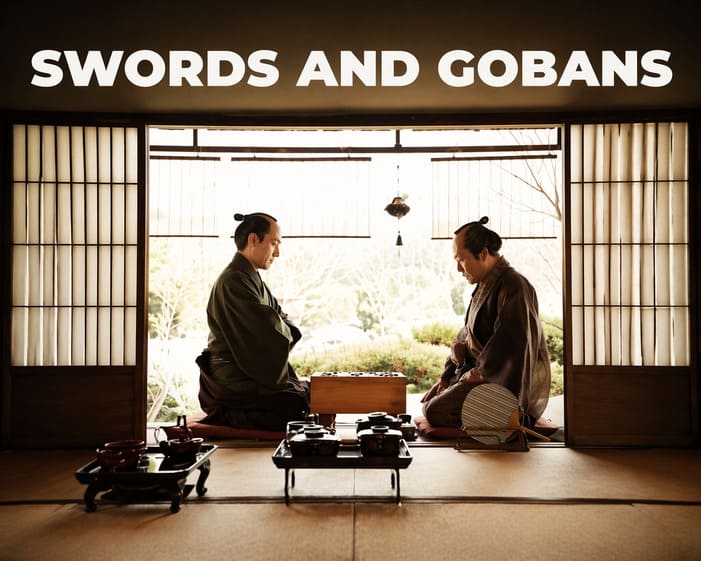

What happens when a samurai drama, a revenge story, and the game of Go meet in one film?
In this review, Vadim takes a close look at Gobangiri, a Japanese period drama that combines moral conflict, emotional tension, and the quiet intensity of Go. The result is not just a movie where the board appears in the background for decoration. Go is woven directly into the story, the characters, and the film’s deeper themes of honesty, loyalty, transformation, and redemption.
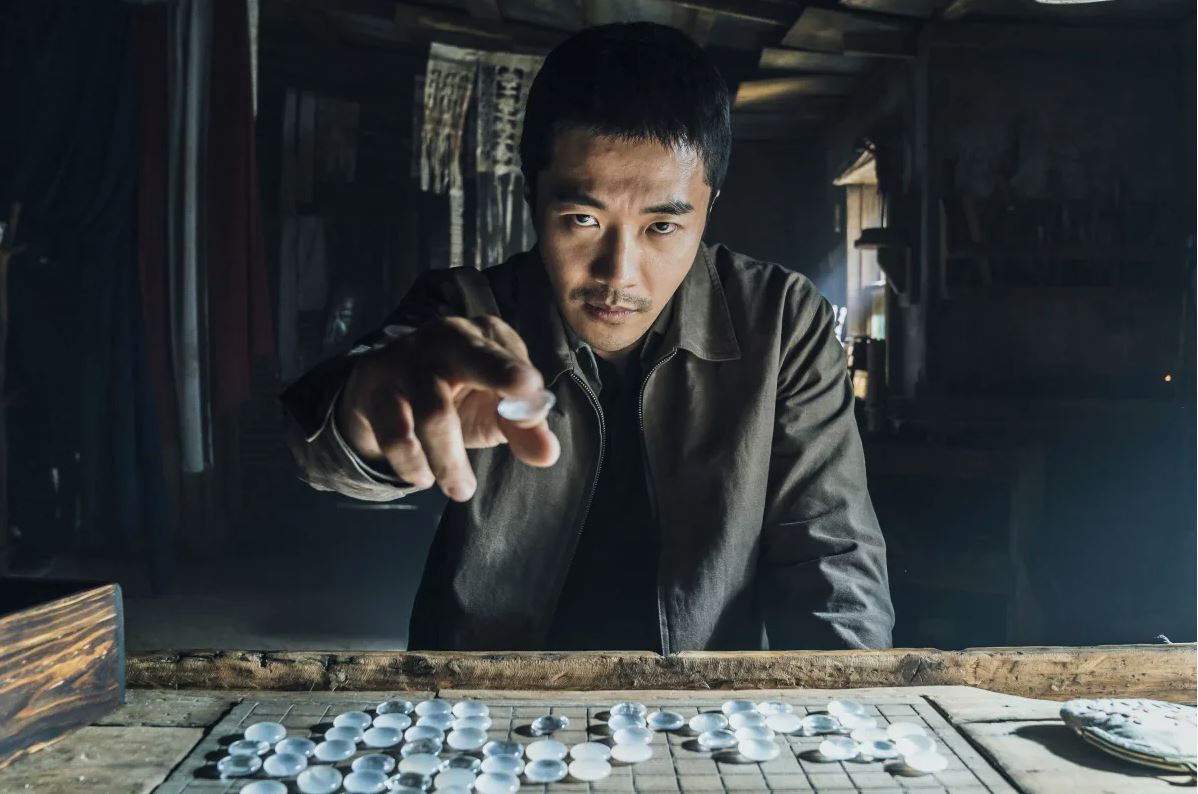
For Go players, that alone makes the film unusual. There are not many movies built around the game in such a meaningful way. But Gobangiri offers more than novelty. It brings together a ronin protagonist, social tension in Edo-era Japan, strong visual detail, and a plot shaped by both human frailty and moral courage. The film also rewards attentive viewers with carefully chosen Go positions, symbolic game moments, and a surprising amount of authenticity in its depiction of boards, stones, and play.
This makes Gobangiri an especially interesting watch for two kinds of audiences: Go lovers who rarely get to see their game taken seriously on screen, and viewers who enjoy layered Japanese historical dramas with strong thematic undercurrents.
Not every film needs to invent a completely new genre to be worth watching. Sometimes the power comes from how familiar elements are arranged—samurai ethics, family bonds, class tension, revenge, and quiet transformation. Gobangiri seems to understand that well. And yes, despite what one might wish to claim, at least one goban definitely suffers along the way.
What This Review Covers
- What Gobangiri is about without giving away too much
- Why the film feels rooted in classic Japanese dramatic traditions
- How Go is used not as decoration, but as part of the story itself
- The film’s attention to Go equipment, board positions, and symbolic game moments
- A memorable tesuji hidden inside the movie
- The villain’s extraordinary opening choice
- Whether this movie is worth watching for Go fans and for general film lovers
Timestamps
00:00 — Introduction
00:16 — What is the film about?
03:31 — Money, money, money
04:08 — Contagious honesty
06:03 — Who worked on the film?
06:43 — Real Go
07:47 — Under the stones
10:05 — The villain’s secret weapon
13:20 — The chopped goban
Today we are not comparing light party games or looking for an easy winner in a rivalry. We are talking about two of the most serious and enduring board games ever created: chess and Go.
For as long as I can remember, I have loved games of all kinds. Years ago, I discovered chess and felt I had found the pinnacle of intellectual board gaming. It had everything I wanted: a clean black-and-white board, elegant pieces with distinct identities, simple beginner rules, and extraordinary depth. The opening, middlegame, and endgame all had their own character. Its history was rich, and its champions felt legendary.
For a long time, chess seemed perfect to me.
And yet, after years of studying and playing it—eventually reaching around 2000 Elo—I left it behind for another game: Go.
This video is my attempt to compare the two as objectively as possible, while also sharing my personal perspective along the way.
00:01:23 — A brief history of chess
Chess was born in India roughly 1,500 years ago and traveled a long road before becoming the modern game we know today. As it moved across countries and cultures, new versions appeared and the rules gradually evolved.
00:01:41 — A brief history of Go
Go, by contrast, was invented in China around 3,000 years ago, possibly even earlier. For much of its history, it remained remarkably stable. Its appearance changed a little over time, but the essential rules stayed almost untouched.
00:02:01 — The board and pieces in chess
Chess is played on a board of 64 squares. Each side has 16 pieces, but only six different types. There are eight pawns, and behind them stand the rooks, knights, bishops, queen, and king. Each piece has its own movement rules and tactical role.
00:02:20 — The board and pieces in Go
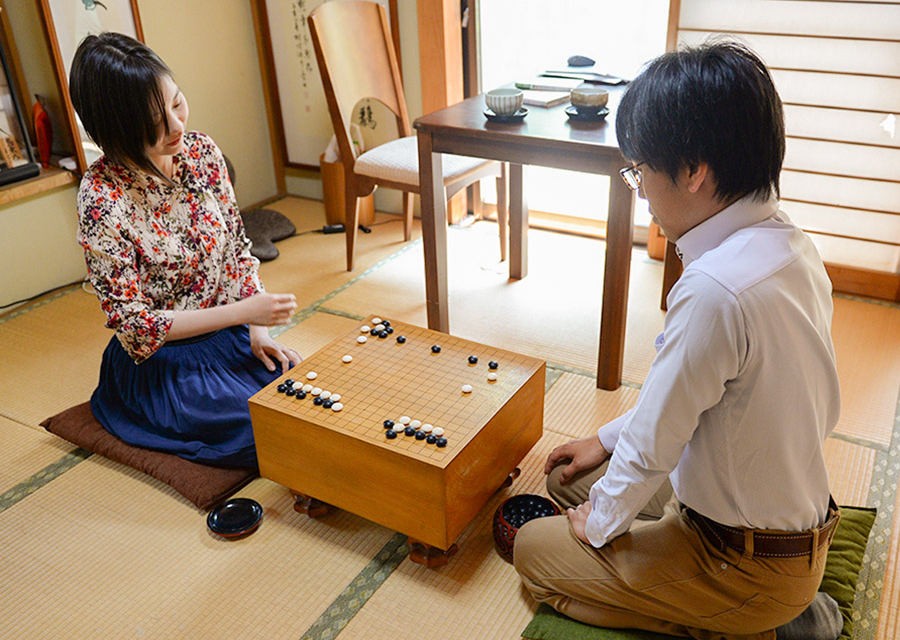
Go looks completely different. It is played on a 19×19 grid, much larger than the chessboard. The board can hold many stones, but unlike chess, every stone is identical. There are no special movement rules because stones do not move after they are placed.
That one difference changes everything.
00:02:47 — The main differences in gameplay
In chess, the board starts full. All 32 pieces are already present, and the game develops as they move, attack, defend, and disappear through capture. The ultimate goal is to checkmate the opponent’s king while protecting your own.
In Go, the board starts empty. Players place stones one by one, gradually shaping influence, territory, and conflict across the board. Captures happen, but stones never move once played. That means every move is a permanent decision, and a poor placement can continue to matter 50 or 100 moves later.
The two games almost feel like opposites.
Chess often moves from fullness toward reduction. Go moves from emptiness toward creation.
A typical Go game is also longer. There are more possible moves, more space to work with, and many more stones placed over the course of the game. And while captures matter, the goal of Go is not mainly to take stones—it is to control more area than your opponent.
00:04:09 — Complexity and AI in chess and Go
Because the Go board is larger and legal moves are far less restricted, Go has a vastly larger number of possible positions and continuations than chess. In chess, the movement of each piece limits what can happen next. In Go, almost any open intersection can be played.
That is one reason Go is often described as the more complex game in a mathematical sense.
Of course, from a human point of view, both games are already so complex that neither feels remotely simple. The difference between their numbers is huge in theory, but for practical play, both offer more variety and depth than any human could ever fully exhaust.
That complexity also shaped the history of artificial intelligence.
In chess, the symbolic turning point came in 1997, when IBM’s Deep Blue defeated Garry Kasparov in a rematch after Kasparov had won their first match in 1996. In Go, many players once believed it would take decades longer for computers to reach top human level. Early Go programs were much weaker, and even amateurs could often beat them.
Then came AlphaGo.
Developed by DeepMind, AlphaGo defeated Lee Sedol in a famous five-game match and changed the history of Go forever. That breakthrough also became a major milestone in modern AI, showing how machine learning could succeed in areas that once seemed unreachable.
00:06:52 — Ease of entry and the learning curve
Chess is not especially hard to try, but it does ask more of a complete beginner right away. You need to learn how every piece moves, how captures work, and what special rules apply. A first game can feel chaotic simply because there are many piece-specific patterns to remember.
Go is different. It is one of those rare games that can be taught in minutes but explored for a lifetime. The basic rules are extremely simple, and new players can begin on a smaller board to reduce complexity. That makes the first experience much more accessible.
A teacher can explain the rules quickly, play a short teaching game, and help a beginner understand the main ideas almost immediately.
That ease of entry is one of Go’s greatest strengths.
00:07:47 — The aesthetics of the game and the beauty of moves
Beauty in games is difficult to define.
We are not talking about the appearance of the board or pieces—although a fine chess set can certainly look noble and elegant. What matters here is the beauty of the moves themselves.
Chess has many brilliant ideas: surprising tactics, elegant maneuvers, and especially sacrifices. A player gives up material, often with no immediate reward, only to reveal the deeper point several moves later. The delayed logic of a good sacrifice can be breathtaking.
Go has beauty too, but of a different kind. Because the game produces such a wide range of unusual positions, it keeps creating opportunities for fresh kinds of brilliance. Some beautiful moves become standard tools once you learn them. Others still feel like rare gems, even after years of experience.
That is one of the most compelling things about Go: it continues to surprise you.
There is always another shape, another tesuji, another move that feels impossible until you see it.
00:09:32 — The drawbacks of both games
Both games share an obvious weakness: they are sedentary, time-consuming, and mentally demanding. If taken seriously, both require long stretches of sitting, deep concentration, and a great deal of study.
Both also involve memorization. As you improve, you begin learning standard openings, common sequences, and theoretical patterns. That raises an important question: at what point does creative play really begin?
In chess, players can remain within opening preparation for a surprisingly long time. In Go, theory is also growing rapidly—especially in the AI era—but the game still tends to leave a larger stretch of the board open for creative judgment.
There is another shared limitation. Both chess and Go are perfect-information, turn-based, two-player abstract games. Everything is visible. Nothing depends on luck, negotiation, hidden information, bluffing, or cooperation. For many players, that purity is exactly what makes them great. But it can also make them feel narrow compared to other kinds of games.
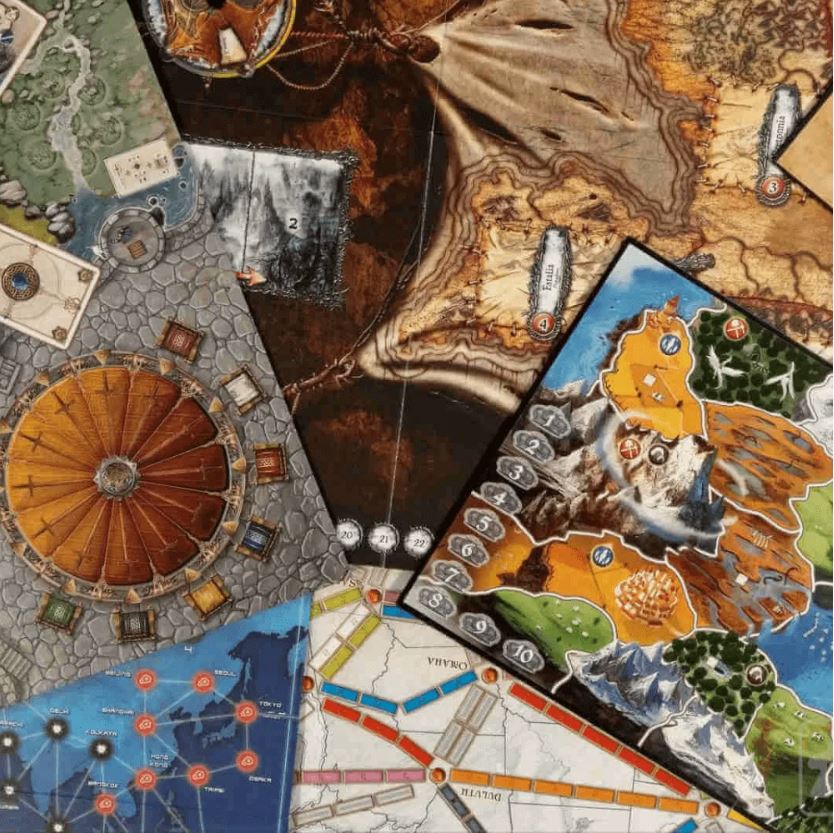
There is a much wider world of game design out there, filled with social dynamics, uncertainty, storytelling, and hybrid mechanics. Even if chess or Go becomes your main intellectual pursuit, it is healthy to remember that they are not the whole universe of play.
00:11:50 — Conclusion: which game should you choose?
So which game should you choose?
The honest answer is: either one is a wonderful choice.
Both chess and Go can sharpen your thinking, reward creativity, and provide a deeply satisfying competitive experience. Both can stay with you for decades. Both give your mind meaningful work to do.
And there is no reason to limit yourself to only one.
If you are a chess player, try learning Go. If you are a Go player, spend some time with chess. If you already know both, explore other games too. Learning new systems and challenging your habits is one of the best ways to keep your mind active and flexible.
In the end, the real winner is not chess or Go.
It is the player who keeps learning.




Комментарии