
🎥 Inside a Korean Go School: An Exclusive Tour with Chanhyuk Lee 6d

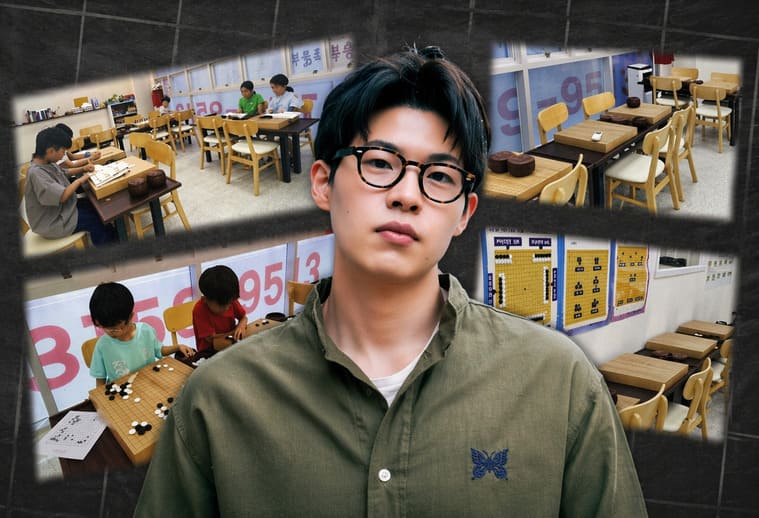

What does a real Korean Go school look like from the inside? In this video, Chanhyuk Lee 6d gives viewers a guided tour of Let’s Go School, a learning space for young Baduk players that combines structured study, warm design, and a clearly defined teaching philosophy.
Rather than focusing only on rank improvement, the tour shows how a Go school can shape a fuller learning environment. There are classrooms, teaching materials, problem sets, reward systems, and even other board games that support the development of reading skill, concentration, and strategic thinking.
One of the most interesting parts of the video is Chanhyuk Lee’s explanation of what matters most to him as a teacher. He speaks not only about Go technique, but also about manners, morality, and helping children grow as people. That gives the school a distinctive identity and makes the tour useful for parents, teachers, and players alike.
For anyone curious about youth Go education in Korea, this is a valuable behind-the-scenes look. It shows how a school can make study feel welcoming, purposeful, and fun, while still building habits that matter on the board.
What You’ll Learn
- How Let’s Go School is organized from the entrance to the main study areas
- What kind of atmosphere the school creates for young students
- How Chanhyuk Lee balances Go instruction with character development
- Why other board games are used alongside Go study
- How rewards, visual materials, and custom teaching tools support learning
- What kinds of boards, stones, books, and joseki cards students use
Timestamps
- 00:00 — Introduction: Hallway
- 00:53 — At the Entrance: Office and the “Let’s Go” Gallery
- 03:57 — Chess Classroom
- 05:01 — Go Classroom (Main Hall)
- 06:14 — Equipment: Boards, Bowls, and Stones
- 06:49 — Joseki Cards
- 07:10 — Miscellaneous Items
00:00 — Introduction: Hallway
Hi everyone. Today I’m going to show you my Go school. Let’s go inside.
At the main entrance, there are many things displayed on the wall. This is our Go school’s Instagram. I put up the QR code so parents can follow it easily. There are also QR codes for the events our school has held and for our KakaoTalk account.
In my school, the strongest player is 8 kyu, so this particular problem is probably suitable for students around 8 to 12 kyu.
You can also see my students’ drawings here. I put them up because they help create a happy feeling in the school.
This is the sign for my Go school. Now let’s go in.
00:53 — At the Entrance: Office and the “Let’s Go” Gallery
As soon as you come through the door, on the left-hand side there is a consultation room. This is also my room, and I’ll show it to you in a moment.
On the right-hand side, there is a gallery. I call it the “Let’s Go Gallery,” because the name of my school is “Let’s Go.” I’ve put up pictures of students playing Go, solving problems, and spending time here, including some of the youngest children.
There are also photos of a board game called Baduk Marvel, which I’ll show you in a second, and other pictures as well. One of them shows Lee Sedol with my students. This is also the board game he created.
You can also see a book I wrote, Capture or Be Captured, along with some playful illustrations of cats playing Go.
When students enter the school, they press their number on the keypad. Usually it is a four-digit number. Once they enter it, their parents are notified that they have arrived safely.
Now let me show you the room. There’s my computer, my microphone, and walls full of photos of students. I also keep materials here that reflect what I’ve done in my life and work.
This is my desk, and this is the consultation table. I usually sit here, while students and parents sit across from me. This is where we talk about what the student will learn and what they can gain from studying at my Go school.
The most important thing for me in teaching Go is not just Go itself. I focus first on the student’s growth as a human being. By that, I mean morality first, then manners, and then Go can be learned on top of that.
I also made this brochure so parents can understand what they will get from the school. It explains why I teach, and it includes photos as well. It was a lot of work to make everything, but it was worth it.
There is also The Great Kingdom, a board game invented by Lee Sedol. It was designed to help students understand Go concepts such as making territory.
03:57 — Chess Classroom
Now let’s go through the main door. Here is my logo.
On the left-hand side, you can see the students’ levels. On the right-hand side, I put up photos from competitions. The room on the left is the chess room, and the room on the right is the Go room.
Let’s look at the chess room first.
When students do well, I give them a reward. I call it a “point,” but it works like a talent system. They can save up those points and exchange them for things they like. I keep the shelves stocked and refill them whenever they become empty.
I’ll be opening the chess class from September, so it hasn’t started yet. Still, I already have explanations and materials on the wall, and the room is prepared.
This is a quick look at the chess room. It also has drinking water, a refrigerator, and even the Christmas tree I used last year. I’ll probably use it again this year.
05:01 — Go Classroom (Main Hall)
Now let’s go to the Go room.
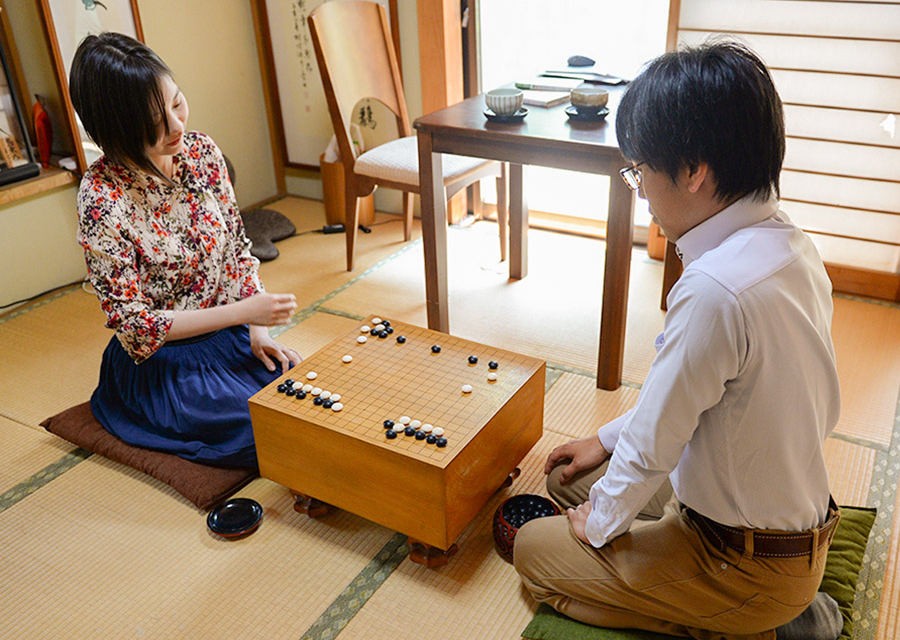
This is the biggest room in my Go school, and really the main place. On the right-hand side, you can see a large collection of board games. There are more than twenty of them.
I bring in all of these games because students do not always want to study the whole time when they come to the Go school. So when they do well in their work, I give them time to play a board game too.
These games are not just for fun. They also help improve reading skill, because they require a lot of thinking.
This is the overall look of the Go room. On the wall, there are basic explanations: living shape, dead shape, bad shape, good haengma, and different student levels.
This table is for board games. If the main desks are full, students can use these desks instead, or move over here and continue playing.
06:14 — Equipment: Boards, Bowls, and Stones
This Go board is quite thick, more than ten inches high. I bought it from Six Brothers in Korea.
These Go bowls were bought in Tokyo, Japan. They were about twenty dollars. I use them with stones from Six Brothers. The stones are plastic, but they are good quality.
This circular Go bowl was also bought in Japan.
06:49 — Joseki Cards
These are joseki cards that I made myself. I used AI to help make them.
Students follow the sequence on the cards, memorize it, and then try to use it in real games. After they become comfortable with that, they move on to fuseki cards.
I also made fuseki cards based on professional games. There is a set of game records as well, so students can choose what they want to study. Usually beginners do not start with the game records, though. They mostly work with joseki cards first.
07:10 — Miscellaneous Items
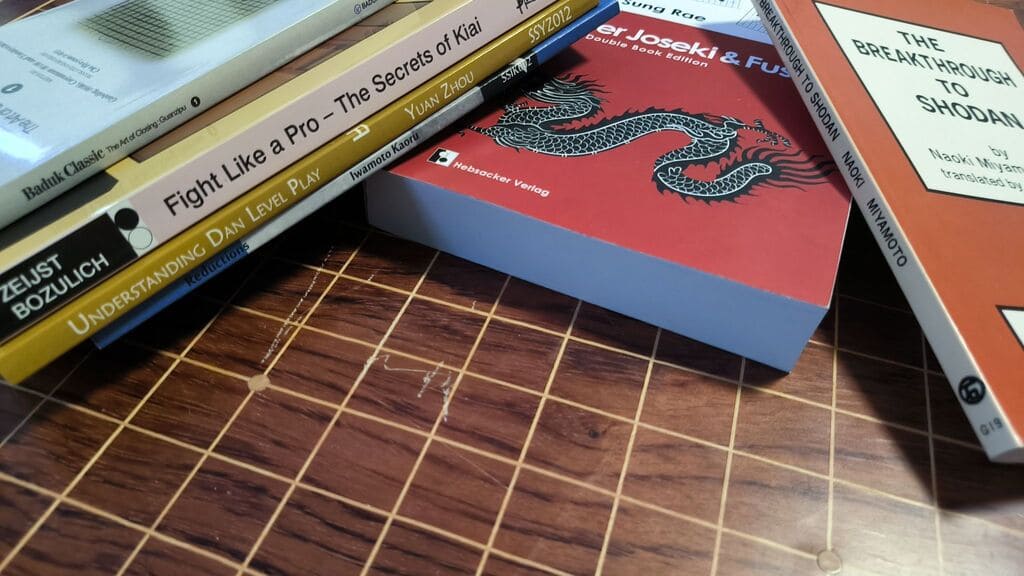
There are also Go books here.
So this is the general look of my Go school. This was a brief introduction to the school, and I’ll see you in the full video. Bye-bye.
By the way, you can also watch these lessons on the Go Magic platform, where they include interactive quizzes during the lesson and practical exercises afterward.
And if you enjoy these Go videos and don’t want to miss others like this one, make sure to like the video and subscribe to the channel.
This is Go Magic.



Комментарии