
The Issyk-Kul Cup, and Why People Keep Coming Back

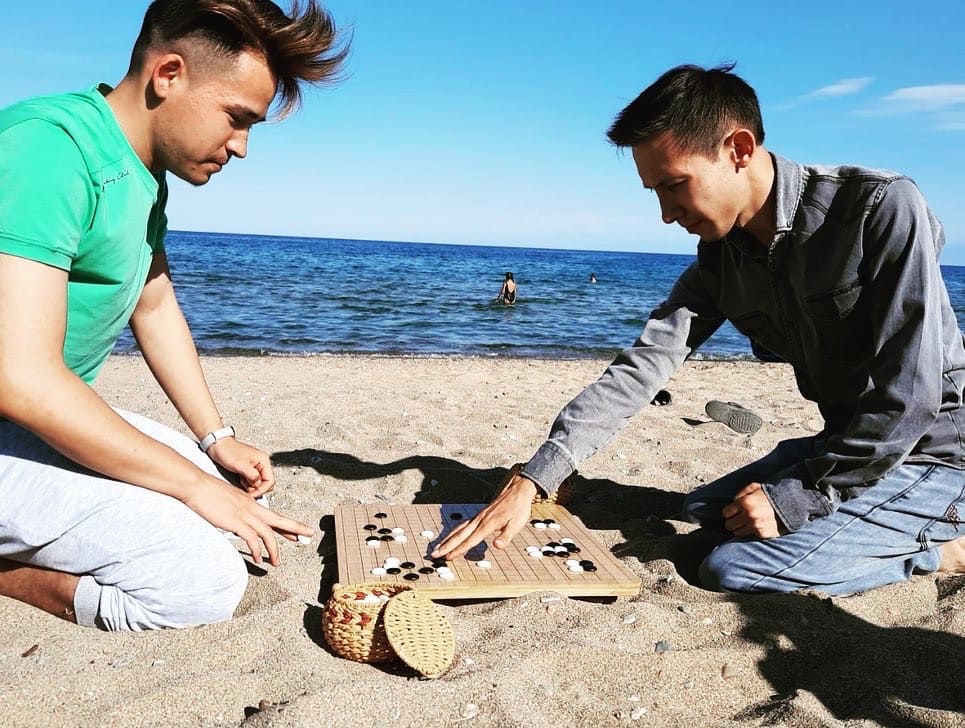
Six years ago, eight people drove out to Lake Issyk-Kul to play Go. This June, more than 180 came, from eight countries, and they filled a resort on the Kyrgyz shore for four days. Somewhere in between, a small idea turned into a thing people plan their summers around.
It Started in the Mountains, Not at the Lake
The trip didn’t start at the lake. It started higher up, in a glamping camp in the mountains of Naryn, where the tents are real Kyrgyz yurts and you can ride a horse before breakfast. A few people set up a board and played a game of Go out among the peaks, which is a strange and good thing to see, black and white stones on a wooden grid with nothing behind them but mountains. Then everyone came down to the water, to ololoAkjol, and the festival opened in the beach bar with a national feast and someone playing the komuz while the lake sat there looking unreasonably blue.
The Hardest Tournament Yet
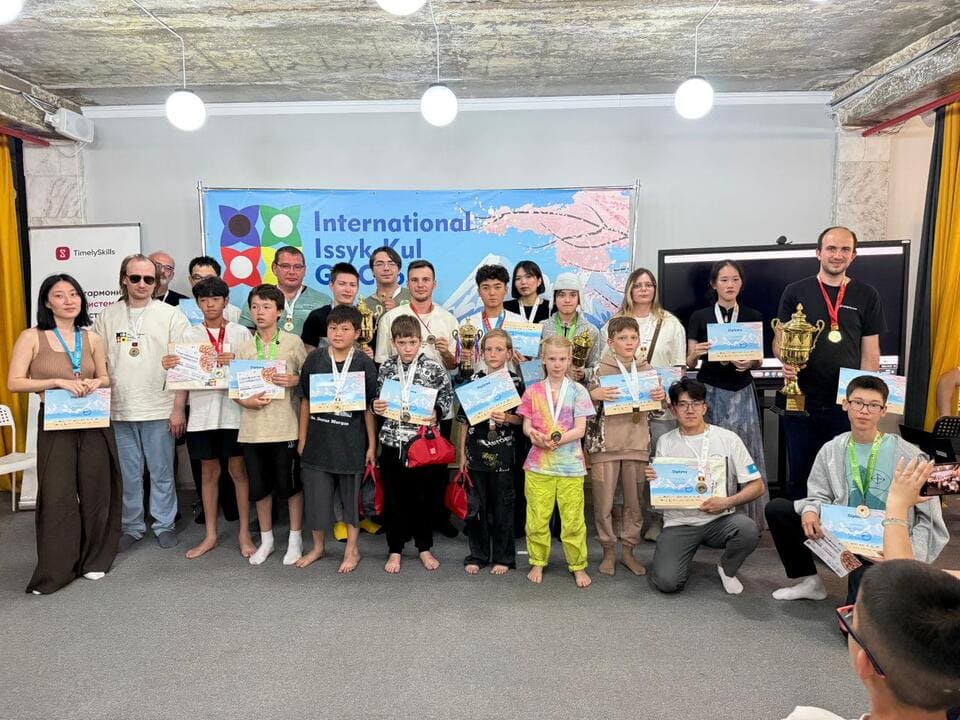
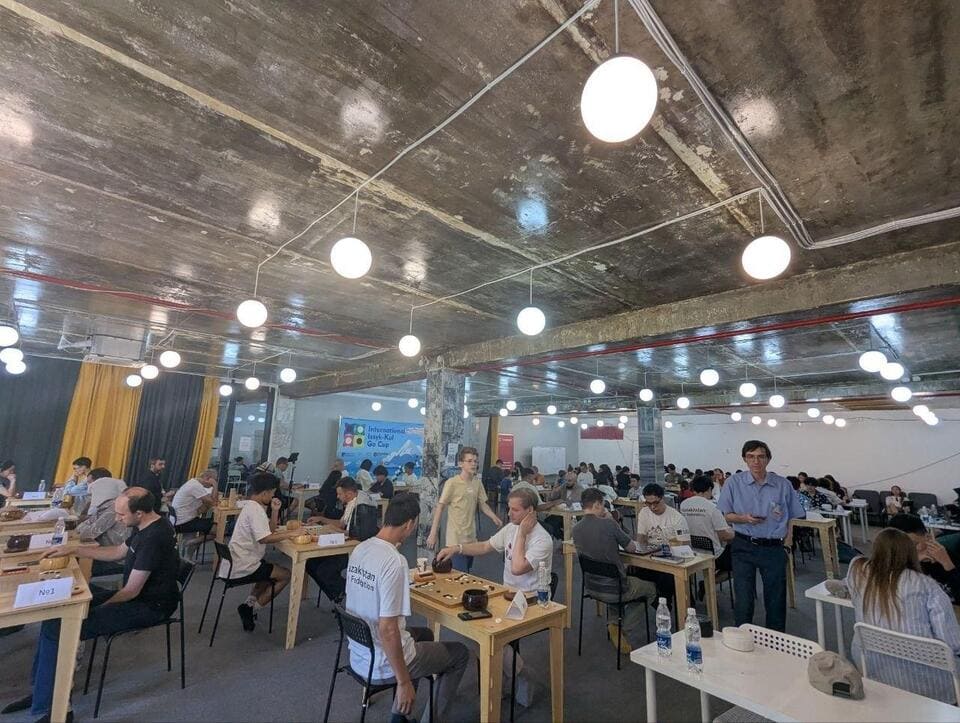
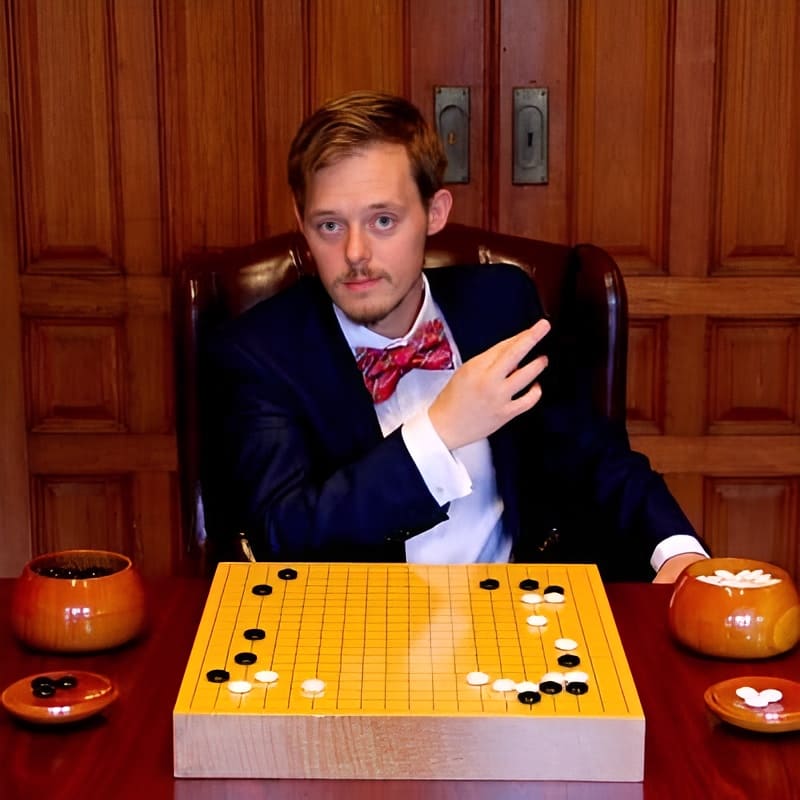
The Go itself was the hardest it’s ever been here. The dan group pulled in some serious names, European players near the top of the game and two 6-dan masters from the Chinese Weiqi Association, and most of the prize groups stayed undecided until the last rounds. The main trophy went to Poland for the first time. Mateusz Surma won it, beating the Russian master Vyacheslav Kaimin in the final game.
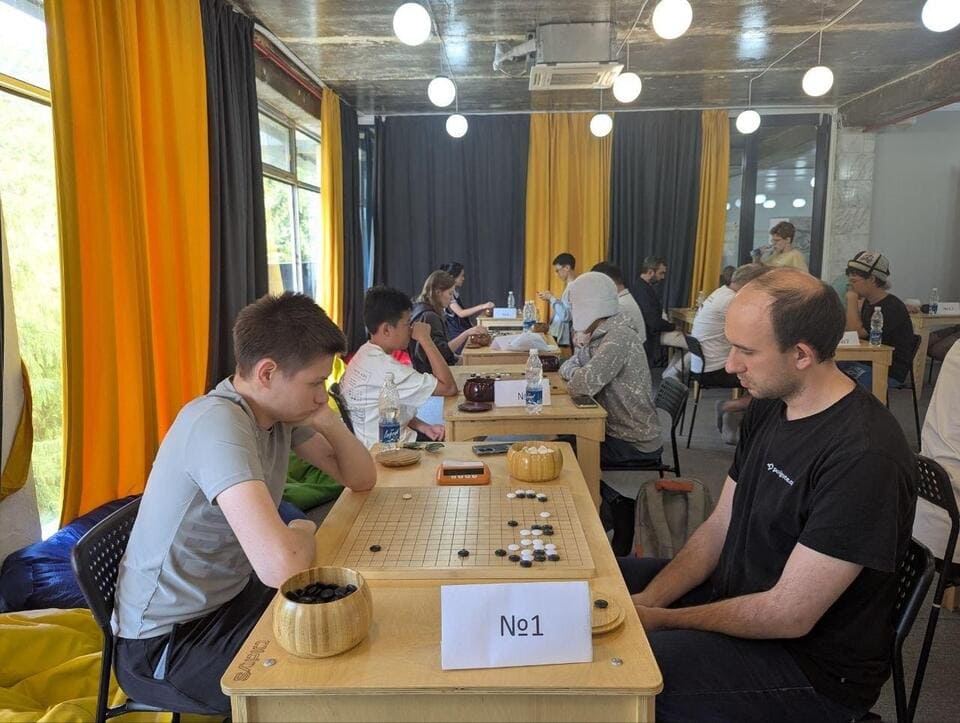
There were so many strong players in the middle of the field that the organizers ended up inventing a prize category partway through the tournament, the League of First Dans, because otherwise a whole tier of good games would have had nothing to play for. Kirill Yakubovsky won it, ahead of Ernur and Danai, two of the strongest players in Kyrgyzstan. Ernur was also named the best Kyrgyz player of the tournament. By the end they’d handed out 25 sets of medals instead of the 18 they’d planned for.
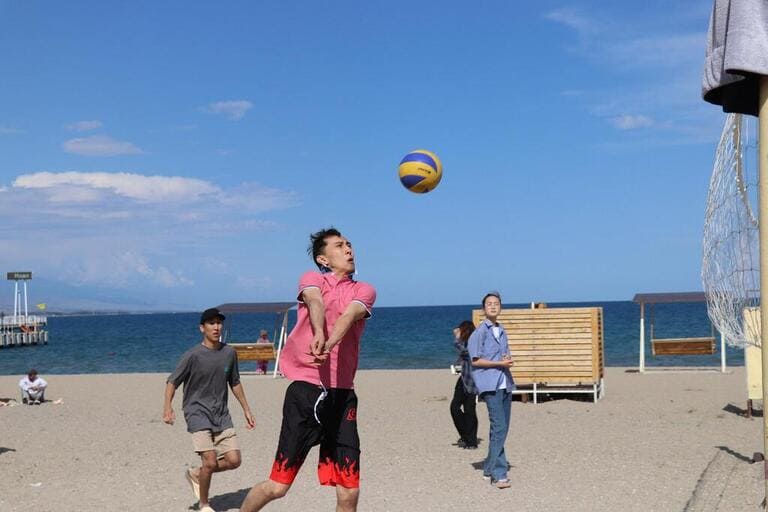
And, for the record, Kyrgyzstan won the volleyball. Ten matches, no losses, Russia and Kazakhstan both sent home from the sand. The Go went differently, but nobody on the volleyball court seemed to mind.
What People Actually Remember
That’s the tournament. But if you ask people what they remember, the results come up surprisingly late.
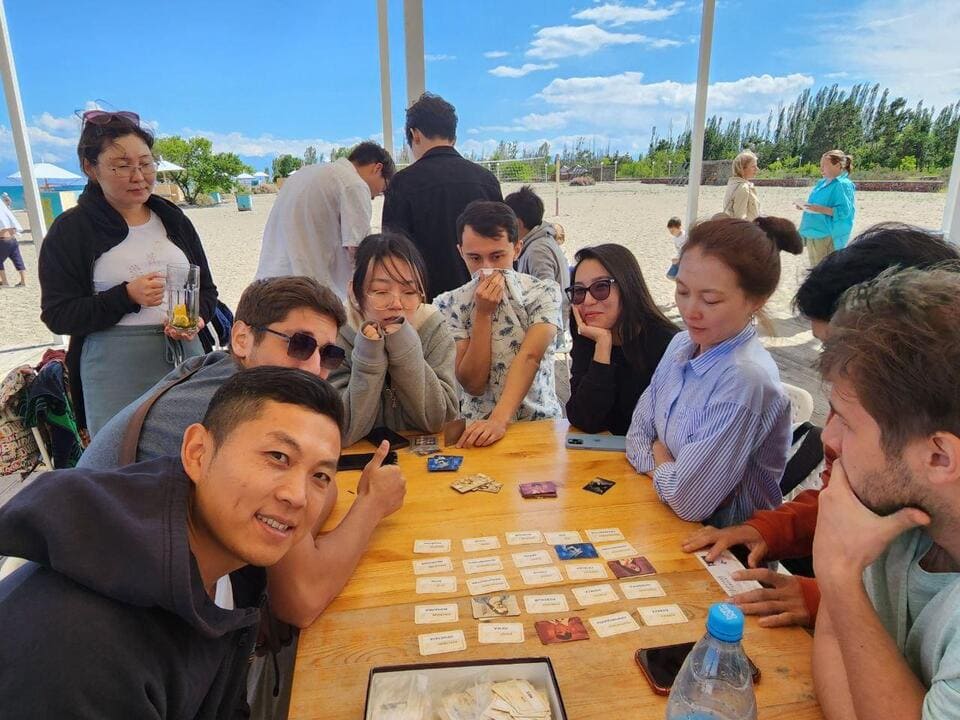
Kirill has been twice now, and the second time he wrote a long note about it on his way home. What stuck with me was how hard he worked to say it wasn’t really about the competition. “You play half the day,” he wrote, “and then you sit with the people you just played against, out by the lake, board games, dancing, singing, volleyball, shooting bows, and everyone’s laughing.” He kept reaching for the right word for the event and landing on things like celebration and holiday rather than tournament. By the end of his note he’d more or less given up on describing it and just started thanking people.
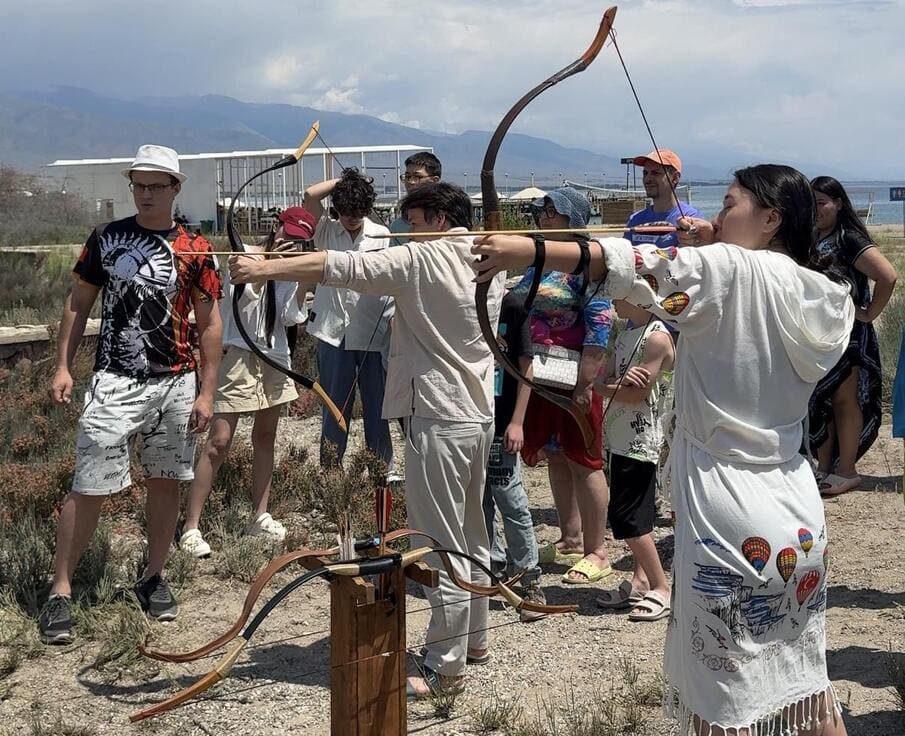
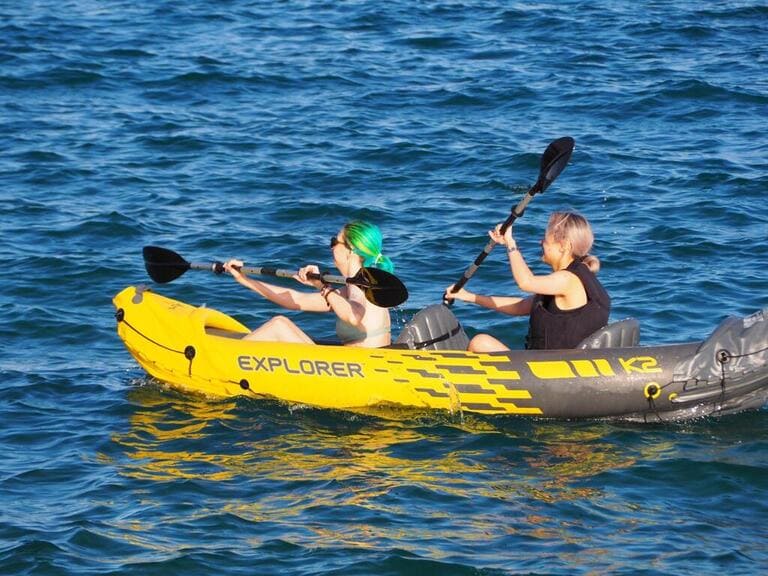
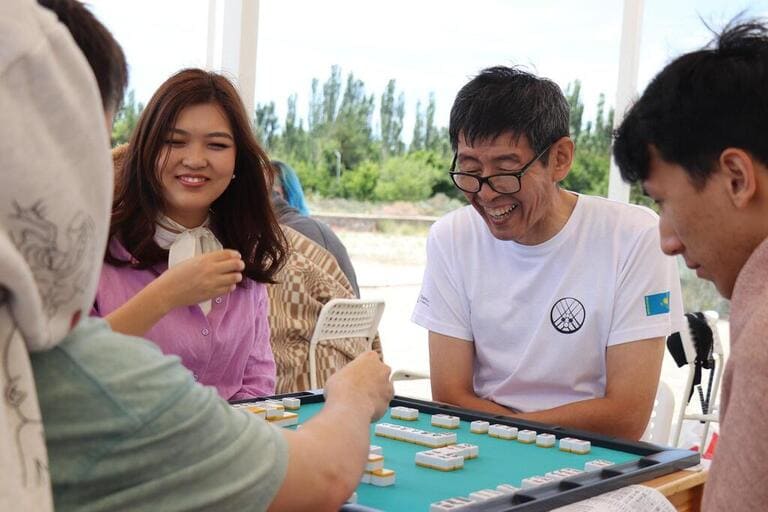
That tracks with how the days actually went. Mornings were for Go. Evenings were for everything else: quizzes in the beach bar, painting fans, weaving bracelets, archery, foam swords, mahjong, swimming when the water wasn’t too cold, dancing when it got dark. It ran late most nights. Nobody seemed in a hurry to end anything.
A Mother, and the Thing She Couldn’t Stop Saying
The person who explained the pull of it best was a mother named Jeanne, who came with her kids. Her son Diaz got real tournament games against players who made him work, which is the kind of thing that keeps a young player interested. Her daughter had a hard run and came off the closing ceremony in tears, and Vyacheslav Kaimin, one of the strongest players in the building, came over to talk to her and pick her mood back up. Jeanne noticed. Most of what she wrote afterward was gratitude, aimed at the organizers, at the guest masters, at the other parents she sees at the lake year after year. But one line did more than the rest. “As a mom,” she wrote, “I could go on forever about this game to everyone I know, telling them to sign their kids up and start playing Go.” That’s the whole thing, really. People show up to play and leave wanting to hand it to someone else.
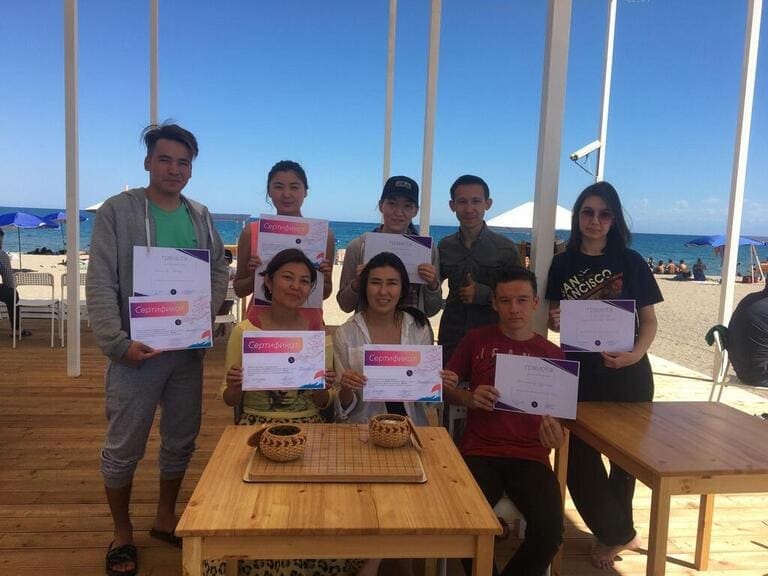
One family came this year without knowing how to play at all. They flew in specifically to learn the game and see what the festival was like. The organizers mentioned them almost in passing, but it’s a telling detail: the event is confident enough now that people will travel to it before they’ve placed a single stone.
The Last Night
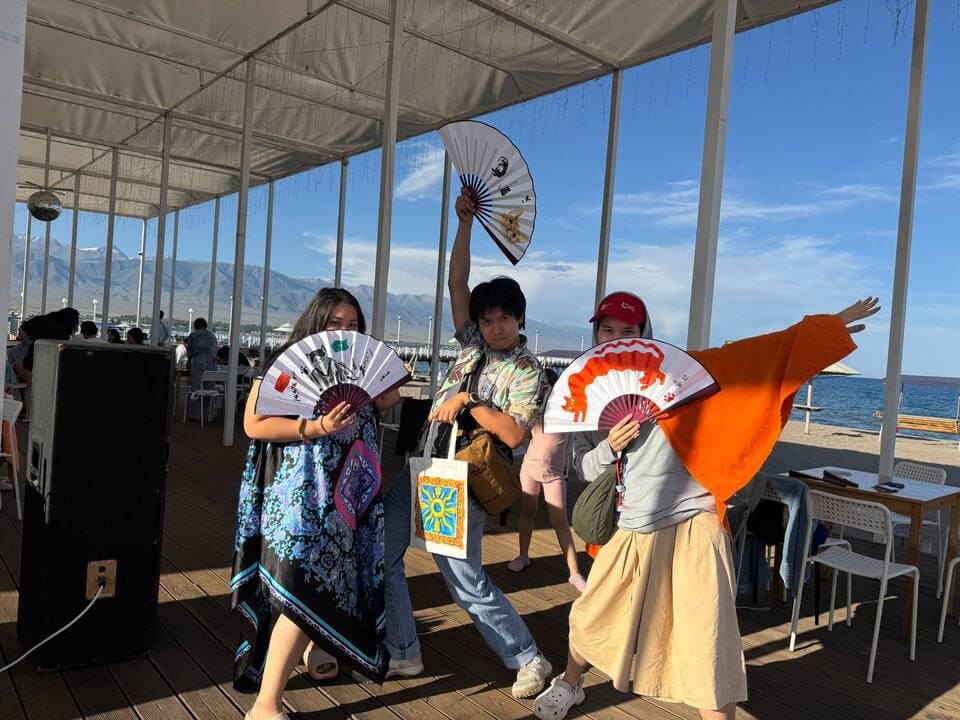
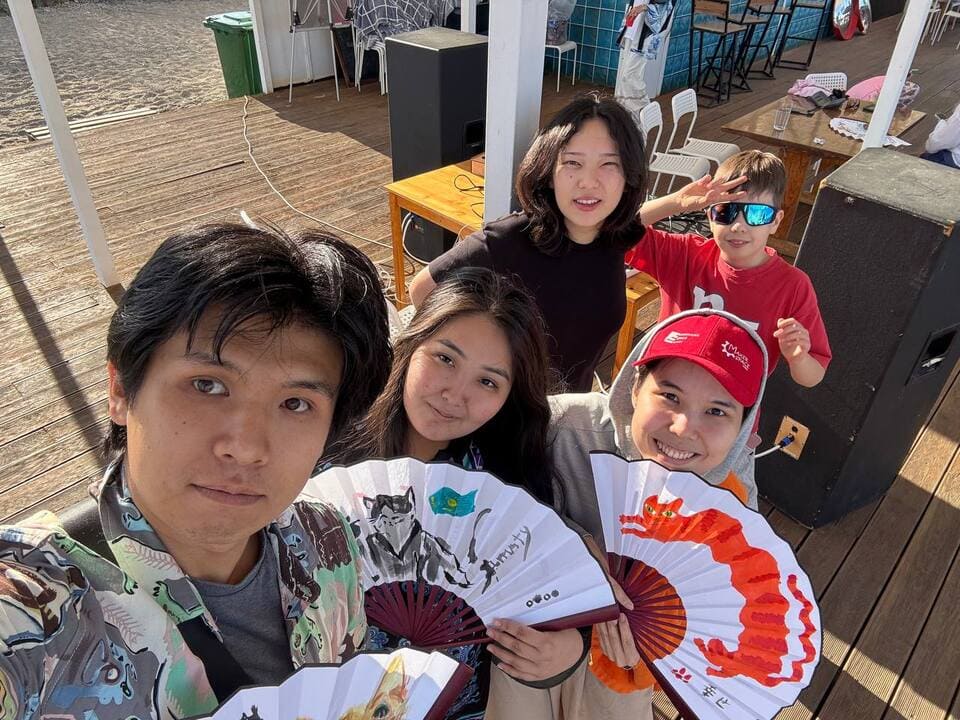
The last night was the quiet one. People signed each other’s fans, which sounds small and somehow wasn’t, everyone walking around with a paper fan collecting names like a yearbook. Some left with Cup merch under an arm. The program closed with the new champion, Surma, playing a simultaneous game against a room full of challengers at once, moving from board to board while everyone watched.
And then there are the people who have come every year for five years, from opposite ends of the world, who by now know each other’s kids and greet each other like the reunion it’s become. Snezhana was one of the ones saying goodbye at the end. “We’re so glad we got to be part of this warm Go company,” she wrote. “The yurt camp alone was a feast for the eyes. See you next year.”’
Next Year
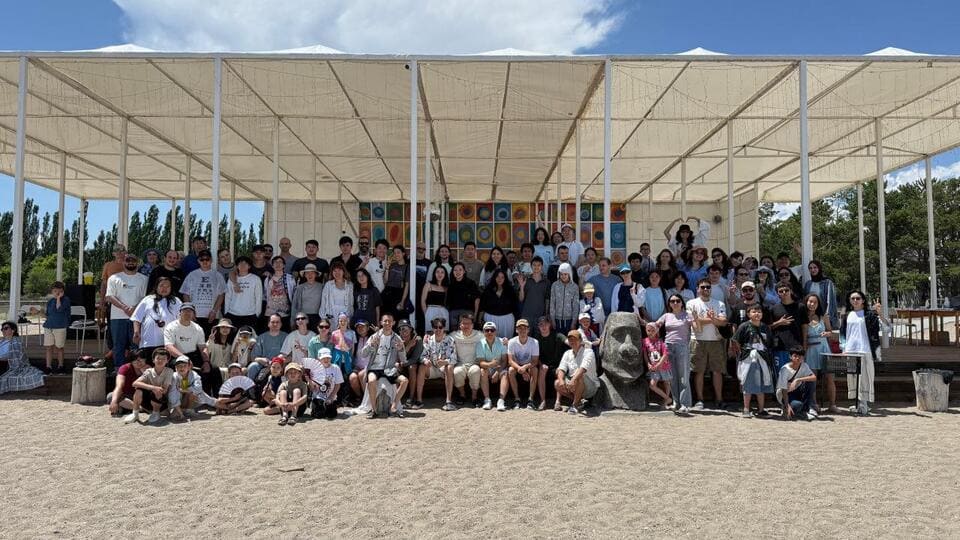
There will be a next year. The Issyk-Kul Cup 2027 is confirmed. Dates, registration and cost aren’t settled yet, and we’ll post them here once they are.
If you’ve never played, that’s not a reason to stay home. The family who flew in this year knowing nothing figured it out fine, and they weren’t the only beginners in the room. You don’t have to be good at Go to belong at this. You mostly just have to come.

Комментарии