
🎥 From Organizer to EGF President: An Interview with Martin Stiassny

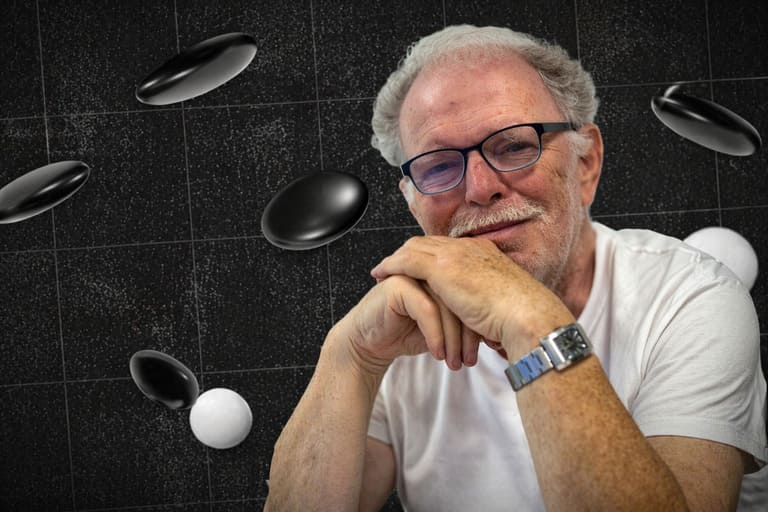

What does it actually take to build Go in the Western world over the long term? In this interview, Martin Stiassny shares the perspective of someone who has spent decades doing exactly that, first as an organizer in Germany and later as President of the European Go Federation.
Rather than focusing only on titles and official roles, the conversation looks at the practical realities of growing Go in Europe: connecting isolated clubs, building trust across countries, establishing stable relationships with East Asian partners, and trying to create opportunities in a scene still powered largely by volunteers.
One of the most valuable parts of the interview is Martin’s candor about what has and has not worked. He explains why earlier hopes for a top-down model based on elite players and prize money did not fully deliver, and why he now sees youth development and support for female players as the key to real long-term growth.
For anyone interested in the future of Go outside East Asia, this is a thoughtful and grounded discussion. It offers both historical context and a strategic view of where European Go stands today, what it still lacks, and what might finally push it to the next level.
Timestamps
- 00:00 — Intro
- 00:30 — How Martin’s Journey in Go Began
- 01:58 — Did Go Choose Martin, or Did He Choose Go?
- 03:38 — The Biggest Challenges for European Go in the Past
- 06:08 — The Biggest Challenge for European Go Today
- 09:23 — Recent Successes of the European Go Federation
- 10:08 — Is European Go Getting Stronger?
- 11:23 — An Optimistic Future for Go
- 11:50 — The Key Strategy to Create a Go Champion
- 13:10 — Advice for the Next EGF President
00:00 — Intro
Vadim: Hello, Martin. We’re here with Martin Stiassny, who is still the EGF President, right?
Martin Stiassny: Yes, that’s right.
Vadim: Great. You’ve probably given a huge number of interviews, but this is the first time we’ve spoken. I’d like to ask you a few simple questions, because I don’t know much about your background and I’d like our viewers to know more.
00:30 — How Martin’s Journey in Go Began
Vadim: How long have you been involved in Go?
Martin Stiassny: I learned to play Go in 1967 while I was studying at the Free University in Berlin. Until around 1979, I was simply playing regularly. Then, in 1979, I started organizing Go. My first tournament work actually began at the end of 1978, around the time I moved from Berlin to Düsseldorf.
I spent a long time in Germany, and since then I’ve been continuously connected with Go. From 1979 onward, I was organizing and managing Go, with one break of about ten years, when I had to step back for political reasons.
So yes, it has been about 45 years.
Vadim: A long time.
Martin Stiassny: Yes. First I managed Go in one part of Germany, then in Germany more broadly, and after that, at the European level. Since 2003, I’ve been on the board of the European Go Federation, first as Vice President, and since 2009 as President.
01:58 — Did Go Choose Martin, or Did He Choose Go?
Vadim: When you started organizing all those years ago, would you say that Go chose you, or that you chose Go?
Martin Stiassny: I always liked organizing, although I did not realize that fully at the time. The game of Go fascinated me, and so did its connections to the Far East, something I had already encountered while studying in Berlin.
When I moved from Berlin to Düsseldorf, I saw that there were Go players there, but they didn’t even know about the neighboring Go club. They didn’t know what was happening in the Netherlands either. I had the feeling that much more could be done. It should not be only about playing once a week in the back of a restaurant, in a dark room, with the same ten people every time.
So I began to build connections and communication. That became my hobby, more or less. And with Go, tournaments are a very natural way to do that.
Düsseldorf was also a center for Japanese companies, including the consulate, so I could easily connect with the Japanese Go club there. Things started from that point.
But in the end, without Go I would never have started organizing. I wanted to organize Go because I felt that we could do much more internationally than what I saw at the time.
03:38 — The Biggest Challenges for European Go in the Past
Vadim: When you began working at the European level, what were the biggest challenges in European Go?
Martin Stiassny: At that time, the main problem was that nobody really knew what the European Go Federation was doing. Sometimes we received invitations from Japan or China, but it was never clear what would happen, who was responsible, or how things would continue.
I wanted to create strong connections with the Far East, because I was convinced that without those connections Europe could not really develop. At the same time, our partners in East Asia needed one recognizable face. They could not deal effectively with thirty-two separate presidents from small countries. You never knew whether an email address was still valid or whether anyone would respond.
So I wanted the European Go Federation to become the interface between Europe and the Far East on a one-to-one level.
That was my main task.
Of course, the European Go Congress and the European individual championship were important, but those events could continue without me. What was really needed was a stable representative, someone partners in East Asia could trust, someone who was always available.
That connection simply did not exist before. Sometimes sponsorship appeared, then it disappeared again, and nobody knew why. There was no lasting relationship.
So the challenge was to establish the European Go Federation as a recognizable and reliable point in international Go, with real possibilities behind it. My role was to make it simple: if you had a request, send it to Martin, and Martin would handle it.
Vadim: So you were basically working in a big unknown.
Martin Stiassny: Yes, exactly.
06:08 — The Biggest Challenge for European Go Today
Vadim: And now, after all these years, what would you say is the biggest challenge Europe is facing today, in 2025?
Martin Stiassny: Today the problem is no longer the connection to the Far East. Those relationships are better than ever.
Our real problem is that we still do not have a European or Western sponsor for Go. In nearly every European country, Go is built on volunteers. That is admirable, and it works to a degree, but the financial base is very limited. In most places, the only regular income comes from membership fees.
What we need is someone who can help us improve tournaments, invest in teaching activities, and support teachers in the way it is done in Asia.
We now have our own professionals in Europe, and building that system was one of my goals over the last sixteen years. But they still have only limited chances to make a living from being professional players. We do not have enough teachers, and more importantly, we do not yet have enough pupils.
If we had hundreds of students wanting to learn, then we could bring in teachers, and those teachers could in turn be trained by professionals. That kind of structure is possible, but right now our financial base is simply too small.
And the EGF is an umbrella organization. We do not have direct membership from individual players, so we cannot simply raise a fee ourselves. We can only ask countries to contribute more, and that is never easy.
At the same time, you have to show ordinary members what the EGF is doing for them. If you say, “We organize the European Championship,” that may only matter to one percent of players. The other ninety-nine percent will never play in it, so naturally they care less.
When I moved into the EGF, I already had experience from my years as President of the German Federation. I knew how organizations worked and how international connections functioned. So it was not a huge personal jump for me.
But when I came to the European level, I found the same financial problem on a bigger scale.
09:23 — Recent Successes of the European Go Federation
Vadim: What would you say have been the major successes in recent years?
Martin Stiassny: We have succeeded in many things over the last sixteen years.
One major achievement was establishing the professional system in Europe. Another was creating lasting ties with East Asia, including a long-term sponsorship agreement with Chinese business partners.
Because of that, we still have the possibility of sending our strongest players to a Go academy in China, where they can learn under conditions that are largely sponsored by the owner of the academy.
So yes, many positive things have happened.
10:08 — Is European Go Getting Stronger?
Vadim: So Europe is getting stronger?
Martin Stiassny: Yes, that is the main point. Europe has become stronger, and with AI it is becoming easier to improve even further.
People in East Asia are waiting for a European champion. I heard that quite directly just yesterday from the Taiwanese world champion.
The background is simple. In East Asia, Go is familiar and culturally established. But when people apply for sponsorship, they are often told, “This is not really an international game. The same countries always win.”
That is why it matters so much when players from Western countries begin to compete seriously. Then sponsors in Asia can say, “Look, this really is international. We need international connections. We should support Go in Europe, in the US, and in South America.”
11:23 — An Optimistic Future for Go
Vadim: So are you optimistic about the future of Go?
Martin Stiassny: Yes, I am optimistic. I am sure that sooner or later there will be a champion from a Western country, and that will be the breakpoint.
Vadim: What’s your forecast? How soon?
Martin Stiassny: I think it should be possible within ten years. Not fifty. Earlier.
Vadim: With AI these days, that sounds realistic.
Martin Stiassny: Exactly.
11:50 — The Key Strategy to Create a Go Champion
Vadim: So what do we need to do in Europe to make that happen?
Martin Stiassny: We have to go back to the basics: schools and kindergartens. The future champions need to start as early as possible.
That is one of our main problems as well, because we do not have enough teachers working in kindergartens and similar places. Our strategy needs to change.
When I first started working for the EGF, I thought we could succeed in a top-down way. We would create professionals, make them into stars, and people would gather around them. They would want to learn because there was prestige and prize money. We even had a tournament where the winner got €10,000, which was huge.
I expected television and newspapers to notice. But it did not really work that way.
So top-down is not enough. We have to go directly to young players, as early as possible, and raise a champion from the ground up.
Vadim: So we have to raise a champion.
Martin Stiassny: Exactly.
13:10 — Advice for the Next EGF President
Vadim: One final question. If there were one piece of advice you could give to the next EGF President, what would it be?
Martin Stiassny: It would be exactly what I just said: concentrate on youngsters and on female players.
Vadim: Female players too?
Martin Stiassny: Yes. If you support female players, the male ones will often come automatically.
You can see that in other activities, where you have a balanced number of male and female participants and good management. But the main point is really to motivate children to start young and to keep playing.
And keeping them in the game is difficult. Today, with the internet and mobile phones, young people have many more options competing for their attention than they did in the past.
In earlier times, our problem was different. You had to go physically to a Go club, and clubs met in the evening, which was not good for children. They had to be at home.
Now, with AI and online play, everything has changed. A child can play twenty-four hours a day if they want. That is a huge difference.
So the key question is how to reach schools more effectively, and how to reach children as early as possible. That should be the strategy.
Vadim: Thank you very much, Martin.
Martin Stiassny: Thank you.
Vadim: Thank you so much for the interview. This was Go Magic.
Martin Stiassny: Yes. The magic of Go.




Комментарии