
🎥 Direction of Play: The Secret to Controlling the Go Board


One of the hardest questions in Go is also one of the most common: where should I play next?
Many players know local techniques, joseki patterns, and tactical ideas, yet still feel uncertain when it is time to choose the biggest point on the board. That uncertainty is exactly what makes direction of play such an important topic. It is not only about reading local sequences correctly. It is about understanding where development has the most value, where your stones work best together, and which side of the board offers the greatest future potential.
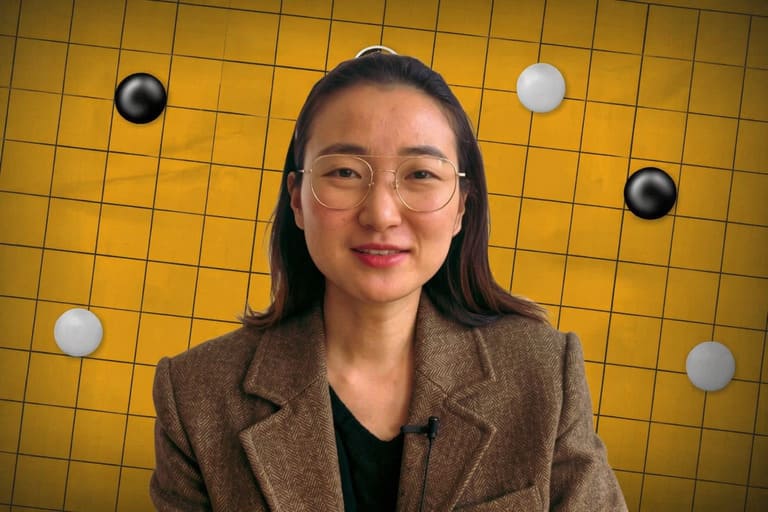
In this lesson, professional player Eunkyo Do 1p explains the fundamental ideas behind direction of play through a series of practical examples. The principles are simple enough for beginners to grasp, but deep enough to remain useful well into dan-level play. Instead of memorizing isolated rules, you learn how to compare open space, how to evaluate development potential, and how to choose the better side when blocking an invasion.
This is the kind of topic that improves overall board judgment. A good sense of direction helps you play calmer openings, avoid cramped or low-value decisions, and build positions that make strategic sense. It also helps you resist one of the most common beginner mistakes: rushing into the wrong area just because it looks urgent.
If you have ever felt that your moves were locally reasonable but globally misplaced, this lesson will help. It offers a practical foundation for making stronger choices and navigating the board with more confidence.
What You’ll Learn
- Why the side with more open space usually has greater value in the opening
- How to choose the better extension direction
- Why direct invasions are often worse than wider approaches
- How to decide which side to block when your corner is invaded
- How existing stones influence the correct direction of play
- Why these principles matter at every level, from kyu games to dan play
Timestamps
00:00 — Introduction
01:02 — Example 1
02:55 — Example 2
04:15 — Example 3
04:57 — Example 4
05:45 — Example 5
08:30 — Example 6
09:33 — Example 7
10:06 — Example 8
10:24 — Example 9
11:16 — Example 10
12:22 — Example 11
Hello everyone.
In this lesson, we are going to study how to choose the right direction of play. Just like in life, Go is full of choices, and the game changes depending on the decisions you make at each moment.
If you understand direction well, you can guide your games much more smoothly. And with a bit of practice, the logic behind it becomes surprisingly intuitive.
Let’s begin with a diagram from New Fuseki Theory, the famous 1933 work by Go Seigen and Kitani Minoru. It was one of the first major attempts to approach Go in a more theoretical way and to explore the deeper logic of the opening.
Suppose Black has a stone in the upper-right corner and can add one more move. Where should Black play: A or B?
The correct answer is A. The reason is simple: the side with more open space offers greater potential for future development.
Now consider a slightly different position. Again, Black can add one more move. This time, where should Black play: A or B?
The correct answer is B. You can compare the available space in each direction, but another way to see it is this: if you extend one way, you gain only a small amount because the corner is already yours. If you extend the other way, you gain access to a much larger area. In the opening, the wider side is usually the better direction.
So this is our first key idea: in the opening, play toward the side with more open space.
01:02 — Example 1
Now let’s look at a three-star-point opening. If you are White, where should you play: A or B?
This is a situation where beginners often make the same mistake. When they see the opponent building potential territory, they want to invade immediately. But that is often the wrong instinct.
If White jumps into the tighter area too soon, Black can kick and extend. White ends up with no base, becomes cramped, and is forced to run. Meanwhile, Black builds naturally in multiple directions and keeps the initiative.
So instead, White should approach from the wider side. That allows Black to build one area, but it also gives White good prospects on the larger side of the board. This is an important mindset in Go: sometimes it is fine to let your opponent build something, as long as your own development is also large enough.
02:55 — Example 2
Now there are a few more stones on the board. It is White’s turn. Where should White play: A or B?
The correct answer is A. Again, A points toward the area with more open space.
If White plays there and Black responds on one side, White can continue to develop the upper side. But if White chooses the narrower direction instead, Black can approach in a way that claims more of the valuable space.
So once again, direction is not only about local shape. It is about the long-term value of the surrounding area.
04:15 — Example 3
This next example comes from a 5-kyu game. Black to play: A or B?
In the actual game, Black invaded the upper-left corner, probably thinking that corner looked large. But in reality, the lower side was bigger and had more potential.
So the correct move is to jump toward the lower side.
This is a very common opening mistake. Players focus on a large-looking local point and miss the bigger direction on the whole board. Good opening play requires stepping back and comparing areas globally.
04:57 — Example 4
Now we move to a game between stronger players. It is Black’s turn. Where should Black play: A or B?
The correct answer is B.
In the game, Black played on the lower side, but that area was not actually valuable anymore. The groups there were already alive or stable. There was little left to gain.
That is an important principle: even if an area looks relevant, it may already be settled. If all the groups there are alive and secure, then the real value may lie elsewhere.
So instead of reinforcing a side that no longer needs attention, Black should choose a move in a more open area with more room for growth.
05:45 — Example 5
This is a continuation of the previous position. Black has already played on the lower side, White pushed and moved left, and now Black must choose again: A or B?
In the game, Black cut White, but that cut did not accomplish much. The White group in the lower-left corner was already strong enough, so Black could not really attack it effectively.
The better move is to play more outwardly and focus on building influence in a way that creates future attacking chances.
If White connects, Black gets outside strength. If White jumps, then Black can cut under much better conditions, because White’s shape becomes weaker and lacks a base.
This shows that direction of play is connected to timing. A move that looks active is not always effective. Sometimes the more outward, developmental move creates stronger pressure than the direct cut.
And this applies at every level. The basics do not disappear when players become stronger. They become more important.
08:30 — Example 6
So far, we have focused on expansion. Now let’s talk about another major question: when your corner is invaded, which side should you block?
White has just invaded the lower-left corner. Which direction should Black block: A or B?
The correct answer is A.
Why? Because Black already has a stone on the lower side. By blocking this way, Black develops naturally alongside that existing stone. The stones begin to work together, and the lower side gains real territorial or strategic value.
If Black blocks the other way, White can push, and Black’s lower-side stone becomes awkward and less useful.
So this is the second major principle of the lesson: when blocking an invasion, block in the direction with more development potential, especially where your existing stones can work together.
09:33 — Example 7
Now it is White’s turn in a similar situation. Where should White block: A or B?
Again, the right answer is the side where White already has supporting stones.
If White blocks in that direction, the lower side becomes natural White territory. If White blocks the other way, Black can push, and White’s lower-side stone loses value.
The same logic applies whether you are playing Black or White: choose the direction that makes your stones more effective.
10:06 — Example 8
Here Black has invaded the lower-left corner. White must block: A or B?
The correct answer is A.
White can build the lower side naturally in that direction. This follows exactly the same principle from the previous examples: block where your outside development becomes larger and more harmonious.
10:24 — Example 9
Now we return to an earlier type of position. Black invades the upper-right corner. White must decide how to block.
The correct answer is B.
If White blocks this way, Black lives in the corner, but White gets stronger value on the outside, where the board is more open. That outside strength is worth more than squeezing Black from the wrong side.
If White blocks from the other direction, Black pushes and White loses important potential on the larger side.
Once again, in the opening, the more open side deserves more attention.
11:16 — Example 10
Now look at the lower-right corner. This is a modern AI-style shape. White approached with a knight’s move, Black jumped, and after a 3-3 invasion White haned.
Now Black must choose a direction to block: A or B?
The correct answer is A.
White will take the corner, but Black is happy because Black preserves and strengthens the lower side. The two Black stones there become efficient and valuable.
If Black blocks the other way, White still lives in the corner, but Black’s lower side becomes overconcentrated, and Black also fails to attack White’s outside stones effectively.
So the correct block is the one that gives Black the better outside result.
12:22 — Example 11
This final example is similar to the previous one, but the surrounding stones are different.
Again, Black has to choose which direction to block.
This time, the correct direction changes.
Now Black should block in the other direction, because that lets Black capture the nearby White stone while still building useful strength on the right side. If Black blocks the wrong way, White becomes happy by connecting out, and Black’s lower-side stone loses value.
That is the key message of the whole lesson: the right direction always depends on the actual board position. The principles stay the same, but their application changes with the surrounding stones.
Closing summary
Today we studied two fundamental ideas for choosing the right direction of play.
First, occupy the area with more open space.
Second, when blocking, choose the direction with more potential for development.
These ideas are simple, but they are extremely powerful. They improve your opening judgment, make your stones work better together, and help you avoid playing in already settled areas.
Of course, real games are not always this simple, and there are more nuances to discuss. But these foundations already go a long way.
Thank you for watching, and see you in the next lesson.






Комментарии