
🎥 The Open Skirt Dilemma: Part 1

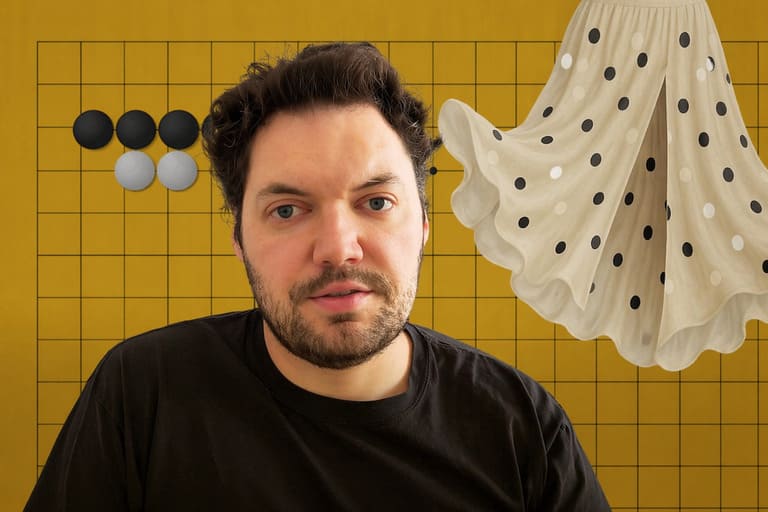

The open skirt, or susoaki, is one of those Go shapes that looks simple until you actually have to play it. A side appears open. One move seems to block everything. Another seems to reduce it. And yet, strong players often ignore the move that feels most urgent. That is exactly what makes this shape so difficult—and so instructive.
In this first part of the lesson, Benjamin Dréan-Guénaïzia 1p breaks down one of the most common modern situations involving the open skirt shape and shows why timing matters more than instinct. Blocking too early can be slow and overcommitted. Reducing from the wrong direction can help your opponent more than it helps you. And a move that looks like territory defense may actually be smaller than a global play elsewhere on the board.
What makes this lesson especially valuable is that it is not just about memorizing a joseki idea. It is about learning how pros compare potential, judge open space, and decide whether a local defensive move is truly urgent. The video shows how reductions from above and below work differently, why center potential changes the value of side territory, and how a strong wall can make an apparently forcing move much less meaningful than it first appears.
For players who want to improve their whole-board judgment, this is a great topic. The open skirt dilemma is really a lesson in timing, direction, and balance—three of the hardest things to master in Go, and three of the most important.
What You’ll Learn
- What the “open skirt” (susoaki) shape means in practical play
- Why the obvious second-line block is often too slow
- How pros compare local defense with bigger moves elsewhere
- Why reducing from above usually comes before reducing from below
- How center potential affects the value of side territory
- When the correct timing to block finally arrives
Hello everyone.
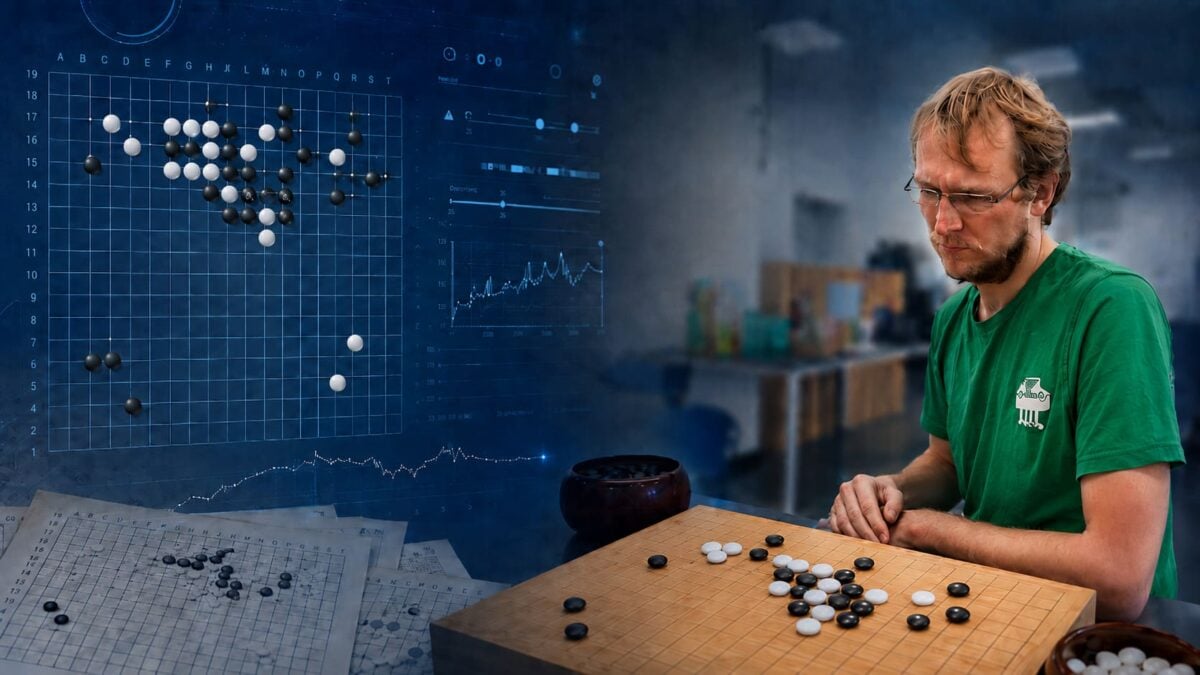
In this video, we are going to talk about the concept of the open skirt. It is a funny and memorable name, but the idea itself is very important. The term comes from the Japanese susoaki. A more literal translation would be something like “opening at the hem,” but “open skirt” is the phrase that stuck.
The concept refers to a territory that remains open on one or both sides. In the example shown here, Black can still jump in on the second line from the left, while White has the option to block. So the main questions are these: when is it good to block, when is it too early, should Black reduce right away, from which side should Black reduce, and when is it better to invade instead? Those are the questions this lesson will answer.
Let’s start with the first situation.
Black has just played in the upper left. You may first wonder how we arrived here, but it comes from a very common modern pattern. There was first a 3-3 invasion, White blocked, and then the sequence continued into a familiar shape that appears often in current games. Later, Black descended, and that descent is important. If Black had played more loosely, White could hane and cut, and Black would already be in serious danger. If Black captures one way, the corner dies; if Black connects the other way, the stone gets caught in a ladder. So that descent is a big move for Black.
Now, if you are White, you may feel nervous. If you do not block, it looks as though your territory will disappear. But if you block immediately, it also feels slow, because Black seems to get to fix the weakness for free.
Blocking would not lose the game, of course, but it is indeed a bit slow. For instance, after White blocks, Black can start reducing from above. Later Black may still think about invading from below. Step by step, White’s territory shrinks, while Black builds territory on top and also creates pressure against the White stone in the lower left.
So what should White do?
The first and perhaps most important principle in Go is to play in the area with the most open space. In this position, that means the bottom side. Not only is it a large area, it also puts pressure on the Black corner. In itself, that is already bigger than simply blocking on the second line.
Even if we think locally, a knight’s move is bigger than blocking. In the earlier line, when White blocked passively, Black was happy to push from above, increase Black’s own territory, and reduce White’s. But with the knight’s move, White does the opposite: White expands outward and keeps more potential.
You may still object that Black can come into the territory anyway. That is true, but such a reduction is actually quite small. If Black crawls in simply and White answers solidly, Black gains only a few points, while making White stronger. Meanwhile, Black’s own potential on top is damaged and the center remains open. So even if the Black move looks annoying, the result is actually very good for White.
Now let’s switch perspective and ask what Black should do next. Should Black still push from above? Should Black play from below? Should Black invade directly?
The classical way to think about this is that you usually reduce from above before reducing from below. If Black starts from below immediately, White often has an easy answer, and the move may not accomplish much. But if Black starts by pushing from above, White is less likely to ignore it casually, because the pressure on the surrounding stones becomes more meaningful. Then, if White answers below later, at least Black has already reduced the top first and developed outside influence. That move order matters a lot.
Suppose Black pushes from above. You may think that now White can finally block on the second line. But the same logic still applies. Black can jump in from the side, White has to defend, and then Black can take another large point elsewhere. In that case, White’s territory on the left is very limited. It cannot really expand anymore, because Black surrounds a much larger zone overall. That is why the knight’s move or another large move remains more valuable for White than simply blocking early.
This is why, in many games, when Black pushes from above, White often answers with hane. What White should never do is answer too passively and give Black a strong sente sequence for free. In fact, if White does not want to hane, it can even be better to tenuki and take a large point elsewhere than to spend a slow move defending a few points on the second line. At least then White gets something big in exchange.
So when is the real timing for White to block?
In most professional games, that timing comes surprisingly late. Imagine that White has already taken a large point elsewhere, and Black now decides to reinforce from above because Black really wants to build there. At that moment, it can finally become correct for White to block on the second line. Why? Because White has already reduced the top, and now also gets to secure the side. In other words, White has taken both directions. Only then does the block become efficient.
Let’s look at a second example.
Here, White has already extended on the top, and only much later—after a large fight on the right—do the players return to the upper-left area. By now, White has built enormous central influence, and Black finally pushes from above. Once again, if Black had started from below instead, White could likely have played strongly in the center and turned that influence into something even scarier. That is why the reduction from above comes first.
Even here, White still cannot block too soon. If White blocks immediately, Black jumps in, White must defend, and after a few moves the whole White potential begins to disappear. So again, the more efficient approach is to keep emphasizing the center and mutual reduction instead of rushing to defend a side that is not yet truly urgent.
Only much later in the game does White finally play the second-line block. In the example shown, that timing comes around move 60. This is a perfect illustration of how late the proper moment can be. You might imagine White should have played it much earlier, but in fact White kept choosing larger, more valuable moves in the center first. If White had blocked too soon, Black would simply have played normal moves nearby and steadily reduced White’s real potential.
Now let’s move to a third example.
Here Black has a huge moyo on the bottom and right, and it is White’s turn. White is already quite strong, so invading deeply is possible. But instead, White chooses a more ordinary move that reduces Black’s right side while increasing White’s top-side potential. A fight follows. Black defends properly, the battle develops, and Black becomes very thick on the top right.
That thickness changes the meaning of the side play completely.
Because Black has become so strong, the value of White’s jump or block on the right-side second line becomes much smaller. It is no longer sente for White. Even if White gets that move, Black can often simply capture a stone, and the points White destroys on the side are nowhere near as large as the value Black gains in the center with thickness and attacking power. This is a key lesson: the stronger a wall becomes, the less valuable these side jumps and blocks tend to be.
So how should we summarize this first open-skirt pattern?
The key is to understand the dual nature of the White stones. They can be very flexible, or they can become a wall. In only a few moves, they may turn into powerful central strength. If Black tries to attack them too directly, that can actually help White more than Black, because White gets good forcing moves and useful development. In many cases, Black would rather pressure White into connecting inefficiently than launch an immediate attack without a clear gain.
So let’s recap.
As White, you do not want to block too early. You want to block only once your potential from above has already been limited, your center growth is no longer large, and a jump on the second line would now cost you real points. If the center is still big or there are larger moves elsewhere, you should usually play those first and come back to block later, when it has truly become valuable.
As Black, you generally do not want to start reducing from below. You reduce from above first, and only then from below if the opponent answers. But as we also saw, the stronger the wall becomes, the less likely it is that the second-line jump remains sente. So this is a very delicate balance, and the timing has to be calibrated carefully. That is why professionals are so good at knowing when to defend territory, when to reduce it, and when to invade. All of those concepts meet in this shape.
This concludes the first pattern. It is one of the most common modern patterns, especially in the sanrensei-related joseki family. Next comes a second situation, slightly more complicated but also very common, and worth understanding as well.



Комментарии