
🎥 A Modern Way to Handle Attachments to the Large Knight’s Enclosure

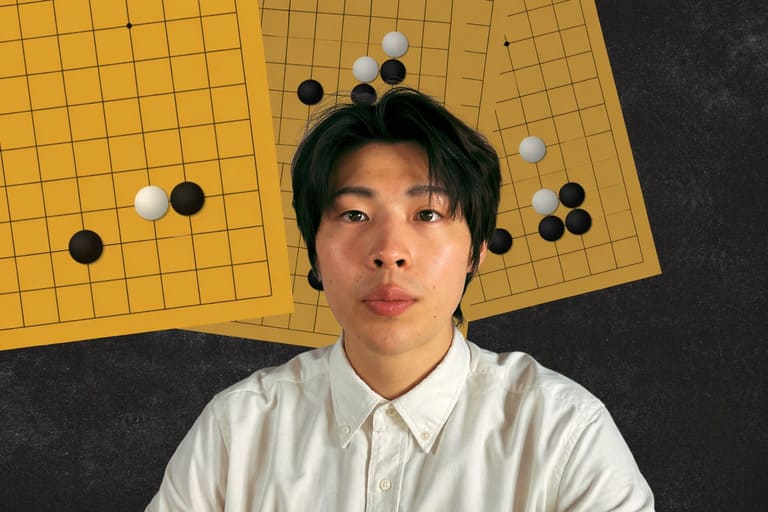

The attachment against the large knight’s enclosure is one of the most recognizable patterns in classical opening play. For a long time, players approached it with familiar ideas: split the shape, probe its weaknesses, and build pressure step by step. But AI has changed the conversation.
In this lesson, Lee Chanhyuk 6d explains how modern play has reshaped Black’s responses to this attachment. Instead of automatically leaning on older habits, strong players now often choose more direct and practical ways to secure the corner, keep sente, and build efficient outside strength. That shift may look subtle at first, but it changes the character of the whole joseki.
This is exactly the kind of topic that helps players improve their opening judgment. Rather than memorizing a single sequence, you learn how to compare several candidate responses, understand why some passive moves fail, and recognize the balance between corner safety, thickness, and initiative. The lesson also shows how tactical details such as ladders and shape quality can completely change the evaluation of a variation.
For intermediate and stronger players especially, this is a valuable update to classical joseki knowledge. If you still rely on older instincts in this shape, this video is a good chance to recalibrate your understanding and develop a more modern feel for the position.
What You’ll Learn
- Why AI changed the traditional way of answering the attachment to the large knight’s enclosure
- Which Black responses are common, and which ones are too passive
- Why reinforcing the corner directly can be better than attacking weaknesses slowly
- How White uses double hane and other forcing ideas to stay flexible
- When Black should cut, and when that choice depends on ladder support
- How to evaluate sente, thickness, and corner safety in these joseki
Hello everyone. I’m Lee Chanhyuk.
Today we are going to discuss how to respond when White attaches to a large knight’s move enclosure. This position has changed a lot over time.
In the past, the usual idea was to split the formation and gradually aim at its weaknesses. But AI introduced a different perspective. Instead of trying to attack those weaknesses indirectly, it often prefers to reinforce the corner right away. That is a major shift in thinking.
Why does AI play this way, and how should Black respond? Let’s take a look.
Black has four main ways to answer the attachment. Among them, moves A and B are the most common, while C and D are much rarer.
Let’s start with the least common response: extending toward the corner. If Black plays this way, White can jump into the space, Black defends, and White expands along the side. This is an ideal result for White, so Black should avoid retreating so passively.
What about extending toward the side instead? Unfortunately, this is not very good for Black either. White can use a kosumi, attach again, or hane into the corner and force a difficult variation. If Black cuts, White may either break through or make an eye in the corner, which makes it hard for Black to gain a satisfying result.
So in practice, Black usually wants to choose A or B.
Now let’s examine B first.
White responds with a double hane. If Black ataris and connects, White can attach and secure life in the corner while keeping sente. That is a good result for White.
If Black plays a tiger’s mouth instead, White can first exchange a cut to create the best possible shape. If Black tries to counterattack, White calmly ataris, extends, and uses a kosumi, ending in a flexible and strong position. There is still lingering aji as well.
So when White plays the double hane, Black’s strongest resistance is to cut directly.
In that case, White should extend, then atari, then extend outward. When Black captures, White plays hane. If Black hanes back, White ataris first and then continues with a double hane, leading to an important ladder situation.
If Black has supporting stones in the upper-left corner, then this may work for Black. So White has to think carefully about the ladder before choosing this variation.
If the ladder favors White and Black simply captures one stone, White can push through and extend into the center. Before making a nice outward-expanding move, always ask the probing question: does the ladder work?
Now let’s turn to the most frequently played move: blocking toward the corner.
Since Black has already played a hane in the corner, it makes sense to reinforce that area. White responds with a double hane, and Black ataris before extending. No matter the exact move order, Black will usually end up forming a tiger’s mouth.
When this shape first became popular, White often cut immediately. If Black ataris in the wrong direction, White gets to block in sente, which is favorable for White.
To avoid that, Black should push first. White jumps, Black captures, and White extends along the side. This sequence became established as a standard joseki.
More recently, White has often chosen a different plan: pushing toward the center.
If Black hanes and extends, White keeps pushing outward. Later, when White cuts the corner, Black ataris and White can tenuki. If Black pushes here, White jumps first and then tenukis, giving a balanced result.
If Black extends once and then hanes, White cuts immediately. At first glance, it may look as though Black can simply capture White, but White extends, uses the exchange moves skillfully, and secures an eye shape that ruins Black’s potential.
If Black pushes first before extending, White ataris and plays lightly. When Black cuts, White ataris once more and tenukis. That is also enough for White. White treats the corner lightly and keeps control of the overall position.
And if White does not want to sacrifice the first stones, White can simply jump and reinforce them.
As we have seen, White’s attachment against the large knight’s move enclosure gives White many flexible options, which is why it remains such a popular strategy. Black does not have a perfectly comfortable answer in every line, and White often gets a playable, favorable result.
That is why it is so important to understand the details of these exchanges. If you know when to block, when to cut, and how to judge the shape, you will make much better decisions in your own games.
I hope this breakdown helps you think more deeply about these positions.
See you next time with another exciting Go topic. Bye-bye.




Комментарии