
Chris Garlock on AlphaGo, Community, and the Stories Behind Go

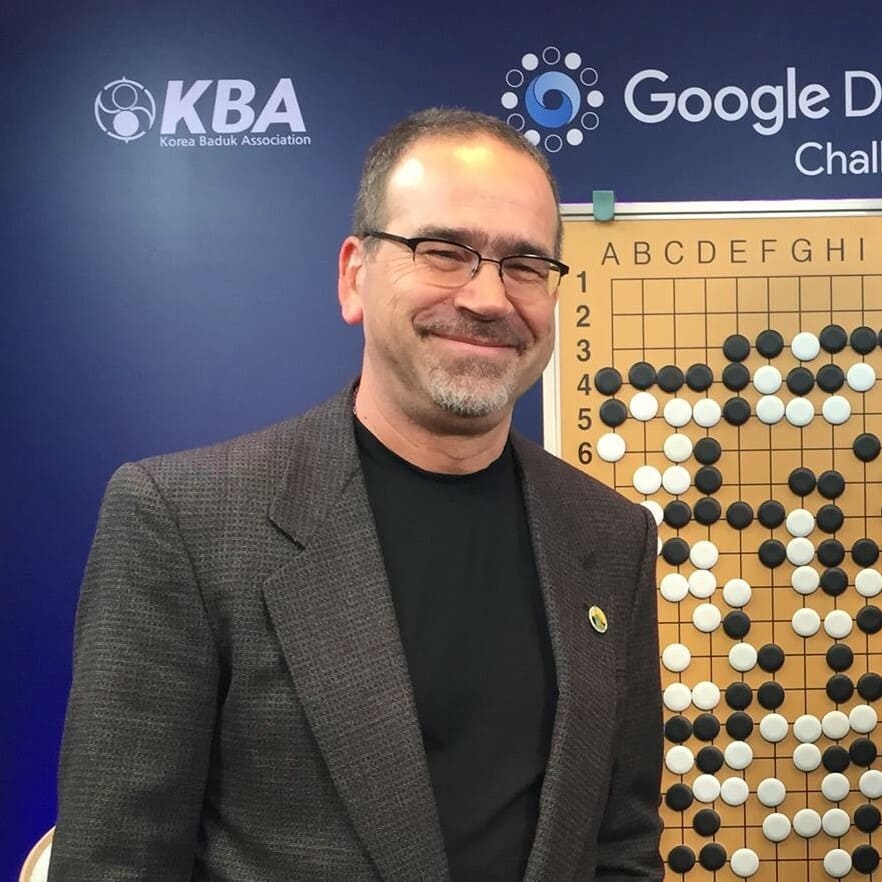
Chris Garlock has spent decades helping people follow Go, from compiling tournament reports to sharing a microphone with Michael Redmond during the 2016 AlphaGo–Lee Sedol match. In this conversation, he recalls learning the game in a Philadelphia kitchen, explaining unfamiliar moves to a worldwide audience, and why he would put money into local clubs before a publicity campaign.
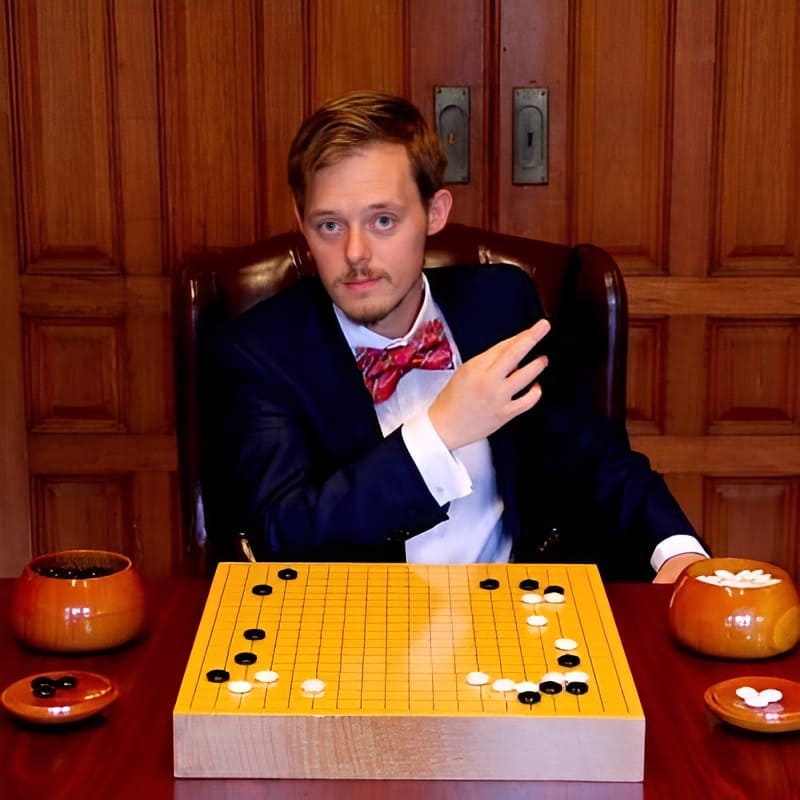
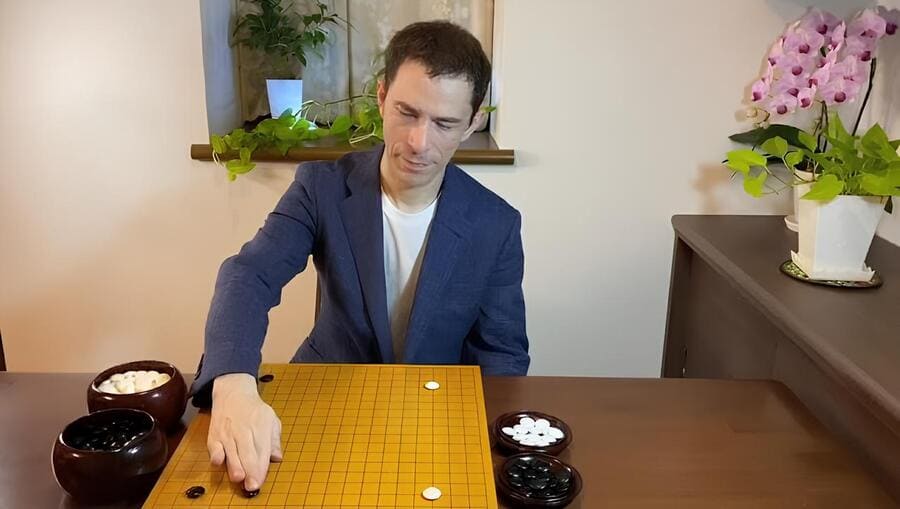
This interview is adapted from Episode 9 of All Things Go, originally released in July 2024. Hosted by Travis, the podcast explores Go through interviews, personal reflections, and conversations about the game’s history, culture, and community. In this episode, Chris Garlock shares his experiences covering the AlphaGo matches, building the American Go E-Journal, and supporting local Go clubs. The conversation has been edited for length and clarity. Watch the full episode on YouTube.
Discovering Go in a Philadelphia Kitchen
Travis: You’re the managing editor of the American Go E-Journal, the American Go Association’s vice president of communications, and an amateur 3 dan. You’ve helped pioneer electronic and broadcast coverage of Go. Where did your own Go journey begin?
Chris Garlock: Back in the 1960s, when I was a kid, my dad was very interested in other cultures and discovered the game. Unfortunately, I didn’t start playing when I was six. I might be a lot stronger than 3 dan if I had!
But I was fascinated. I have these childhood memories of peeping over the board and seeing mysterious patterns play out. I didn’t learn the rules, but the game was there.
In 1985, when my son Benjamin was born, I was off work, or semi-off, for a little while and decided to get into it. I was living in Philadelphia. In the back of one of the few Go books available, there was a list of clubs, and the Philadelphia Go Club was listed.
It turned out to be run by Phil Straus, who is now one of my best friends and later served as president of the American Go Association. At the time, he was running the club in his kitchen.
Phil was really my first official Go teacher. A group of us formed what we called the “Break 10 Kyu Club.” Back then, you improved by going to the club. There were a few books in English and a few teachers, but that was about it.
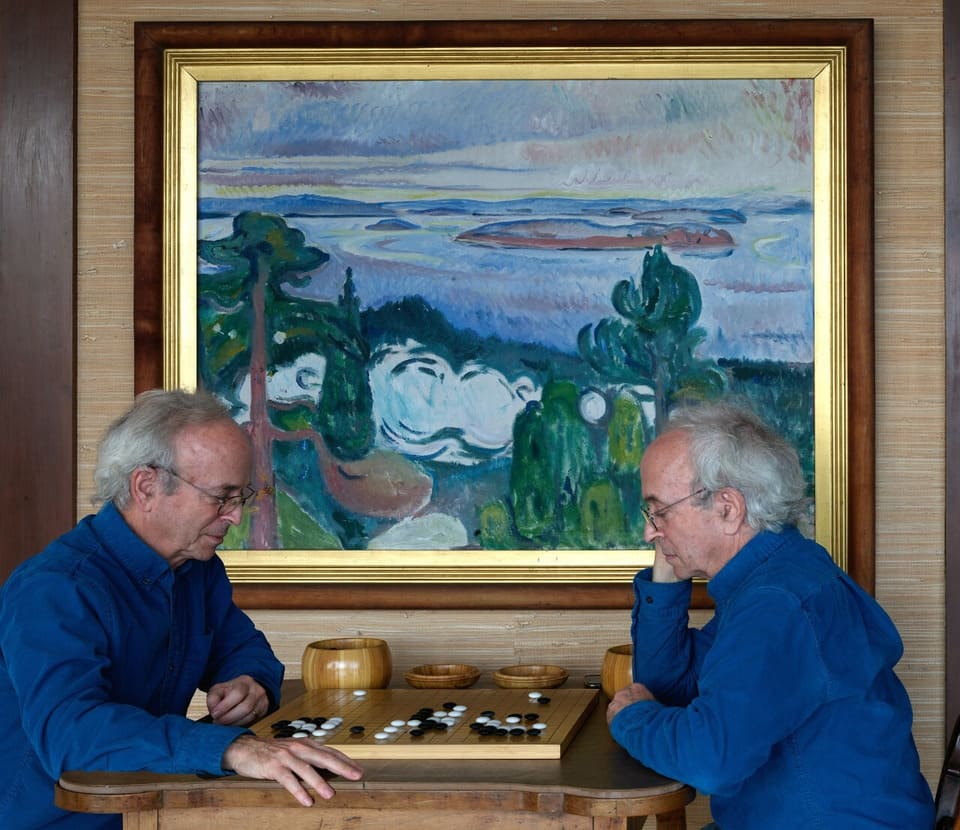
When I think about the resources someone has now—AI, books, videos, and apparently podcasts—it’s extraordinary. I do radio and podcasts myself, and I had thought about doing a Go podcast. But it’s such a visual game that I could never quite figure out how to approach it. So my hat’s off to you for taking it on.
(For help navigating today’s selection of Go books, read our guide: Go Books: Your Guide to Choosing the Right Read.)
Travis: Do you know how your dad first came across the game?
Chris Garlock: He studied literature and philosophy, and I think that was the route. This was the 1960s, when a lot of people were interested in Zen, Buddhism, and Chinese philosophy. He also had a friend who studied Chinese literature.
You would hear about this game and then have to go down to Chinatown and find a ten-dollar board in a Chinese grocery. I think I bought my first board in a Chinese grocery in San Francisco, if I remember correctly.
Finding a Community Wherever You Go
Travis: How did playing in Philadelphia lead to your wider involvement in the Go community?
Chris Garlock: I was lucky to live somewhere with a good club. Phil was a good organizer, there were a few strong players, and there were several of us around the same strength who could help each other.
Then, in 1986, some people from the club were going to the U.S. Go Congress. I just assumed that was what you did: you went to the club, and then you went to the Congress. I didn’t realize how new it was. I think that was only the second one.
Once you’re part of that community, you can go almost anywhere and find people to play with. During a fundraising walk along the Thames in England, some players had seen our route online and said, “You’re going through Oxford. Stop in and see the Oxford Go Club.”
So I did. We had dinner together, and it was great. I didn’t know these particular people. They were complete strangers—but they weren’t, because they were Go players. You’re accepted. We play the same game.
Being There for AlphaGo
Travis: I suspect many people first encountered you through the live commentary for the 2016 match between Lee Sedol and AlphaGo. What was it like to be part of that moment, both for Go and for AI?
Chris Garlock: It was incredibly historic. I actually had a conflict with a major event at work. I was working at the local AFL-CIO, and we had our big annual event, in which I had an important role.
I went to my boss and said, “I have to go and do this thing.” They weren’t especially happy about it. But I said, “Somebody else can do my job at this event. This thing with Go is different.”
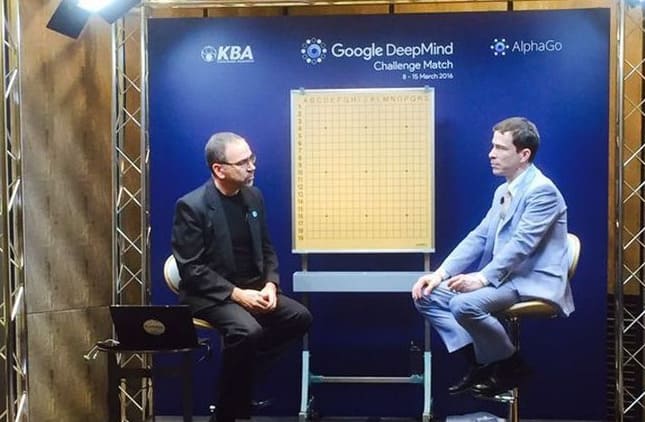
When Michael Redmond was asked whom he wanted to work with, he said, “You’ve got to get Chris.” We already had a relationship and knew how to work together. We didn’t know what was going to happen with the AI, but I knew I had to be there.
I even said that if it meant I had to move on from the job, I would. That’s how strongly I felt about going.
It all worked out with my job. And then, suddenly, this game that was relatively obscure in my home country had a global audience.
“Go: It’s Too Hard for You”
Chris Garlock: Despite the efforts of generations of enthusiasts, Go has never really taken off in the United States. I was the AGA’s membership secretary, and I spent a lot of time thinking about this.
It’s easy to learn, but it isn’t an easy game. People join, start playing, and then discover that something that looked simple can be very hard and frustrating. We had a lot of turnover: people would join and leave six months or a year later.
I compare it with tennis. It takes time before you can play well enough to really enjoy what you’re doing. You need patience. With pickleball, I can teach someone the basics in a few minutes, and they can start having fun almost immediately.
At one point, when the AGA was talking about giving me money to promote Go, I said, “Here’s my slogan: Go—it’s too hard for you.” We might as well be upfront about it!
Travis: But the difficulty is also what attracts people who stay with the game. The same thing that draws them in may make it harder to spread.
Chris Garlock: Exactly. My tongue was only partly in my cheek. I’ve been playing for almost forty years, and I know the sort of people it attracts: people who enjoy a challenge.
There’s a reason I’m not 6 dan. The strongest players are very good at solving problems and puzzles. I think many people can reach shodan, or 1 dan, if they put in enough work. But getting from shodan to 3 dan takes a lot more work.
My reading is probably a couple of levels above my rank, which made me a good game recorder: I could see what was likely to happen. My strategic understanding is probably a couple of levels below it.
We say, “Five minutes to learn, a lifetime to master.” And that’s okay.
(For more context on the levels Chris mentions, our article Go Ranks & Ratings: Kyu, Dan and Elo explains how ranks and ratings work.)
Explaining Go to a Global Audience
Chris Garlock: Michael and I spent a lot of time talking beforehand. During the event, we would go for long walks every day and talk through our plans.
We had viewers who knew the game extremely well, but we also had people who had never seen it or only had a very basic idea of what was happening. We had to speak to both.
Michael’s role was to go deep. I could say, “All right, Michael, release the Kraken. Go down the rabbit hole on the joseki in that corner.” Then I would have to bring him back: explain some of those terms, tell us the simple version, give us the count.
Some experienced players would write to me because I was asking very basic questions. But that was my job. Michael was the deep-dive guy; I was the person trying to make it relatable.
And when it came to what the AI was doing, both of us were out of our depth. We figured Google wouldn’t be doing this unless they had a pretty good idea it would work, but we didn’t know what to expect.
We would see the AlphaGo team at breakfast and try to get information. Those guys were like the CIA! They didn’t tell us anything.
We kept trying to get them to come on the broadcast, and eventually they did. We also wanted to get into the room and see what was happening behind the scenes. We wanted to see the percentages and look under the hood—the kinds of things everyone can see with analysis tools now.
One thing people might not realize is how exhausting those broadcasts were. We were in front of the cameras for hours, trying to work out bathroom breaks and keep going physically as well as mentally. We’re both interested in fitness, and that helped.
It gave me a real appreciation for top-level Go players. Maintaining that kind of concentration for that long is demanding. We got a taste of it through the broadcasts, while trying to understand AI moves that sometimes seemed completely crazy.
Since then, Michael and I have done so many commentaries, and our understanding has developed. Michael has gone very deeply into those games. But at the time, there were moments when we were simply asking, “What on earth is going on here?”
Working with Michael Redmond
Chris Garlock: Michael and I are almost exactly the same age, and although our backgrounds are very different, we have a lot of respect for each other. We also genuinely like each other.
It began with me interviewing him at international events. We got to know each other and became friends.
I know he loves Go history, so I encouraged him to talk about it. Some viewers love that too; others want to get straight back to the game. But the history is fascinating, and it’s part of who Michael is.
He also has a very dry sense of humor. People don’t always realize that. Sometimes I’m just trying to get him to laugh, or at least crack a smile.
You don’t become a top Go player without being extremely serious about the game. In tennis, young players are taught how to deal with the media and be approachable. We don’t have the same tradition in Go. Being an excellent player and being comfortable in front of a camera are different skills. Part of my role is helping that person come through.
(To hear Michael’s own account of his career and approach to learning, read The Best Move on the Board: An Interview with Michael Redmond.)
From Phone Calls to the E-Journal
Travis: Your professional background is in labor communications. How has that work influenced what you do in Go?
Chris Garlock: I’ve been interested in communication since I was a kid. Somebody, probably my grandparents, gave me a little printing press with rubber letters. I made a newsletter and took it around to people.
The idea that I could make my own version of a publication and use it to communicate with others seemed very cool. My whole career has really been about that. If we can communicate, we can build a community—whether that means more people playing Go, playing tennis, or organizing unions.
When I got involved in Go, there was a quarterly journal. But a quarterly publication couldn’t keep people up to date with everything that was happening.
I started a very simple monthly newsletter, mostly tournament reports. People would actually phone the results in. You’d call me, tell me who won, and I would put it into the newsletter, have it printed, and send it out.
Then it became an email newsletter. It was very primitive at first: plain text, then formatted text, and gradually more possibilities as the technology developed.
I remember producing the newsletter at tournaments and Go Congresses on a Palm Pilot. You have no idea what a pain that was. So you can imagine how pleased I’ve been to see the tools improve.
Making Go Worth Watching
Travis: What do you think about Twitch, Go streamers, and the newer ways people broadcast the game? What helps, and what might hold it back?
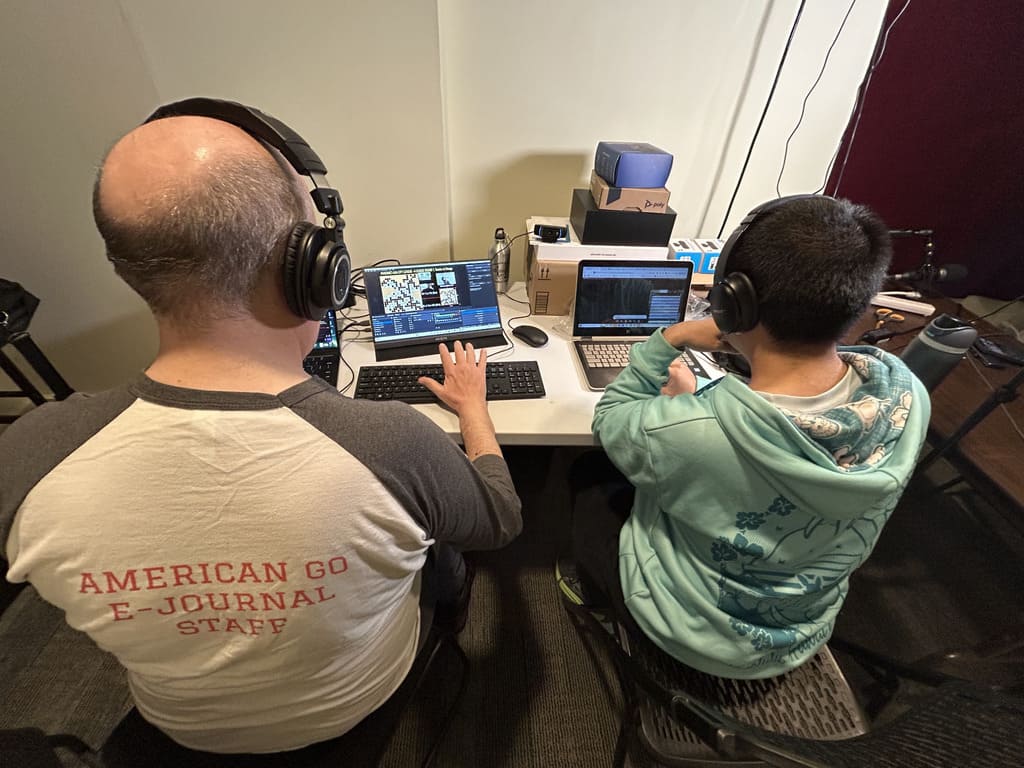
Chris Garlock: I’m pretty pro-communication. Michael and I still tend to prefer a broadcast format. It might go out on Twitch, but we aren’t usually playing, commenting on our own game, and responding to chat all at once. We’re a little old-school for that. But I appreciate what people are doing.
I came to it from journalism. This is competition, so there should be reporting on it.
Look at how coverage of sports such as golf and tennis has changed. There’s analysis, statistics, better camera work, and access to tournaments you would once never have been able to watch. I’ve always thought there was room for Go to develop in that direction. With someone willing to put substantial resources behind it, I can imagine a dedicated Go channel. But you have to make it entertaining.
Some streamers are doing that. I think there’s an opportunity to bring that together with coverage of professional play.
For the AlphaGo match, Google brought in people with experience covering top-level sporting events, including Super Bowls. They talked with us about how to present the game. Our commentary was one part of helping viewers understand what was happening.
I also spent time watching poker and reading about games, trying to understand why poker had become so popular to watch. Showing the players’ hole cards was a brilliant idea: suddenly the viewer knew something the players didn’t.
When a Go streamer explains what they’re thinking, that can offer a similar kind of access. You get to follow a decision that would otherwise be invisible.
Travis: What about players developing more outspoken personalities, or bringing trash talk into Go?
Chris Garlock: I’m not a big fan of trash talk. Maybe that’s partly generational. One of the things I’ve always liked about Go is its ethos of respect.
I recognize that some people enjoy that sort of entertainment. In tennis, you have someone like Nick Kyrgios, but he stands out because most players don’t behave that way. I’m not convinced it fits Go particularly well.
Other sports face similar questions. Baseball has been trying to work out how to appeal to a modern audience, but if you change it too much, is it still baseball?
At the end of the day, Go is two people sitting across a board in silence. You have to think about how to present that.
(For a filmmaker’s perspective on telling Go stories, our article on The Surrounding Game includes an interview with co-director Will Lockhart about finding the story and bringing it to the screen.)
Every Game Tells a Story
Travis: The AlphaGo documentary was a watershed moment for me, as I think it was for many people. One thing you and Michael do well is bridge the gap between what’s happening on the board and what an inexperienced viewer can understand. A single stone can change everything, but a newcomer may have no idea what just happened. If there were another big wave of interest, what would help bridge that gap and keep people involved?
Chris Garlock: Every game tells a story. The question is: what is that story? My favorite commentaries with Michael are the ones where we’re trying to work that out.
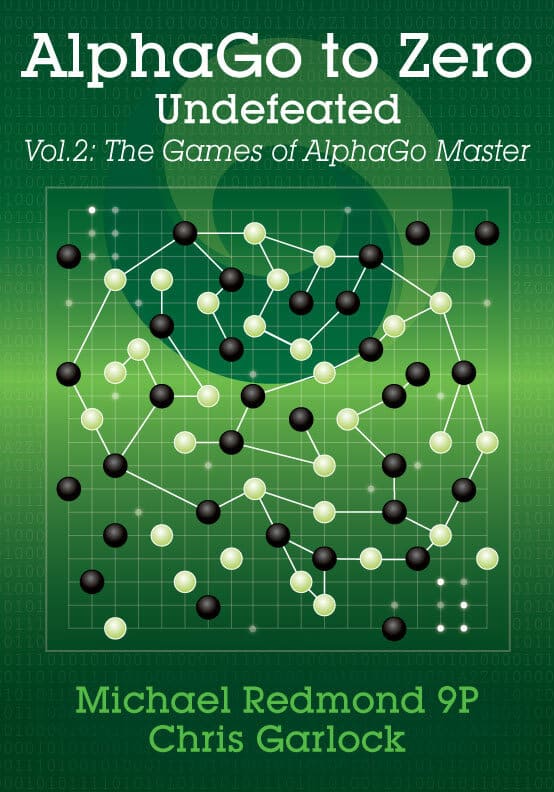
When we decided to make the AlphaGo to Zero books, I wasn’t interested in producing only a set of game commentaries. You can look at the moves and analyze them, but I wanted to bring in the history and the videos as well.
During the AlphaGo match, after doing hours of live commentary, we would also record shorter summaries of about fifteen minutes. I was really proud of those.
You’re taking a ten-volume story and turning it into a short story. To do that, you have to understand what the story is. Which moments matter? What does somebody need to see to understand how the game developed?
That was where the things Michael and I brought to the partnership really came together.
We also had to work out how to embed the videos and make the technology do what we needed. That took longer than making a conventional print book. Anders Kierulf’s work with Go Books and SmartGo has been a big part of opening up those possibilities. You should interview him.
Travis: The interactive books help with that too. I’ve used Go Books and SmartGo myself. Following moves is much easier than trying to find the numbers in a printed diagram.
Chris Garlock: Exactly. I grew up with printed diagrams showing moves one through fifty—or, God help us, one through two hundred. You had to be seriously committed to follow them.
I didn’t want to keep doing that when we had better tools. We wanted the books to include the videos and use the available technology. Working that out with our publisher took time, but I’m really proud of the result.
The different versions of AlphaGo also needed their own treatment. We couldn’t simply put everything together without distinguishing those stages.
Put the Money into Clubs
Chris Garlock: I don’t feel a need to sell the game. It’s a great game, and it’s here for people who want to discover it.
The AGA is here, and there are associations around the world, including places where Go is still relatively unfamiliar. People are working on it in India; there have been Go Congresses in Mexico. That interests me.
The game has lasted for thousands of years. It took computers a long time to crack it—though less time than we expected—and, as I see it, doing that helped unlock other problems too. There’s plenty here to be interested in.
Phil and I have played in public for years. If someone stops and asks what we’re doing, I’ll tell them it’s Go and point them to the AGA website. Phil will actually sit down and teach them. They’re different approaches.
I know that many people who start won’t stick with it. That happens. It can be frustrating for a teacher: you put six months into helping someone, and then they stop coming to the club. You feel as though you’ve wasted your time.
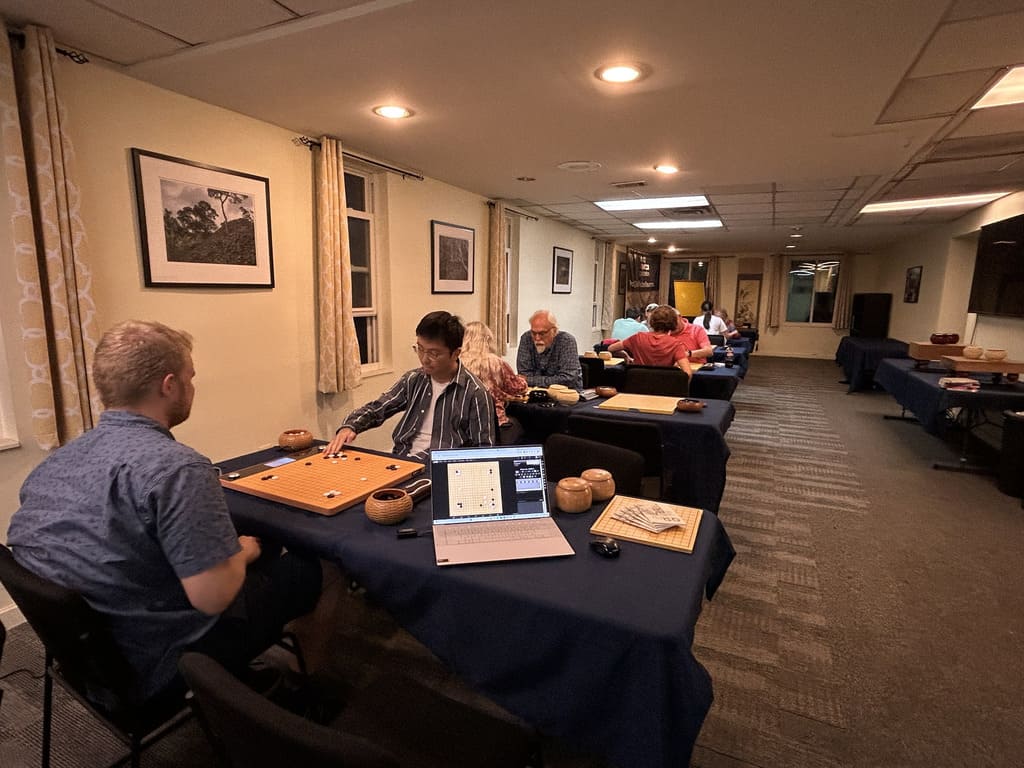
But I’ve always supported clubs. When AGA presidents have talked about giving me money to publicize Go, I’ve said, “Let’s put that money into the clubs. The clubs are where the action is.”
When you or your friends become interested, I want there to be a local club you can go to.
We’ve also been putting money into streamers. It’s an experiment, but some of those people are doing very good work. I don’t have to love everything they do. If they have people watching, let’s support them and see how it goes.
Travis: This is something I struggle with. Go fascinates me, and I think it will be with me for the rest of my life. Yet nobody in my everyday life seems to know about it unless I’ve introduced it to them. That can be frustrating.
But there’s something powerful about simply showing why the game matters to you. People can pick up on that enthusiasm without feeling that they’re being sold something. Teachers have also told me to be careful about coming on too strongly. Insisting that something is the best can put people off.
Chris Garlock: And people come back to games at different points in their lives. I see it in tennis all the time. Someone played at school or college, then got busy with work and family. In their forties, they have more time and return.
They say, “I wish I hadn’t stopped.” I tell them, “The game is still here.”
That’s how I feel about Go. Go to the club, find some books, start playing. I’ll always play a game with somebody, and I’m happy to spend time helping. The other night, a woman I was playing pickleball with asked for some tips, and we spent fifteen minutes on a little lesson. I’ll invest that time. But you have to show up. That’s the main thing.
(The question of what keeps people playing also runs through Finding Go, Finding Community: A Conversation with Devin Fraze, where we discuss local clubs, shared spaces, and lasting connections around the board.)
Giving New Commentators a Chance
Travis: After all these years, where do you find the most fulfillment in your work with the Go community?
Chris Garlock: I’m in a bit of a transition. Michael and I still do things together, and during the pandemic I encouraged him to start his own YouTube channel. His usual source of income had been cut off because people couldn’t play. We helped promote the channel, and it’s been going really well.
At Go Congresses, there are people who are much more technically proficient than I am. If somebody turns up with skills and ideas, I want to give them a chance. Sometimes we try something and it doesn’t work. That’s fine.
At one Congress, we started putting different people on commentary. Someone would say, “I’ve never done this. I’m only an 8 kyu.” Well, there are a lot of 8 kyus watching.
Our first instinct had been to get professionals and the strongest players, but much of what they said was hard for the audience to understand. So we tried 8 kyus, 10 kyus, and some kids who had grown up with digital media and were very comfortable on camera. They were entertaining.
People would ask, “What are you doing putting kids on there?” And I’d say, “Let’s give it a shot. Let’s see what happens. Let’s mix things up.”
Travis: Thank you, Chris. It’s been fascinating to hear about your experience and where you think things might go.
Chris Garlock: It’s my pleasure. Any way I can help, I’ll be happy to.
Were you already playing Go when AlphaGo faced Lee Sedol, or did you discover the game through the match or documentary? Share your story in the comments.



Комментарии