
Brilliant Minds Entranced by Go


Across time, lands, and cultures, the game of Go has captivated the minds of some of humanity’s most remarkable thinkers. Perhaps its enduring appeal is best captured in that beautiful paradox: “Simplicity is the ultimate sophistication.” There is no evidence that Leonardo da Vinci, the Renaissance polymath often credited with the celebrated phrase, ever encountered Go, but had he done so, he might have recognized in it the same balance of elegance and emergent complexity that shaped so much of his own work.
Join us as we explore the lives of extraordinary figures who, in addition to their groundbreaking achievements, shared a fascination with this ancient and enigmatic game of infinite novelty.
El go* – Jorge Luis Borges
Hoy, nueve de setiembre de 1978,
tuve en la palma de la mano un pequeño disco
de los trescientos sesenta y uno que se requieren
para el juego astrológico del go,
ese otro ajedrez del Oriente.
Es más antiguo que la más antigua escritura
y el tablero es un mapa del universo.
Sus variaciones negras y blancas
agotarán el tiempo.
En él pueden perderse los hombres
como en el amor y en el día.
Hoy, nueve de setiembre de 1978,
yo, que soy ignorante de tantas cosas,
sé que ignoro una más,
y agradezco a mis númenes
esta revelación de un laberinto
que nunca será mío.
Go**
Today, the ninth of September, 1978,
I held in the palm of my hand a small disk,
one of the three hundred and sixty-one required
for the astrological game of Go,
that other chess of the East.
It is older than the oldest writing,
and the board is a map of the universe.
Its black and white mutations
will outrun time itself.
Within it, men may lose themselves
as in love and in the day.
Today, the ninth of September, 1978,
I, who am unversed in so many things,
know I am ignorant of one thing more,
and I thank my guiding muses
for this revelation of a labyrinth
I shall never call my own.
*According to Argentinian Go enthusiast Raúl Podetti, the poem was inspired by a set of Go stones he lent to Borges’ close friend María Esther Vázquez.
**Translated by Sammy Shatner
Alan Turing

Alan Mathison Turing (1912–1954) was one of the most influential thinkers of the twentieth century. A British mathematician, logician, and cryptanalyst, he laid much of the groundwork for modern computing through his invention of the Turing machine and later proposed the famous artificial intelligence detection experiment that became known as the Turing test. During the Second World War, he played a crucial role in cracking encrypted communications, helping the Allies defeat the Axis powers in several key battles.
Less well known is that Turing was also a Go player. He learned the game during his years at Cambridge and even attempted to formalize its rules. A handwritten rule set of his is preserved in the Turing Digital Archive, written on King’s College stationery and dating from the early 1930s. It describes a variant of Go close to what is now known as No Pass Go or Nim Go. Although some of Turing’s rules are incomplete from a modern perspective, the document showcases his passion for creating precise logical systems.
At Bletchley Park, Britain’s codebreaking center where he worked during the war, Turing introduced the game to his mathematician colleague Irving John Good, who went on to become a prominent figure in British Go circles. Good wrote about the game of Go in New Scientist in 1965 and played with other notable intellectuals, including Roger Penrose.
Mao Zedong

Since at least the Han dynasty, the game of Go, or Weiqi, has been a favorite of Chinese generals, statesmen, and literati as an exercise in strategic thinking and decision-making. The very legend of its origins recounts that Emperor Yao devised it as a teaching tool to help his unruly and slow-witted son, Danzhu, develop discipline, concentration, and military prowess.
Mao Zedong (1893–1976), the founder of the People’s Republic of China, inherited this long-standing association between Weiqi and statecraft. He frequently invoked Go principles in discussions of politics and military strategy, and in his writings on guerrilla warfare compared China’s struggle against Japan to battles on a Go board, likening opposing armies to groups seeking territory, influence, and survival.
The extent to which Mao’s military thinking was consciously derived from Go – and indeed how much he actually played the game himself – remains uncertain. It is possible that Go concepts had become so deeply embedded in East Asian military thought by the twentieth century that Mao was simply familiar with its metaphors and their practical applications in warfare. According to Major General Lin Jianchao, former chairman of the Chinese Weiqi Association and a senior officer who held several important positions within the Communist Party, Mao did not hold an official rank in Weiqi but was highly knowledgeable about its theory and often used its terminology when formulating military plans. Lin recounts that during the difficult period of the Communist struggle in the Jinggangshan mountains in 1928, Mao and Commander-in-Chief Zhu De played Weiqi together at the Octagonal Building, where Mao lived and worked.
Ironically, during the Cultural Revolution of the 1960s and 1970s, launched under Mao’s leadership, Go was condemned as one of the “Four Olds” (old ideas, old culture, old customs, and old habits) and labeled a “bourgeois” pastime unfit for the new era. Go schools were closed, professional players were persecuted, and organized play stagnated until Premier Zhou Enlai helped revive the national team in 1973.
Roger Penrose

Sir Roger Penrose (born 1931) is one of Britain’s most celebrated mathematicians and physicists. Awarded the Nobel Prize in Physics in 2020 for his work on black holes and general relativity, Penrose is also known for his contributions to cosmology, geometry, and the philosophy of science, as well as for the discovery of the eponymous Penrose tilings: non-repeating geometric patterns that revolutionized the study of symmetry.
It is unclear exactly when and how Penrose learned Go, but growing up in a remarkable household of intellectuals and game enthusiasts, he may well have first encountered it at home. His father, Lionel Penrose, and his brother Oliver Penrose were also Go players, while his other brother, Jonathan Penrose, became a chess grandmaster and one of Europe’s strongest chess players. By the early 1960s, Roger Penrose had reached approximately 2–3 kyu strength, making him arelatively strong amateur player for the time.
Penrose’s Go story is connected to that of Alan Turing through the mathematician and statistician I. J. Good. Good learned Go from Turing at Bletchley Park during the Second World War, and later met Roger Penrose through his brother Jonathan. The two became regular opponents and played a total of around twenty games against each other. According to Good, they were of roughly equal strength, and after each encounter the winner would jokingly claim the title of “British Go Champion,” a tongue-in-cheek distinction in Britain’s tiny Go community.
Edward Lasker

Edward Lasker (1885–1981) was a German-born American engineer, chess master, inventor, author, and one of the driving forces behind the spread of Go in the Western world.
Lasker first encountered Go in Berlin in 1905 through a magazine article by Oskar Korschelt, the German chemist and engineer responsible for introducing the game to Germany and Austria. Korschelt himself had learned Go from the great Honinbo Shuho during his time working in Japan. The title of the article, “The Game of Go: A Rival of Chess,” amused Lasker greatly. His interest was piqued again later when he noticed the record of a Go game printed on the back of a Japanese newspaper at his local café. Lasker quickly became fascinated by the game and began playing it with his friend and fellow chess player Max Lange.
When his distant relative and world chess champion Emanuel Lasker returned to Berlin, Edward introduced him to Go. At first, Emanuel was skeptical that any game could possibly rival chess. After learning the rules and playing a quick game, he immediately recognized its strategic depth and began hosting regular Go gatherings at his home.
A meaningful encounter took place when the Laskers challenged a Japanese Go master passing through Berlin. Despite receiving a generous handicap and feeling confident in their abilities, the pair were swiftly and thoroughly defeated, leaving them humbled by the depth of Japanese Go.
In 1934, twenty years after moving to the United States, Edward Lasker published his influential book Go and Go-Moku, which introduced thousands of English-speaking readers to the Asian game. The following year, he co-founded the American Go Association with fellow enthusiasts Karl Davis Robinson and Lee Hartman. These achievements established him as one of the central figures in the development of Western Go. In 1971, Lasker was recognized by the Nihon Ki-in – the Japanese Go Association – which awarded him the Okura Prize for promoting Go around the world.
For a man who spent his life mastering chess, some of his most memorable words were about Go: “While the baroque rules of Chess could only have been created by humans, the rules of Go are so elegant, organic, and rigorously logical that if intelligent life forms exist elsewhere in the universe, they almost certainly play Go.”
Lise Meitner

Lise Meitner (1878–1968) is perhaps the most important twentieth-century scientist you have never heard of.
An Austrian physicist who later fled Nazi Germany for Sweden due to her Jewish ancestry, Meitner provided the first scientific explanation of nuclear fission – the physical process by which heavy atoms such as uranium split into smaller ones and release enormous amounts of energy – and in fact coined the term together with her nephew, physicist Otto Frisch.
Although her work led to tremendous breakthroughs in modern physics, she was controversially excluded from the 1944 Nobel Prize in Chemistry awarded to her longtime collaborator Otto Hahn, a decision still regarded as one of the Nobel Committee’s greatest blunders.
Even less well known is that Meitner was also among the earliest Go enthusiasts in the German-speaking world. When physicist Leopold Pfaundler launched the first German-language Go magazine in 1909, the Deutsche Go-Zeitung, Meitner was reportedly among its forty-odd subscribers. This made her not only one of Austria’s earliest known Go players but also one of the first female Go players in the West. According to former Austrian Go champion Helmut Wiltschek, who studied physics in the 1960s, Meitner may even have played Go with Einstein during the years they both worked together in Berlin, although no surviving game records confirm this.
Albert Einstein

Albert Einstein (1879–1955) needs little introduction. The German-born theoretical physicist who revolutionized our understanding of space, time, and gravity through his theory of relativity is one of the most recognizable figures of the modern world.
Unbeknownst to many, Einstein was also involved with the ancient game of Go. He most likely learned it in the 1920s from his friends Emanuel and Edward Lasker, two central figures in the histories of chess and Go, whom he came to know during his time in Berlin.
The most famous documented Go-related moment in Einstein’s life came in 1951, when Japanese professional Go player Fukuda Masayoshi 6p visited him at Princeton University. The meeting was arranged through the Japanese mathematician Yano Kentaro, who was also a member of the Institute for Advanced Study at Princeton and was well acquainted with Einstein at the time. Fukuda presented Einstein with a Go board and stones from the Nihon Ki-in, and proposed arranging a game between Einstein and fellow Go enthusiast and Japanese Nobel laureate physicist Hideki Yukawa. Einstein graciously declined, admitting that he did not play Go very well (Yukawa himself was a high amateur dan player).
The visit was brief, but Fukuda later recalled feeling his entire being swell with excitement at meeting one of the greatest minds of the age and presenting him with a game that represented centuries of Japanese and Chinese intellectual tradition. Einstein was later awarded an honorary dan certificate by the Nihon Ki-in.
Georges Perec

Georges Perec (1936–1982) was a French writer renowned for his highly experimental approach to literature. A member of the Oulipo literary group (Ouvroir de Littérature Potentielle – Workshop of Potential Literature), an offbeat collective whose raison d’être was to create works based on self-imposed constraints, Perec transformed the most restrictive rules into endless sources of creativity.
His best-known novel, A Void, was written entirely without the letter e, the most common letter in the French language. His other works explored palindromes, puzzles, permutations, and intricate mathematical structures. Across his writing, Perec demonstrated repeatedly how originality can emerge from the deliberate embrace of boundaries…and lists. The man loved his lists.
It’s hardly surprising then, that Perec would be drawn to the game of Go. In 1969, he co-authored Petit traité invitant à la découverte de l’art subtil du go (A Short Treatise Inviting the Reader to Discover the Subtle Art of Go) with mathematician-musicologist Pierre Lusson and mathematician-writer Jacques Roubaud. The book was the first major French-language work devoted to Go, but its purpose extended beyond simply explaining the rules of the game. The authors sought to communicate something of its elegance and philosophy in a sort of literary meditation on the art of playing and creating.
For Perec and his fellow Oulipians, Go was much more than a board game – it was the metaphor par excellence for their own creative process. Like a writer facing a blank page, the Go player begins with an empty board: Whether black and white stones or ink markings on paper, governed by a handful of simple rules, both give rise to ideas, narratives, conflicts, and an infinite landscape of possibilities. The authors conclude the opening section of their book with the following line: “There is only one activity that can reasonably be compared to Go. By now, you will have understood that it is writing.”
Demis Hassabis

Sir Demis Hassabis (born 1976) represents the beginning of the modern technological chapter of Go’s long history. A British AI researcher, entrepreneur, and game designer, he is the founder of DeepMind, the company behind AlphaGo.
From a very young age, Hassabis was fascinated by games as a lens through which to explore cognition. A chess prodigy from the age of four, he reached master level by thirteen with an Elo rating of 2300 and captained several England junior chess teams. Hassabis also taught himself computer programming and immersed himself in a wide variety of strategy games, including Go.
For decades, Go was considered the holy grail of artificial intelligence. Unlike chess, where brute-force search can produce world-class play, Go presents an astronomical number of possible board positions and relies more heavily on intuition and long-term strategic judgment.
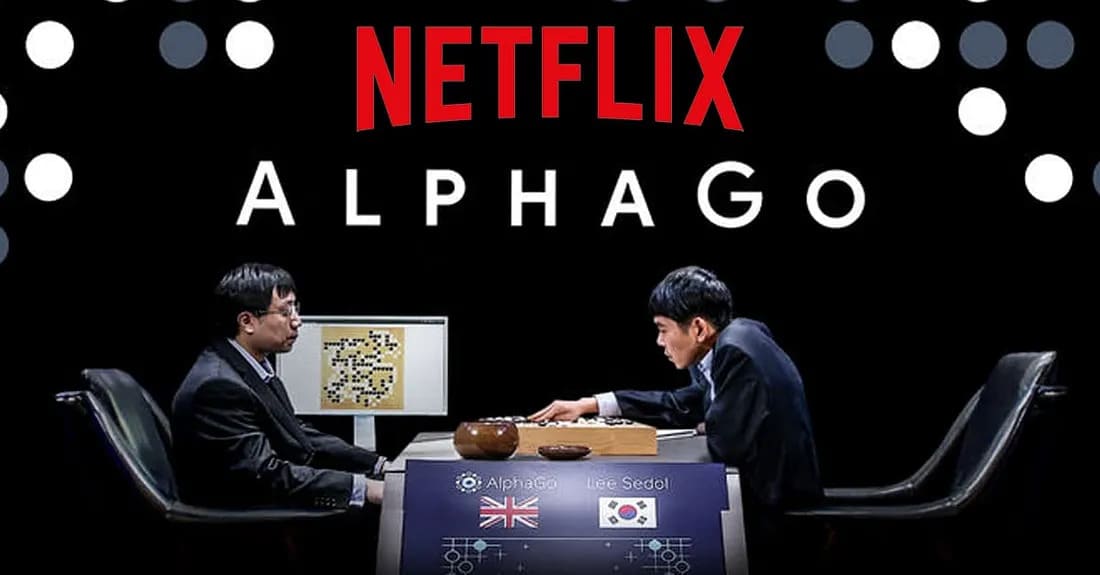
In 2016, DeepMind’s neural-network-based program AlphaGo defeated South Korean champion Lee Sedol, one of the strongest Go players in history, by four games to one. The match became a watershed moment not only for Go but for artificial intelligence as a whole, as AlphaGo demonstrated that machines could discover strategies even the world’s strongest professionals had never considered.
Following AlphaGo’s historic victory, DeepMind went on to make major advances in machine learning, publishing numerous seminal papers and developing AI systems for scientific research. The company has also supported Go communities, particularly youth programs in the United Kingdom. In 2024, Hassabis shared the Nobel Prize in Chemistry with John Jumper and David Baker for pioneering AI-driven methods for predicting protein structures.
Hassabis has described DeepMind’s mission as first to “solve intelligence,” and then to use that intelligence “to solve everything else.” While he believes that AI has the potential to become one of humanity’s most beneficial technologies, he has emphasized the importance of addressing its ethical and safety challenges as the technology continues to evolve on an exponential scale.
Xi Jinping

Xi Jinping (born 1953), president of China and general secretary of the Chinese Communist Party, is another modern political figure connected to the game of Go. Like many Chinese leaders before him, Xi’s interest in Weiqi reflects the game’s longstanding role in leadership, diplomacy, and statecraft.
Xi’s first exposure to Go may have come through his close childhood friend, the legendary Chinese Go master Nie Weiping. The two attended the same middle school in Beijing and bonded during the turmoil of the Cultural Revolution, a period of upheaval that deeply affected their families. They maintained their friendship into adulthood and supported each other’s careers, with Xi reportedly helping secure funding for Nie’s Go team during his tenure as party secretary of Zhejiang Province. Xi has long praised Nie as “the pride of Chinese Go,” while Nie described Xi as a competent amateur player with a genuine appreciation for the game. Nie, who passed away in 2026, left behind a towering legacy as both a national hero and one of the greatest figures in the history of Chinese Go.
Unsurprisingly, Xi is not the only modern leader to appreciate the game. During a diplomatic visit to South Korea in 2025, President Lee Jae Myung gifted Xi a traditional Go board crafted from prized Torreya nucifera wood from Jeju Island, considered among the finest woods for Go boards. Designed specifically to hold Go stones, the gift echoed an earlier exchange between the two leaders and symbolized the hope for continued friendship between the two nations.
Paul Erdős

Paul Erdős (1913–1996) was one of the most extraordinary mathematicians of the twentieth century, and arguably one of the most unusual minds to have ever existed. Born in Budapest, Hungary, to a Jewish family, he displayed a prodigious aptitude for numbers from an early age and published his first paper at just 17.
While Erdős left an indelible mark on number theory and combinatorics – the branch of mathematics concerned with counting, arranging, and combining objects – he became almost as famous for his eccentric lifestyle as for his brilliant theorems. With no permanent home, no family, and two tattered suitcases containing the entirety of his possessions, he rejected the conventional trappings of domesticity and roamed the globe as an “itinerant mathematician.” Believing mathematics to be a social activity, Erdos spent the better part of his life crisscrossing continents from one conference to the next, appearing unannounced on colleagues’ doorsteps and proclaiming, “My brain is open.”
Erdős’ only known hobby was Go, and he particularly enjoyed games that featured intense battles. The Cambridge mathematician Charles Matthews, who played against him, estimated him to be a lower-kyu amateur. By all accounts, Erdős played Go the same way he did mathematics: Fast, furious, with childlike exuberance. He was fond of saying, “I may play Go wrong, but I must not play slow.”
Erdős remains by far the most prolific collaborative mathematician in history, having published more than 1,500 papers with over 500 coauthors. His staggering output inspired the creation of the Erdős number, which measures the shortest path between a mathematician and Erdős through coauthorship. The concept became a badge of honor among mathematicians and eventually a model for studying networks of collaboration within the scientific community.
Go aficionados later adapted the Erdos number into the Shusaku number, tracing connections between players and the legendary nineteenth-century Japanese master Honinbo Shusaku. Sensei’s Library offers several possible paths for calculating your own Shusaku Number.
David Lee Roth

David Lee Roth (born 1954) is perhaps the most unexpected name on this list. Best known as the charismatic lead singer of the American rock band Van Halen, Roth developed a passion for Go later in life and has since become one of the game’s most enthusiastic advocates.
In 2016, Roth began studying Go with Korean professional player Myungwan Kim 9p, who moved to the United states in 2008 to teach and promote the game as a representative of the Korean Baduk Association. Roth shared his Go journey with Kim online, which includes 2-hour weekly lessons and homework assignments in between. He highlighted the steep learning curve of the game by joking, “I can’t understand half of what my teacher says.”
Roth believes Go’s strategic depth makes it an ideal tool for developing intuitive problem-solving skills through divergent thinking, the process of generating creative ideas through unstructured, open-ended exploration.
Roth attended the 2016 match between DeepMind’s AlphaGo and Lee Sedol in Seoul, South Korea, and shared his thoughts on the event in an episode of his podcast, The Roth Show. From rock stages to Go boards, Roth’s story is a testament to the game’s enduring ability to inspire minds of all kinds.

Do you know of any other remarkable figures, past or present, who played or play Go?
Let us know in the comments!





It takes a wonderfully nimble mind to weave Da Vinci, Borges, and modern AI into a seamless love letter to Go. Tremendous work, my friend.
Means a helluva lot coming from you :))
@Sammy Shatner Keep writing!
Thank you for this fascinating and beautifully written article! I love discovering the quieter passions behind great minds, and it’s beautiful to see how Go has intrigued and influenced such a fascinating range of people, from Turing to David Lee Roth. It says so much about the depth of the game and its unique connection between strategy, intuition, and creativity!
Exactly! Thank you for the lovely comment! <3