
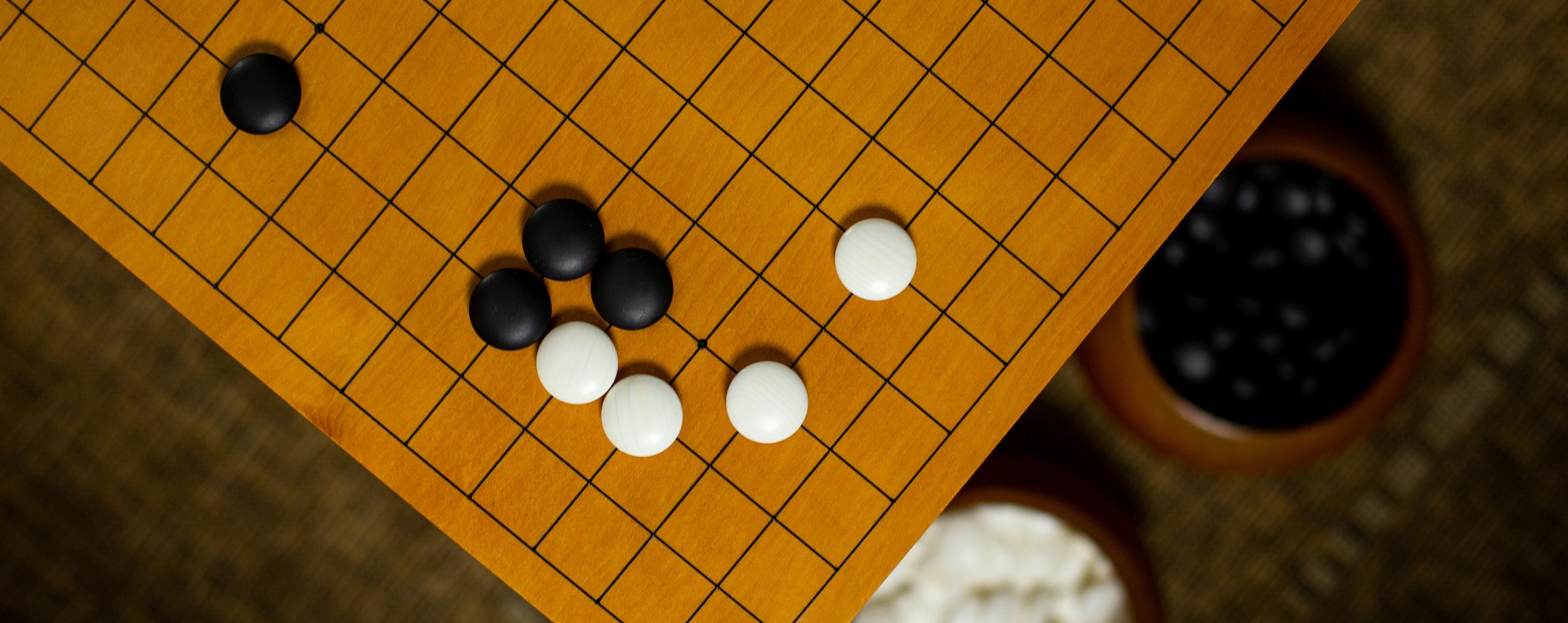

The game has just started, you played the first corner sequence and something clearly went wrong. Sounds familiar? Those are issues with playing the initial corner variations — joseki.
In this course you will learn the main simple joseki patterns and understand what they are made of. How not to screw things up if your opponent chooses a difficult variation and how to make it complicated if necessary. The joseki will no longer seem like scary sharp-toothed monsters, more like a set of useful tools. What’s left now is to choose a suitable one at the right moment.
Suitable for: 15–7k who are already familiar with the basic opening principles.

Course Contents
Teacher


Course Includes
 11 Lessons
 9 Quizzes
Reviews


I liked the content, but found it difficult to retain the details for the exercises. I'm currently somewhere around 12-18 kyu, so maybe I should come back to this course later.

This course was perfect! It really helped me improve.

Clear and lively, as usual.

The course was excellent, very helpful, and definitely worth watching. I learned a lot. As constructive feedback, I would have liked to see some more advanced variations as well. The focus was mainly on simple, beginner-friendly play, which is great for new players, but it wasn't always the most accurate according to AI. A few stronger examples would make it even better.

Excellent as usual. Thanks for the course!
Great teacher! Great course!

It's an excellent course, you get the basics of Joseki and the idea behind it, likes he says in the end you don't need to remember joseki by heart. Learn a few to get a feeling but the important part, is to play more games, try to apply some but don't start learning every single Joseki.
There was a lot to learn. This course will require more practice on my own and some more experience at the board just as our instructor advised. Limited number of joseki with limited variations makes it easier to apply what I learned to my games.
I play go for several years now. It was good to come back to this course and learn the reasoning behind some joseki moves and see what impact AI had on traditional Josekis.

I watched this course after playing 3 months on GoQuest9x9 without studying any Joseki beforehand. I even invented San-San invasion (“submarine”) myself in there :). So it was indeed useful to me. Especially the direction part and the hane tricks. I also got a habit to start with komoku playing white and Takamoku playing black and really hoped to learn more about Takamoku. Oh boy how did I laugh!)

Liked the course. All the variations are hard to remember. Would be nice if there was a dedicated Joseki study page to learn them and practice them.
Good explained and structured

This is the first course that made me question whether I can learn go. The explanations are too brief. As a beginner, I would benefit more from deeper review of fewer josekis. But that's what playing games is for! Overall a good course that gave me a lot to study.
Çok iyi bir kurstu elinize sağlık
A fantastic starting point to understand joseki, I will definitely rewatch it a couple of times for a better understanding!
I really needed more Joseki knowledge, and this was perfect for me! Learning Joseki in a dry manner wasn't for me, but the course gave me the theory I was missing and the puzzles are great to be able to re-play the situations multiple times. I'll reset and replay them, to really make it stick.

Loved this course but I will need to repeat it some times before I fully get everything

What an absolutely insane course. Loved every puzzle, will be definitely revisiting

So good at demystifying a completely mystifying part of the game. Wonderful course.
muy bueno