
“With 600 of Your Closest Friends”: Trevor Morris on Running the Biggest U.S. Go Congress Ever

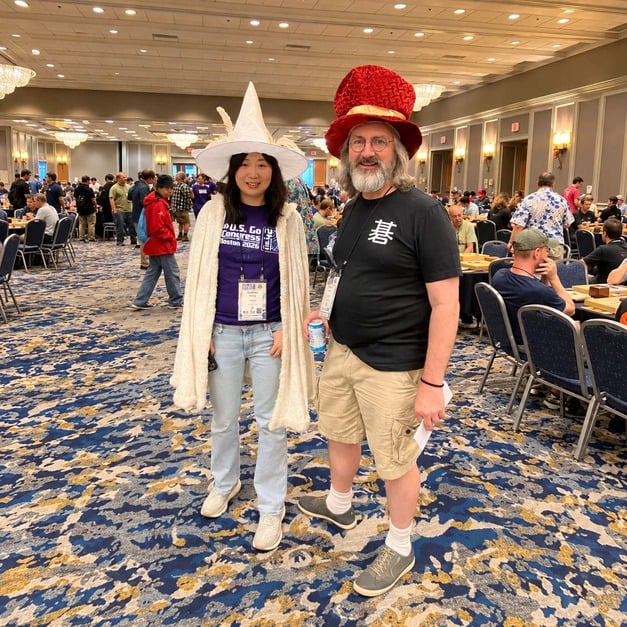
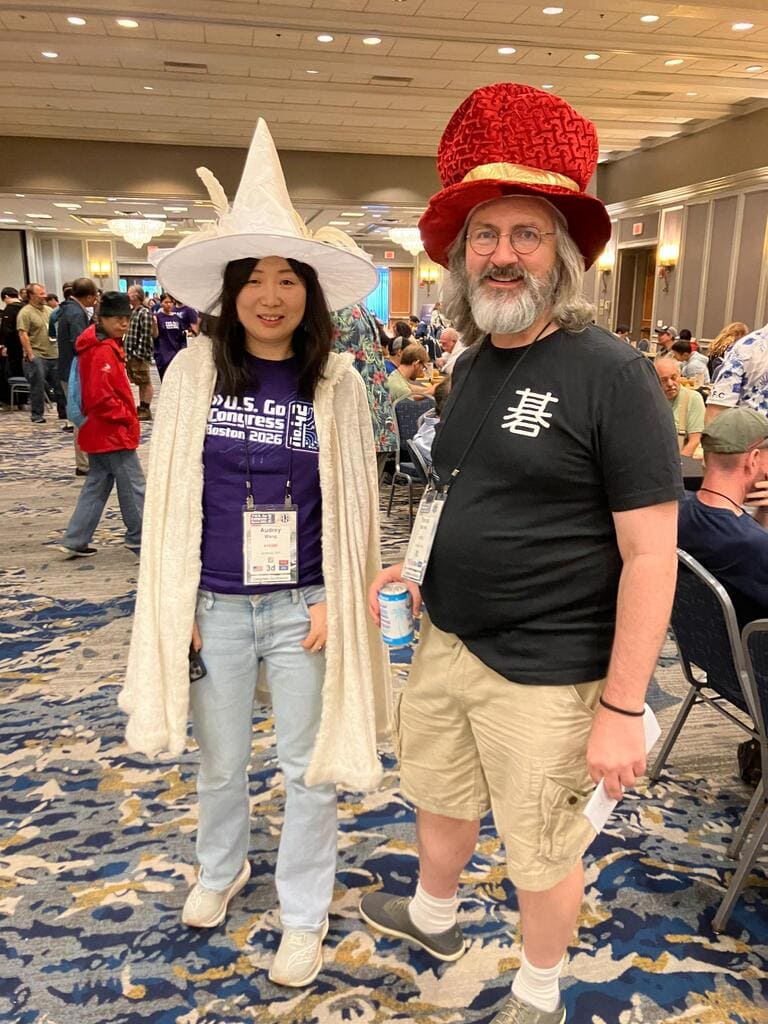
The U.S. Go Congress is the largest annual Go event in the Americas: a full week of tournaments, lectures, pro game reviews and late-night side events, in a different city every year. The 2026 edition ran from July 25 to August 1 at the Boston Marriott in Newton, just outside the city, and set a record: 651 people came, and 477 of them played in the U.S. Open, the main tournament. Trevor Morris co-directed it with Audrey Wang. He is a software developer, a member of the American Go Association (AGA) board, and a Congress veteran: he was at the very first one in 1985, as a 16-year-old. We asked him what the week is actually like from the inside, what went wrong, and why someone from Europe should consider making the trip.
Trevor answered our questions in writing; we have edited only lightly, for length and clarity.
Introduction
Trevor, please introduce yourself to our readers. How did you come to Go, and how did you end up co-directing the biggest U.S. Go Congress in history?
I first learned Go as a pre-teen when my mother bought an Avalon Hill bookshelf game at a local game store. I knew little of just how popular Go was around the world. I simply enjoyed playing it with my father and brothers.
The location had already been decided for Boston 2026 when I stepped up. I reached out to Audrey, offering my help, and she asked if I wanted to be co-director. I jumped at the opportunity. I had long wondered why so many Congress directors would burn out. I also wanted to understand why it is such a huge ordeal to put on the event. As a board member, I constantly struggle with where the AGA should put its energy. We put a huge amount of energy into the Congress, which is very important as our flagship event. But I worry that we don’t put as much energy into recruiting new players throughout the country. Putting on a Congress felt like a great way not only to contribute, but also to better understand where and why we put our energy.
You were sixteen at the very first Congress in 1985. What do you remember from it, and what has stayed the same after forty years?
I remember one game from the U.S. Open in 1985 where my opponent was saying to himself how far behind he was, causing me to play passively. I’m not sure whether I won that game or not, but that gamesmanship moment still sticks with me.
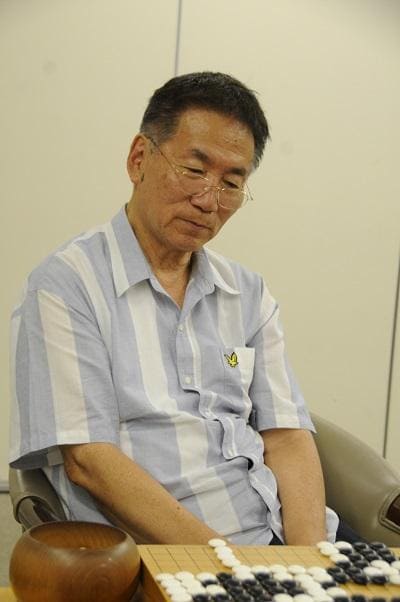
As a 16-year-old at the first U.S. Go Congress, I was thrilled to see Rin Kaiho, one of the world’s strongest players, in person in Maryland. Remember, this was before the internet, so nearly everything I knew about the Go world came from the few Go World magazines I’d stumbled across. I’d never even heard of or seen Go Review.
On the last evening, I recall Thomas Hsiang showing my older brother, Doug, and me some famous Go problems. I was especially enamored of one of them. It’s well known and has a name I only learned years later..
(A Go Discord identified it: it’s “Bright Pearl Comes Out from the Sea”, problem 1 of the Xuanxuan Qijing, a 14th-century Chinese collection.)
Meanwhile, at the other end of the large conference room, Haskell Small, the Congress director, was playing a teaching game with Rin. No one else was watching, and I vividly remember my brother discouraging me from going over. “This is Haskell’s special benefit for running the Congress. Let’s let him enjoy it in peace.”
Really, what keeps me coming back after all of these years is the community. Every year I get to see all of the great friends that I’ve made over the decades.
What a Congress actually is
For a reader who has never been to a Go congress: what does a typical day look like, from the moment you wake up in the hotel to the last game at night?
A day at the Congress, according to Trevor
- 9 am – 1 pm. U.S. Open game.
- 1 pm – 6 pm. Review the morning game with a pro. Attend lectures or simuls. Youth–adult pair Go, one of my favorite afternoon activities (this year on Tuesday).
- 7 pm. Side tournaments: 9×9, 13×13, lightning, Crazy Go, etc.
- 9 pm – 11 pm. Socializing: cards (Pits!), poker, etc.
- 11 pm – 1 am. Midnight Madness!?
(Simuls are simultaneous games, in which a professional plays a dozen or more amateurs at once. In pair Go, two-player teams alternate moves without consulting. Midnight Madness is a tournament that starts at 11 pm. Pits is a rummy-style five player card game introduced many years ago to Go Congress attendees by some European visitors.. – ed.)
This year 651 people came, and 477 of them played in the main tournament, a record. Why do you think so many people chose to spend a whole week of their summer in one hotel playing Go?
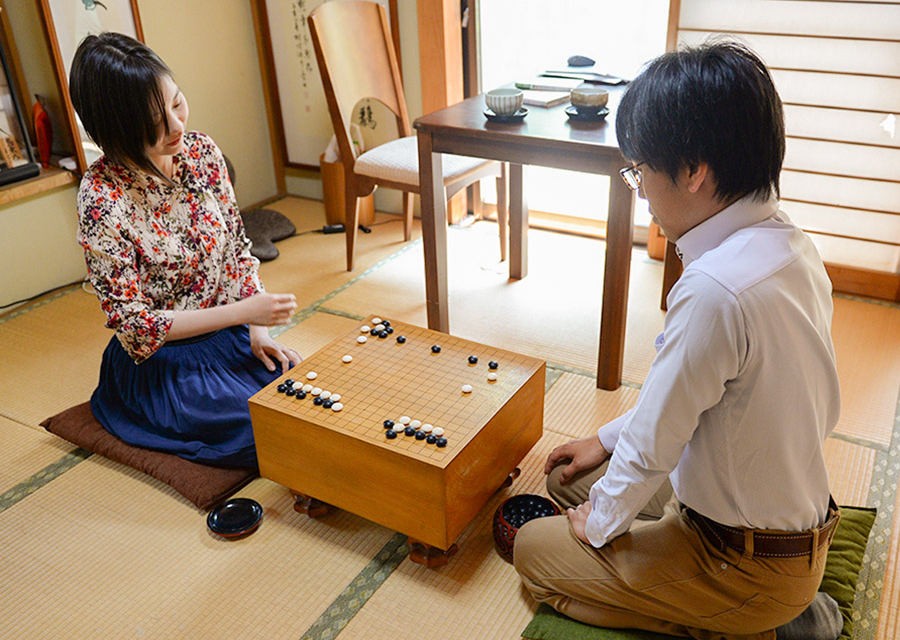
It’s all about the community. We have players from age 4 through 92. We have people of various genders, backgrounds, educational levels, etc. Other communities work hard to achieve the type of diversity and inclusiveness that our community has.
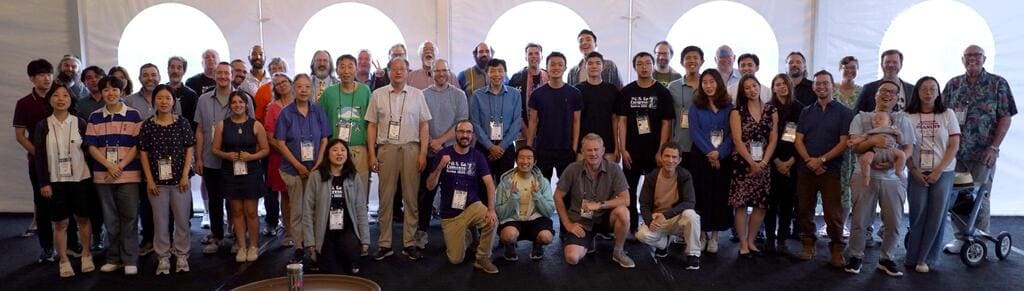
Over 120 youth players were sponsored by the AGF to attend. I’m particularly moved by this. At age 16 in 1985, I was the only youth player at the Go Congress. This change bodes well for the future of Go in America.
There is so much going on in this “one hotel” that an avid Go player has little reason to venture far. With over 600 of your closest friends, who wouldn’t want to come?
And, of course, Boston is an excellent draw. It’s a wonderful city to visit!
(The AGF is the American Go Foundation, a charity that supports youth Go in the U.S. – ed.)
Boston is a big city, and the venue was a hotel on the Charles River rather than a university campus. What did that change for the players, for better and for worse?
What a great question. We organizers continue to struggle with the choice of venue. In the United States, universities have become less and less attractive to us. Not only have they come to treat their facilities as profit centers, raising their rates, but they’ve also made the contracts more and more arduous.
The banquet was very well received. The hotel staff was very accommodating. The playing rooms, lecture halls, and the kids’ room were all very close together. We basically took over the hotel. No 15–30 minute walks across campus to get from one room to the next or to your dorm room.
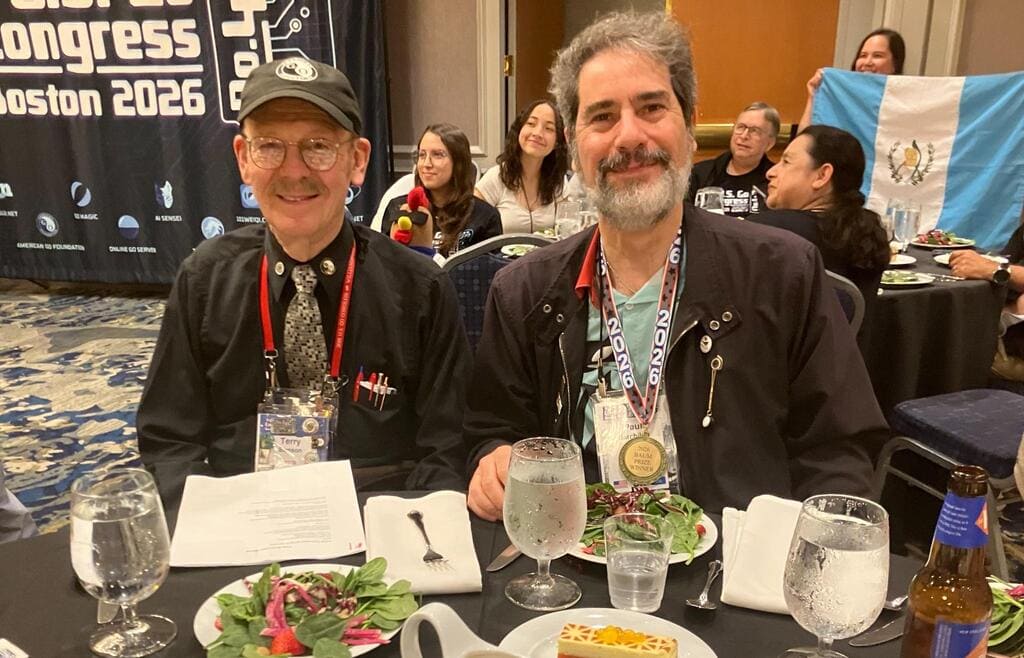
The biggest complaint that we heard about having the Congress at this hotel was the lack of communal dining. Last year in Austin, nearly everyone had every meal at the university dining hall. This shared dining experience has long been a treasured hallmark of the Congress experience. It’s such a great way to meet with old friends and make new ones.
Behind the scenes
You co-directed the Congress with Audrey Wang, and there was a whole team behind you. Who else made it happen, and what was the hardest decision you had to make?
The unsung hero of organizing the Congress this year was Eric Wainwright. He’s been the AGA Congress liaison for the past few years. His experience, expertise, and hands-on organizational skills were vital in pulling together the various pieces for Congress.

Eric, Audrey and I also relied heavily on a very strong group of volunteers. The list is too long to go into here, but we had several team leads that helped organize the bulk of the work.*
By far the hardest decision was to change not only the venue but also the date. We were very disappointed that the new dates overlapped with the first week of the European Go Congress. Unfortunately, we could not finalize the contract with the university, and we met an impasse in negotiating with them. We owe a debt of gratitude to AGA President Gurujeet Khalsa, who put in a huge amount of effort not only in finding this alternate location, but also in visualizing the layout of the entire event. I cannot overstate how much his leadership shaped the flow of this, our most successful Congress to date.
* Among them: Galen St. John (IT), Josh Larson (marketing), Matthew Hershberger (TD coordinator), Jonathan Green (registrar) and Juelz Kwan (pro coordinator).
You are a software developer, and this year the Congress introduced a “prizes app”: hundreds of donated prizes, players ranking their favourites in advance, and the app handing them out by tournament results. Why, and did it work the way you hoped?
I envisioned the app, but Josh Gum built it. James Putnam put in a lot of the legwork reaching out to over a dozen vendors and entering their prizes into the app. The app worked exactly as envisioned. Over 400 prizes were automatically delivered via email on Saturday afternoon. Players generally found the app easy to use.
I’ve been running the New England Open for the past five years. For the past few years, I’ve had more prizes than players. Each player gets one high-value prize and one low-value prize, until the prizes run out. We start with the 5-game winners, then proceed through the 4-game winners, and so on. So the better your results in the tournament, the better the prizes that are still left on the table. At the scale of under 100 players, this prize award chaos is quite fun, and everyone seems to really enjoy the mayhem. They also seem to value the prizes that they select this way.
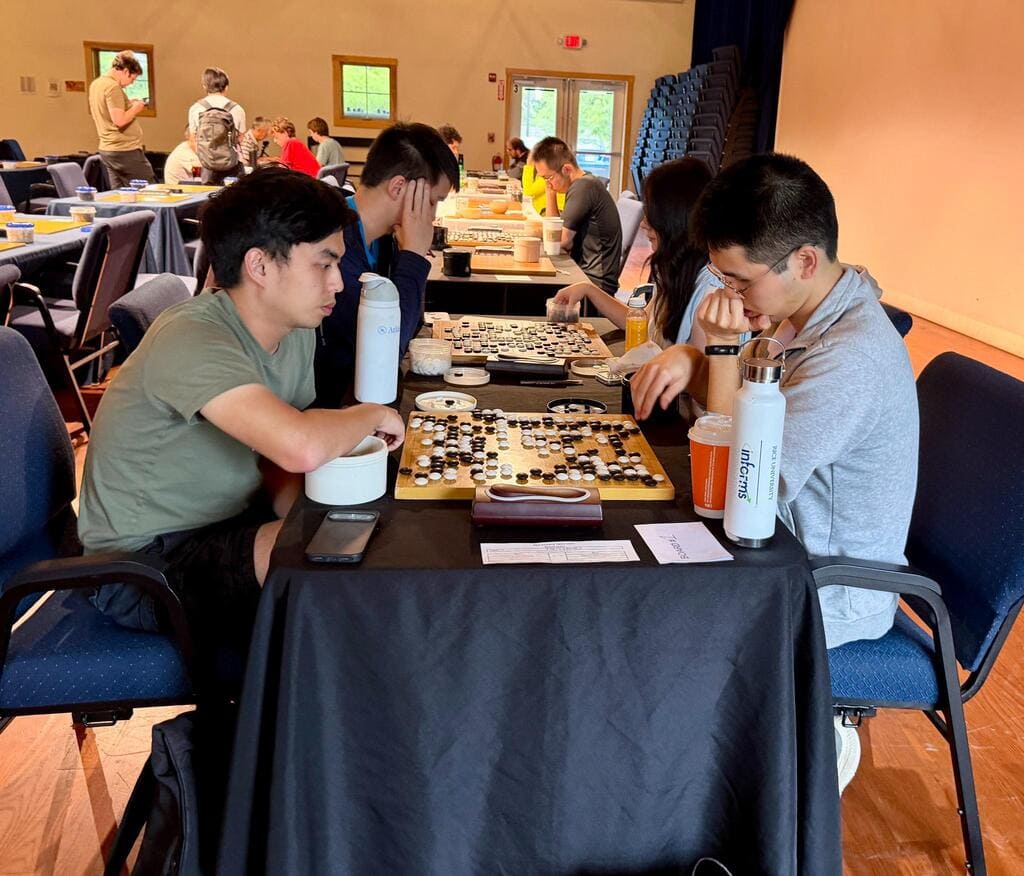
I was motivated to try the prizes app this year at Congress because this type of awards ceremony simply doesn’t scale to Congress size. Unfortunately, the prize redemption rate was quite low, and the Congress feedback form indicated lackluster uptake for the prizes app. It’s unclear to me whether it is an experiment worth continuing. I still consider it a worthwhile experiment, and am proud of the exposure we were able to give to all of the vendors. I also know that many players did highly value their prizes. Stay tuned for the uncertain future of the prizes app!
(Thirteen sponsors donated 474 prizes worth over $18,000 in total, according to the AGA. – ed.)
What went wrong that nobody noticed? Every organiser has a story like that.
By far the biggest snafu was round 1 of the U.S. Open. Over a dozen players who never checked in were paired anyway, so their opponents had no one to play. We didn’t realize it until 9:30 am, a full half hour into the round, so it was too late to re-pair. These opponents missed their first-round game because of our mistake, and I felt terrible about it. The Congress team came up with a creative offer to help offset the sting: each of them got premium placement in the pro simuls, and several told me they appreciated the gesture and enjoyed their simul games.
People
There were more than a dozen professionals at the Congress, from Michael Redmond 9p to Cho Yeonwoo, who is well known from YouTube and Netflix. What can an ordinary kyu player get from a pro during the week, and what did you see this year that you’d tell your friends about?
Cho Yeonwoo was just as charming and personable live as she is on video. It was a joy, not only for me, but for everyone at the event to meet her in person.
My favorite moment with Michael Redmond was when he poked fun at me about the timing of the board auction. The auction has long been a staple of the Saturday night closing ceremony. This year we moved it to Friday night to shorten the ceremony. Michael’s featured presentation was also on Friday evening, but some of us worried that the auction would not fetch as much as it would on Saturday night. I didn’t even know that he was aware of the debate. It was really fun to see this light-hearted side of our national Go hero! Not to worry, though: the AGF raised over $2,000 after a bidding war erupted over who would take home the board signed by Michael Redmond.
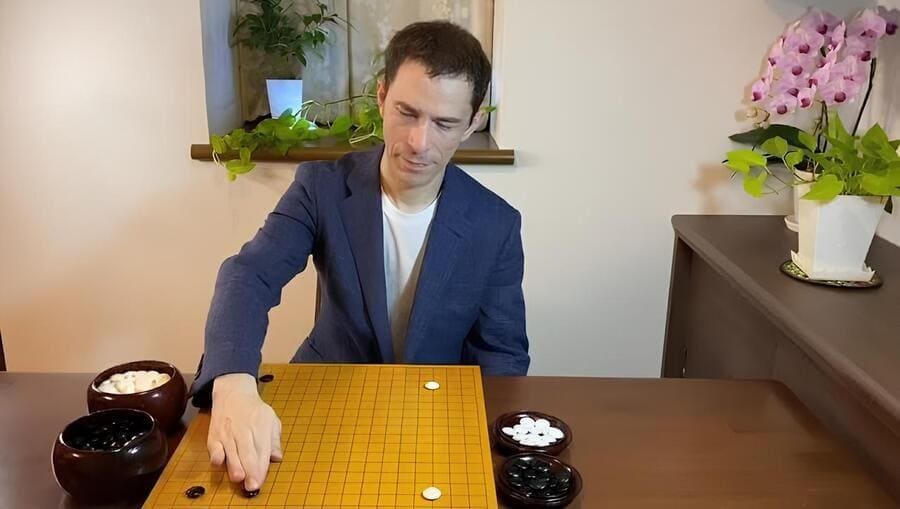
One of the best things that a kyu player can get from a professional is one-on-one game reviews. For several hours each day, anyone could come to the game review room, typically with their opponent, and have their game reviewed by a pro. The clarity and insight that pros provide is so useful. In just a few minutes, they can often spot some key weaknesses in your game and recommend areas for you to focus on.
I would be remiss not to mention the DDK (double-digit kyu) track that we had this year. Several strong amateurs presented this series of lectures. These lectures, focusing on entry-level topics, were all well attended and appreciated.
What is the best thing you saw at the Congress that had nothing to do with the tournament results? A game between strangers, a kid’s first win, something at midnight?
I was happy to see the return of Midnight Madness, a tournament that started at 11 pm each night. It was quite well attended. Truly for the die-hards, nearly all of whom would have a 9 am U.S. Open game the next day!
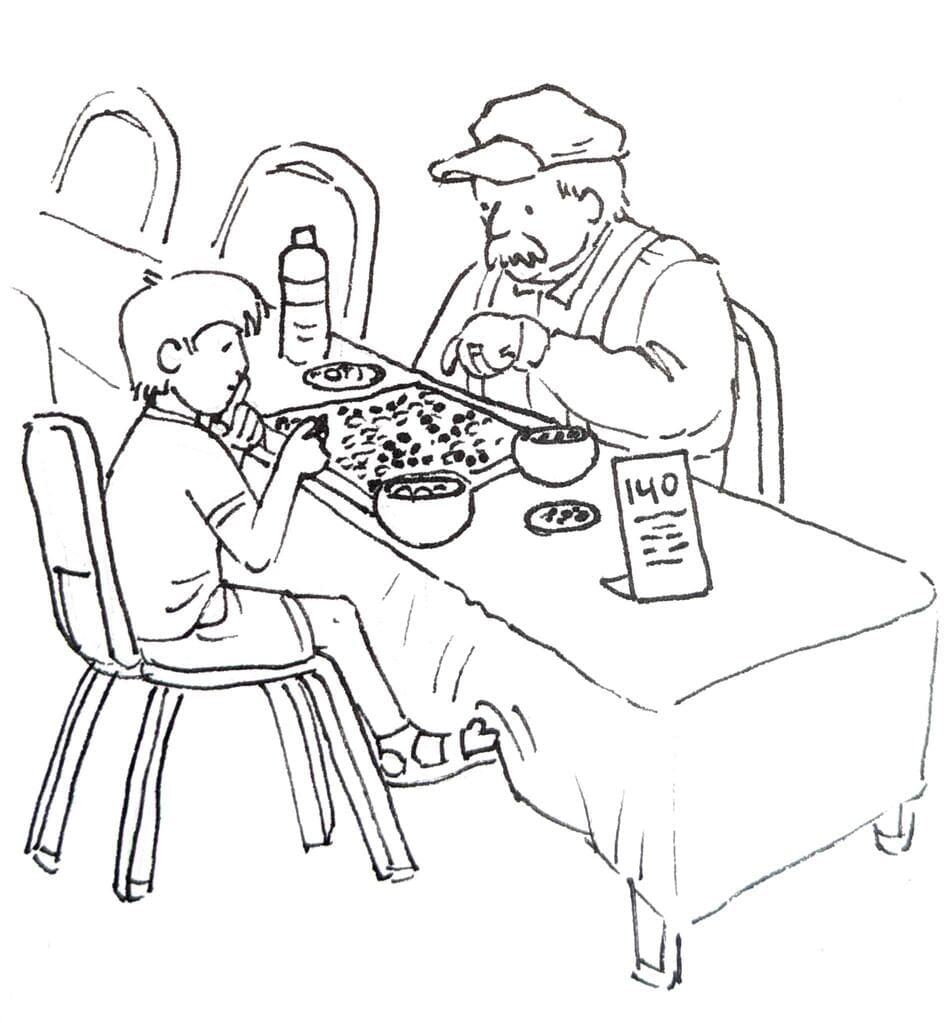
My favorite quote of the week came with a wonderful illustration. A Congress attendee posted it on Tumblr during the week, and it has since collected over 22,000 likes:
I’m at a convention for the game of Go with a friend who is almost 84 years old, and he is constantly being accosted by elementary schoolers who want to play him because every year there is a prize for whoever plays a game with the biggest age difference between players. So every time I go to look for him, I see this:
Looking ahead
You’ve long pushed for more online Go: Discord, streaming, hybrid events. After Boston, what can an in-person Congress give that the internet can’t, and what should it borrow from the internet?
Many of us, during Covid, experienced “Zoom fatigue.” There is nothing like being with other people with a shared passion in real life. You will make some of the best friends you will ever have at Go Congress. You may not see them for a year, but it will feel like it’s just been days.
One thing that we continue to struggle with is ratings. Online servers have us beat hands down on this one. The number of games per year per player that feed into our ratings system is minuscule compared to the online servers. AGA President Gurujeet Khalsa put together a plan to make a dent in this disparity. There’s now a monthly AGA-rated self-pair tournament that any AGA player can participate in. Simply agree ahead of time that your in-person game will be AGA rated, with anyone, anywhere, and submit it to the monthly rating tournament on Leago.
To finish: a European reader is thinking about coming to the next U.S. Go Congress. What would you say to convince them, and what’s the one piece of advice for a first-timer?
A great part of the U.S. Go Congress is that it is in a different city every year. Each local team has the opportunity to put a unique spin on the event. It’s always a little bit different.
You will be welcomed with open arms. You will find it easy to make new friends.
Accept that it will be more expensive than a European Go Congress. Seattle, in 2027, is a wonderful city to visit. Allow for some time before or after Congress to sightsee. Do not play in the Die Hard tournament on Wednesday; instead, join one of the Congress-led outings, be it to hike Mount Rainier or visit the Space Needle.

I really enjoyed the EGC in Toulouse recently, and was disappointed to miss Turkey this year. Perhaps you’ll see me in the Netherlands in 2027. My partner and I love using Go events as an excuse to travel not only around the U.S., but around the world!
Boston 2026 in numbers
- 651 attendees, 477 players in the U.S. Open: both records
- Players aged 4 to 92
- 120+ young players sponsored by the American Go Foundation
- More than a dozen professional players
- 474 donated prizes from 13 sponsors, worth over $18,000
- $2,000+ raised at the auction for a board signed by Michael Redmond
- 41 years since the first Congress in Westminster, Maryland, in 1985
Going next year?
The 2027 U.S. Go Congress will be held in Seattle, Washington.
The European Go Congress 2027 takes place in ’s-Hertogenbosch, the Netherlands, from July 24 to August 7.



Comentários