
🎥 The Open Skirt: The Most Misunderstood Shape in Go

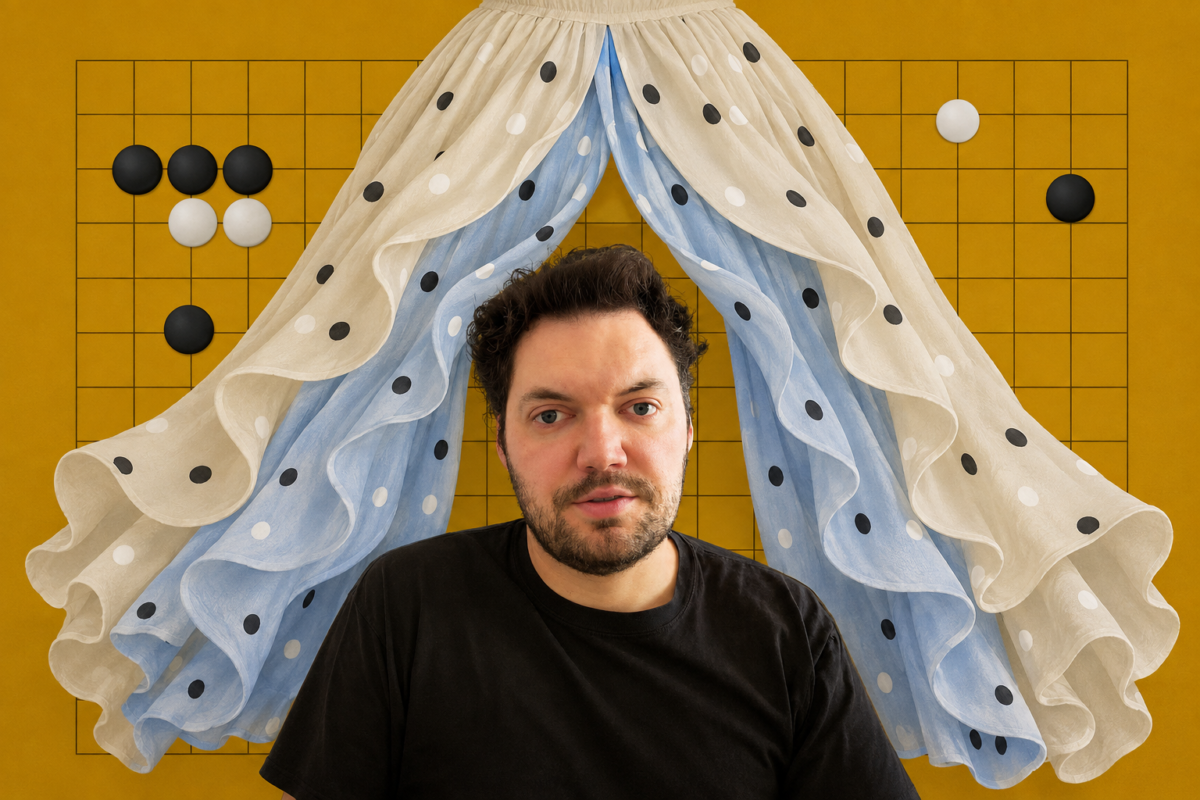

The open skirt, or susoaki, is a Go shape in which a territorial framework remains open on one or both sides. It looks simple, but it creates an uncomfortable choice: should you block the second-line entry immediately, expand your potential first, or let your opponent come in and answer later?
The natural move is often not the best one. A premature block can be slow and overcommitted, while an early reduction from the wrong direction may strengthen the opponent. Strong players judge the entire board before deciding whether the local weakness is truly urgent.
In this full 26-minute lesson, 2022 European Champion and EGF professional Benjamin Dréan-Guénaïzia 1p examines modern positions from real games. He explains why reductions usually begin from above, how thickness changes the value of a second-line jump, and when a probing move can make an apparently powerful wall awkward.
The lesson is especially useful for players who struggle against moyos or feel compelled to defend territory too early. Its central ideas—timing, direction of play, and double reduction—apply far beyond the specific joseki patterns shown in the video.
What You’ll Learn
- What the open skirt (susoaki) shape means in practical play
- Why the obvious second-line block is often too slow
- How to compare local defense with larger whole-board moves
- Why a moyo is usually reduced from above before the side or bottom
- How probes and thickness change the value of a local continuation
- When a second-line jump or block finally becomes urgent
- How double reduction can grow your potential while shrinking your opponent’s
Timestamps
00:00 — What the open skirt means
01:16 — Pattern 1: a modern 3-3 invasion shape
03:02 — Play in the largest open area
04:39 — Reduce from above before reducing from below
07:57 — When the second-line block becomes efficient
09:03 — Central potential and a block delayed until move 60
11:31 — How thickness changes the value of the side
14:08 — Recap of the first pattern
15:48 — Pattern 2: the large knight’s enclosure
17:16 — Challenge the wall with an active probe
20:17 — Double reduction and whole-board balance
21:44 — The correct timing for the second-line jump
22:43 — Final example: why the local move stays small
24:31 — Two principles to remember
25:28 — Learn more on GoMagic.org
00:00 — What the Open Skirt Means
Hello, everyone. In this video, we are going to discuss the open skirt. The name is funny, memorable, and admittedly perfect for a YouTube thumbnail. It comes from the Japanese term susoaki. A more literal translation would be something like “an opening at the hem” or “a gap at the hem,” but “open skirt” is the expression that became established.
The concept describes a territorial framework that remains open on one or both sides. In the position on the board, Black can jump in on the second line from the left, while White can choose to block. That raises several questions. When is the block worthwhile? When is it too early? Should White expand the framework instead? If you are Black, should you reduce immediately, and should you come from above or below? Is an invasion better? We will answer these questions by studying two common modern patterns.
01:16 — Pattern 1: A Modern 3-3 Invasion Shape
Black has just played in the upper left. The position arose from a common modern sequence: Black invaded at 3-3, White blocked, and the players followed a familiar pattern. White later approached the lower-left corner, Black answered, White extended, and Black descended.
That descent is important. If Black plays more loosely, White can hane and cut. Capturing in one direction allows the corner to be taken, while connecting in the other direction leaves a stone trapped in a ladder. The descent therefore protects a serious weakness.
White may now become nervous. If White does not block, it looks as though the side territory will vanish. Yet an immediate block also feels slow because Black appears to have repaired the weakness for free.
The block does not lose the game, but it is indeed inefficient at this stage. After White blocks, Black can reduce from above and later consider entering from below. White’s territory shrinks step by step, while Black develops the top and creates pressure on the White stone in the lower left.
03:02 — Play in the Largest Open Area
What should White do instead? One of the most important principles in Go is to play in the area with the greatest open space. Here, that is the bottom side. It is a large area, and a move there also pressures Black’s corner. That is already more valuable than a second-line block.
Even if we look only at the local position, a knight’s move that expands White’s framework is bigger. In the passive line, Black reduces White while enlarging Black’s own prospects. The knight’s move reverses that relationship: White expands outward and preserves more potential.
Black can still crawl into the side, but the reduction is smaller than it appears. If White answers simply and solidly, Black may gain only a few points while making White stronger. Black’s potential on the top is damaged, and the center remains open. Although Black’s low move looks irritating, the exchange is actually favorable for White.
04:39 — Reduce from Above Before Reducing from Below
Now consider Black’s choice. Should Black push from above, enter from below, or invade more deeply?
The classical principle is to reduce from above before reducing from below. If Black starts underneath, White can often answer comfortably, and the move accomplishes little. A push from above is harder to ignore because it places more meaningful pressure on the surrounding White stones.
If White eventually answers below, Black has at least reduced the top first and developed outside influence. The order of moves matters. Beginning from the top limits White’s center-facing potential before Black spends a move taking points away from the side.
Suppose Black pushes from above and White now wants to block on the second line. The same problem remains. Black jumps into the side, White has to defend, and Black takes another large point elsewhere. White’s left-side territory becomes contained and cannot expand, while Black surrounds a larger area overall.
That is why the outward knight’s move, or another major move on the board, still has greater value. In many professional games, White answers Black’s push with a hane. White should avoid replying passively and giving Black a strong sente sequence for free. If White does not want to hane, tenuki may be better than defending a few second-line points: at least White receives a large move elsewhere in exchange.
07:57 — When the Second-Line Block Becomes Efficient
So when should White finally block? In professional games, the correct moment often comes surprisingly late.
Imagine that White has already taken an important point elsewhere and Black reinforces the top because Black genuinely wants to build there. Now the second-line block can become efficient. White has already limited Black’s top and can also secure the side—in other words, White has benefited in both directions.
This is the kind of timing we are looking for. Blocking is valuable after the wider potential has been settled or reduced, not while White can still use the same move to expand toward the center.
09:03 — Central Potential and a Block Delayed Until Move 60
In the next example, White has already extended along the top. Only much later, after a major fight on the right, do the players return to the upper-left area. White has built enormous influence toward the center, and Black finally pushes from above.
Once again, beginning from below would be questionable. White could play strongly in the center and turn that influence into something far more dangerous than the side territory Black destroys. Reducing from above first limits that possibility.
White still should not block immediately. If White blocks, Black jumps in, White defends, and White’s potential disappears within a few moves. The more efficient plan is to emphasize the center and seek mutual reduction.
Only around move 60 does White finally play the second-line block. White had opportunities to play it earlier but kept choosing larger center-facing moves instead. Had White defended prematurely, Black could have made ordinary nearby plays that steadily reduced White’s real potential.
11:31 — How Thickness Changes the Value of the Side
The third example shows Black with a large moyo across the bottom and right sides. White is strong enough to invade deeply, but instead chooses a normal move that reduces Black’s right side while enlarging White’s potential on top.
A fight begins. Black defends in good shape and becomes very thick in the upper right. That thickness changes the meaning of the second-line play on the side.
Because Black is now so strong, White’s jump or block on the right is worth much less. It is no longer sente. Even if White plays there, Black may simply capture a stone. The points White destroys on the side do not compare with the value Black gains through central thickness and attacking power.
The lesson is important: the stronger the wall becomes, the less valuable these side jumps and blocks tend to be. A move cannot be evaluated only by counting the local points it appears to threaten.
14:08 — Recap of the First Pattern
The key to this first pattern is the double nature of White’s stones. They can remain flexible, or they can become a powerful wall in only a few moves. If Black attacks them too directly, the attack may help White by providing useful forcing moves toward the center.
Black may prefer to pressure White into connecting inefficiently rather than launch an immediate attack without a clear target or gain.
From White’s perspective, do not block too early. Block when your development from above has already been limited, when the center can no longer grow significantly, and when Black’s second-line jump would now cost real points. If the center is still promising or there are bigger moves elsewhere, play those first and return to the side later.
From Black’s perspective, do not normally begin the reduction from below. Reduce from above first, then come underneath if White answers. At the same time, remember that greater thickness may make the second-line jump less forcing. Timing the balance between defense, reduction, and invasion is delicate, and this is one reason professional whole-board judgment is so impressive.
15:48 — Pattern 2: The Large Knight’s Enclosure
The second pattern comes from a famous joseki involving the large knight’s enclosure. Black makes the enclosure, White attaches, Black hanes, White cuts, and the sequence reaches the shape on the board.
Some players wonder why Black does not simply block the open side. It looks large, but the result would leave a wall facing a star-point stone with an enormous gap between them. White could enter that gap without much difficulty and destroy the framework.
White also has a modern option: play a peep first, then use an active move that makes Black’s wall resemble a long baguette rather than an efficient wall. The baguette may remain strong, and Black might attack White later, but White has also secured a large amount of territory on the left. Black would need substantial compensation in influence to justify that result.
For this reason, Black does not block immediately. Black takes the larger point at the side star point.
17:16 — Challenge the Wall with an Active Probe
Should White jump into the open skirt at once? Clearly not. On such an open board, a second-line move cannot compete with approaching a corner, taking a star point, or playing another major point. If White ends with only a few local points while Black occupies several large areas, the exchange is poor. White has gained territory but nothing dynamic.
If White wants to challenge Black’s wall, it should be done more actively and usually not immediately. A very modern approach is to begin with a probe.
If Black answers simply, White may later jump in under improved conditions. If Black tries to cut White off, White can still jump, and Black again risks the awkward baguette shape. As a French player, I may be expected to appreciate baguettes—but Black certainly does not want this one.
Black can respond dynamically and even offer the four stones, but White does not have to capture them immediately. White can take a bigger point elsewhere or jump on the third line, leaving the cut as future aji. That flexibility is what makes the probe uncomfortable.
Black has several possible replies: connect, jump, or answer lightly. The exact variation matters less here than the strategic purpose. White pressures the wall without committing to a small local continuation.
The same principle therefore returns: reduce from the top before reducing from the bottom. Start from the direction that most effectively restricts the opponent’s growth. On an open board, tenuki may still be perfectly reasonable because many moves are larger than poking at the wall right away.
20:17 — Double Reduction and Whole-Board Balance
In another game with the same top-side joseki, it is White’s turn. White already has an extension on top, as well as support from the wall and the group on the right. A second-line block now appears more reasonable because a deep invasion is less threatening.
Even so, the whole-board principle still takes priority. White plays a large move on the boundary between White’s potential and Black’s. If Black occupies that area, the two moyos may become similar in size, but Black already has more secure territory. White therefore chooses the more dynamic point first.
If Black becomes concerned and starts reducing, White can take another major point and may even begin an attack on a nearby stone. The territorial balance changes, but White’s position gains activity. This is often preferable to spending a move on passive local defense.
This is double reduction: one move enlarges your prospects while reducing your opponent’s at the same time. Such boundary points are frequently among the biggest moves on the board.
21:44 — The Correct Timing for the Second-Line Jump
Later in the same game, the position has changed through fighting. White has entered the territory on the left, and now it is Black’s turn. White’s top-side framework can scarcely grow any further; the center no longer offers the same enormous potential.
Now Black finally jumps in. The move that was too small earlier has become correctly timed. Black has already accomplished the larger tasks elsewhere, and the second-line reduction is now sente. White cannot ignore it because too many points on the top would disappear, so White must answer and defend what remains.
This is the heart of the open-skirt dilemma: identical local moves can change from slow to urgent as the surrounding position develops.
22:43 — Final Example: Why the Local Move Stays Small
In the final example, White is building a large framework on the right and Black has several choices. Black can double-pincer in the lower left, continue attacking the White stone in the upper left, or address the right side.
The position contains so many large possibilities that an early second-line move is clearly too small. White would answer in a much more valuable area, while Black’s local follow-up is not severe enough to justify the exchange.
Black follows the familiar plan: reduce from above while making a probing move. White answers, Black returns, and only much later—after the large areas and major fighting points have disappeared—does White block on the second line.
By then, White can no longer expand meaningfully in the center. There is also dangerous aji in the position: if White tries to capture too greedily, Black has severe reducing moves against the entire top-side framework. White therefore settles for the necessary block.
24:31 — Two Principles to Remember
There are two main ideas to carry into your own games.
First, when you face a large moyo, you will usually want to reduce from above before entering from the bottom or side. Limit the opponent’s outward growth before taking away points underneath.
Second, look for double reduction. A move that increases your potential while decreasing your opponent’s is exceptionally valuable. Often the best point on the board is important to both players for exactly this reason.
We have used two modern joseki families to illustrate these principles, but the ideas apply much more broadly. Whenever an open side seems to demand an immediate move, compare it with the rest of the board. Ask what can still grow, which direction matters most, and whether the local threat is actually sente.
25:28 — Learn More on GoMagic.org
You can also watch lessons like this on GoMagic.org, where videos include interactive quizzes within the lesson and practical exercises afterward. If you enjoy this kind of Go content, like the video and subscribe to the Go Magic YouTube channel so you do not miss future lessons.
Short Conclusion
The open skirt is not solved by a single automatic response. The right move depends on the surrounding influence, the remaining large areas, and whether the second-line continuation is genuinely forcing. Block when the side has become urgent; until then, use the board’s open space, reduce from the correct direction, and search for moves that work in two directions at once.




评论