
Manja Marz on the Future of European Go
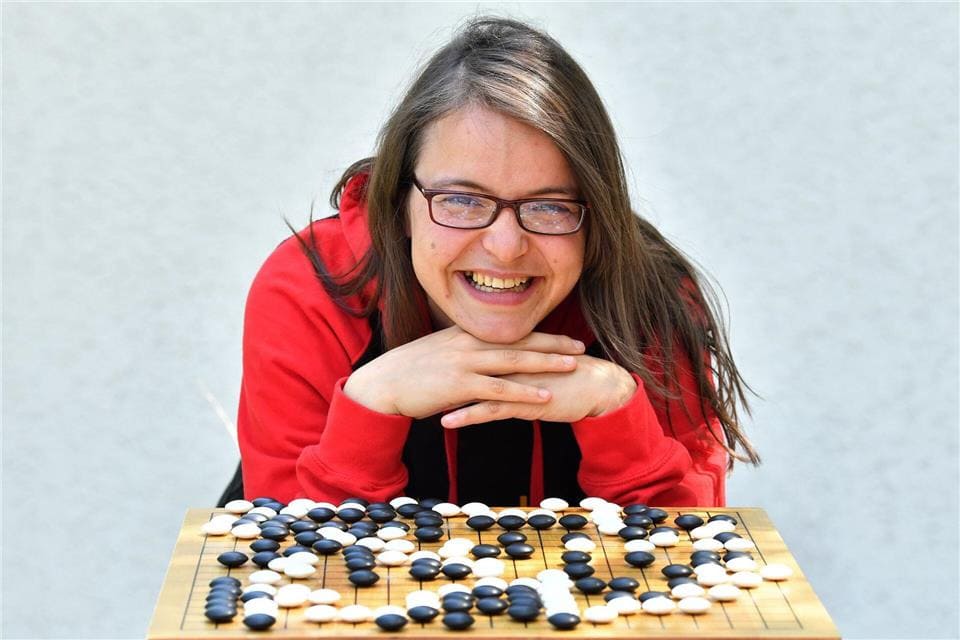
This is an edited adaptation of a Go Magic podcast interview with Manja Marz, based on the first 30 minutes of the episode. The original video is available here: https://youtu.be/pOue0tpywWI
What the European Go Federation Does
Vadim: For everyone watching who does not know what the EGF is, could you say a few words about what it stands for and what it does?
Manja: EGF stands for European Go Federation. It brings together Go in Europe.
Go in Europe is organized country by country. Every country has its own organization, and all these organizations are gathered together under one umbrella organization — that is the EGF.
At the moment we have 33 members, and 14 more that are observing, suspended, or in some other situation. So we have a lot of cultures and a lot of communities to bring together. That is what the EGF is doing.
Winning the SENKO Cup and European Ratings
Vadim: Before we move on with the rest of the interview, I have to congratulate you on winning the SENKO Cup. Manja is not just the EGF president; she is also a very strong Go player. Are you 4 dan or 5 dan?
Manja: I am 4 dan. I wish I were stronger, as probably everybody does.
Vadim: So how was it? How did it feel to win such an important event?
Manja: It was really great. It sounds very big, but there are two sections: one for professionals and one for amateurs. I played in the amateur section, and I won that. It was cool. I had tried for several years and always failed. This year I managed.
Vadim: When I saw the news, I could not believe it. I am used to the idea that there are always 7 dans playing there, and they always win. Then, unexpectedly…
Manja: I think Europe got stronger. Meanwhile, we have one of the strongest rating systems. A 4 dan in Europe, as I am, can already be compared to a 6 dan or 7 dan in Japan or in other countries. I think we are pretty strong.
Vadim: That is nice that you mentioned it, because one of our users on Discord asked how the EGF rating system is different from other rating systems, and why it is so notoriously tough.
Manja: Maybe that goes too much into the mathematical part, but, as in chess you have the Elo system in the background, we have something similar. It is not fundamentally different from what you have somewhere else. In Asia, they do not even have such a system in the same way.
There are attempts to bring everything together and have one worldwide rating system. This has existed as an idea for several years, but so far it has not worked out. In Europe we have a quite stable system now. We have maintained it for several decades.
Vadim: Do you think that one day we will see a global Go rating system, with the same ranks for every country? So when you say “3 dan,” you are 3 dan everywhere.
Manja: That is the aim or the vision of a lot of people. But as I said, this idea has existed for a while, and so far it has not been possible. There are some movements in Asian countries, and they are very interested in the rating systems of America and Europe. So maybe one day it will be possible.
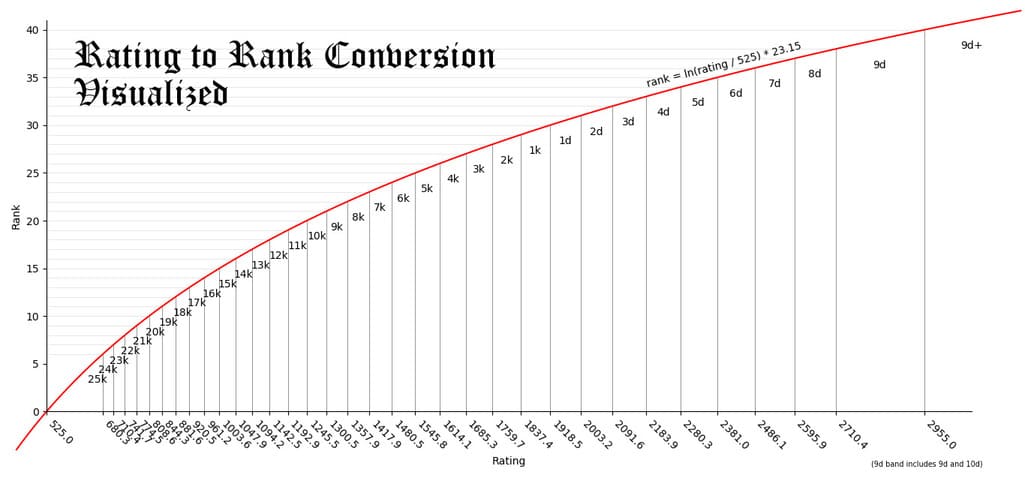
(For a deeper look at how Go ranks work across kyu, dan, and Elo-based systems, read our article: Go Ranks & Ratings: Kyu, Dan and Elo)
The First Female EGF President and the Next Direction
Vadim: Let’s talk about the presidency. You are the first female president.
Manja: I guess so. I did not think about it, but I guess so.
Vadim: Martin Stiassny had been shaping European Go for a very long time. Very generally, what is your goal? How are you planning to build on what he made, and maybe develop it in a different direction?
Manja: Martin set up a lot of things, and I think we can be really grateful for all the time he spent and all he has done.
Just to name a few things: he established these team events, similar to the Bundesliga. I come from Germany, so I like Bundesliga. On the European level this is the Pandanet Team Championship, and it became very famous. It attracts a lot of people and brings the community together. This is big and great. For that, he also found Pandanet as a sponsor.
Another big achievement is that we now have professionals in Europe. That is a really big thing as well.
We should not neglect Martin’s big achievements or throw them away. We should continue them, and I am very happy and proud to be able to do so.
Nevertheless, I think we can also do a little bit more. For example, the professionals could be integrated better. We also need to develop the youth much better. We have the problem of putting the EGF on financially stable feet, because at the moment this is not easy. We do not have the sponsorship anymore, and I think Europe should be strong enough, even without sponsors, to stand on its own feet.
Of course, it would be great to have sponsors to develop Go further.
I also see this as a little bit of a shift from Martin: I see the EGF as a service unit for its members. For our countries, we as the EGF should shape things in Europe according to what our members want. Therefore, we spend quite a lot of time trying to understand what the countries want and what they need, and then we try to go in that direction.
That takes time, of course. We also try to work pretty transparently, which sometimes shocks some people. But I think that is the direction we need at the moment.
(For more context on the previous EGF presidency and the work that shaped modern European Go, watch our interview: From Organizer to EGF President: An Interview with Martin Stiassny)
European Go Professionals
Vadim: You mentioned Go professionals in Europe. Europe is getting stronger. Could you first say a few words about who these European Go professionals are and how they came about?
Manja: Martin introduced the system of creating Go professionals. In the first years, almost every year we had a new Go professional — even two in the beginning. Now it is not that regular anymore. Now we have one more professional every two or three years.
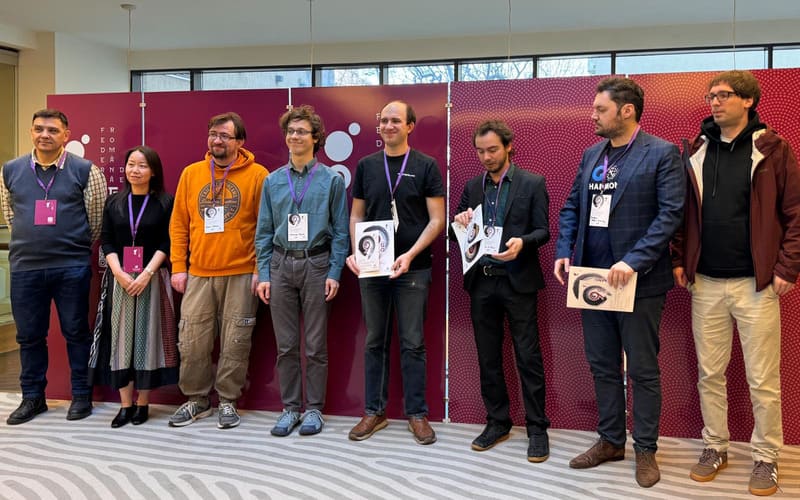
Meanwhile, we have 10 professionals. Some of them are probably known to you because they are very active and spend their whole life on Go. Mateusz Surma, for example, you may know very well. You also know Stanisław, who is a regular part of Go Magic. There is also Ondřej, who is doing full-time Go teaching.
(To learn more about Mateusz Surma’s Go journey and his view of the game, read our interview: Finding Go Everywhere: An Interview with Mateusz Surma)
Most of the professionals do something different from Go. They do Go as a kind of hobby or side job. That also makes it more difficult.
One of the aims for the EGF is to give a vision to players who want to become strong: that they can really live on Go and spend all their time on it. I think this is something we also need to establish.
Source: https://www.eurogofed.org/index.html?id=537
Vadim: This has always struck me as a little bit sad. Players like Ali Jabarin or Pavol Lisy spent so many years becoming such talented players, reached this level, became European professionals — and then they are doing other things and not playing that much anymore. I know there is a European tournament just for professionals, with good prize money. But is there anything else in the works? What could be the next step for these professionals, so they could develop further?
Manja: What we are trying to do right now is establish commissions in the EGF. Having all the workload of developing everything in Europe just on the board, which is seven people, is too much on their shoulders. That is why we have now established several commissions.
One of them is called the Professional Commission. They try to take care of the needs of professional players.
This commission is currently working in a direction where it would be possible for any person, or for administrative people organizing a tournament, to book a professional. What does that mean? What are the price rates? It should not just be floating around. It should be like a portfolio, so that professionals can be engaged more in actual Go activities.
I also think it is very important that the EGF has contracts with professionals. We did not have that so far. It should be clear in both directions what is needed, what should be served, and what is expected.
Of course, this should also come along with paying the professionals. But currently the EGF is not able to pay. So we are trying to set up things that are of mutual interest on both sides. Once the financial situation maybe gets a little better, we will of course try to pay our professionals a fundamental salary.
Vadim: Otherwise, if it is not established, younger players ask questions like: “I am 6 dan and I want to become very strong. What can I do? Should I go to Korea and study there for a couple of years?” And some people say: think about it, because you go to Korea, become 8 dan, become a pro — and then what? You become very strong, you have spent time, and then you need a plan.
Manja: Exactly. We do need structures for how these professionals can be integrated.
One of the most important parts is to integrate them into youth development. I think it is important that young players can look up to professionals and see where it can go.
But this also needs more structure. At the end of the day, if people want to live on Go, they need money for that. And where does the money come from? This is something we are trying to solve step by step. We have some ideas, and we need to see what works out. But yes, we are working on it.
Online Tournaments and Fast Formats
Vadim: After COVID, we started seeing a lot more of the online format. Very recently there was this exciting new Factorio tournament. It was much more exciting to watch than regular ones because it was speed Go. It was risky, and players had to make a lot of gambling decisions.
This is also connected with chess, because chess saw a massive surge in popularity, and a lot of that was thanks to online faster formats. Not the classic format of two people sitting there for a whole day over one game, but rapid chess. Is something like this planned for Go, to keep developing it and make it more entertaining for audiences and maybe for new players as well?
Manja: I am such a big fan of it, so I am pretty sure this was not the last edition.
We were very lucky because there was the sponsor Factorio, and that is why it was also called like that. There was also a version before, done by Štěpán from the Czech Republic — nice greetings — who had already done this kind of speed Go before, and it was already a success.
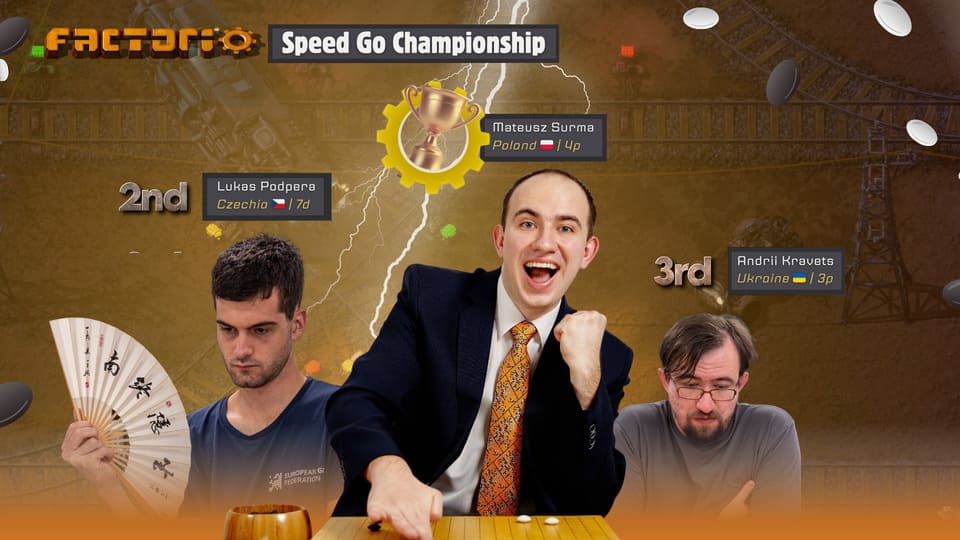
I think people liked the fast games, and we should engage in it.
There is also another aspect: strong players like it too. Coming together physically in one place is difficult. You need to travel, and especially in Europe, where there are so many different countries, it becomes really difficult. Doing something online is more convenient for them, and it is also much more entertaining for the audience if it is fast.
So I think this is something we will try to engage in.
Anti-Cheating and Keeping Online Go Clean
Vadim: The darker side of the same question is anti-cheating. Obviously, the online format is not going away after COVID. Somebody on Discord asked about this. At the beginning, someone mentioned: just play on camera. But that is not always easy. Setting up two cameras — one webcam and another camera showing you playing — is a little ridiculous and complicated. Have you thought about how this could be simplified so that we can run a safe environment?
Manja: Yes. In Europe it is maybe a little bit different from Asia, and also different from chess. We are more used to trusting each other. But this changed quite drastically with AI.
We have quite a lot of cases where people cheated. That is why we have now established a commission called the Anti-Cheating Commission. The EGF has just set it up, so we are taking the first steps.
One of the aims of the Anti-Cheating Commission is to make such rules possible. This may look different for different formats, but it should be very clear that anti-cheating is not something we want.
There should also be a catalog from the beginning of what happens if you cheat. It should not be handled as a single emotional case. It should be very clear what happens, who gets banned, for how long, and for what kind of cheating.
With that vision, we hope Go can stay a clean sport as it was, and that we can really go forward.
Vadim: The Anti-Cheating Commission — is it people in a room?
Manja: They meet online regularly, and they are now working on writing this kind of catalog and setting up the rules. These rules will first be applied to all European championships, both face-to-face and online events. There will be clear rules that will be applied.
Go, Science, and Working With People
Vadim: I forgot to mention that Manja is not just the EGF president or a strong Go player. Professionally, you are a professor of bioinformatics, right? I do not know exactly what you do, but I think it is somehow connected with RNA.
Manja: Bioinformatics is a pretty broad and young field. I like to go into young, new things and develop things. Yes, indeed, I work on RNA bioinformatics. Maybe we do not need to go too much into that, but I love my job.
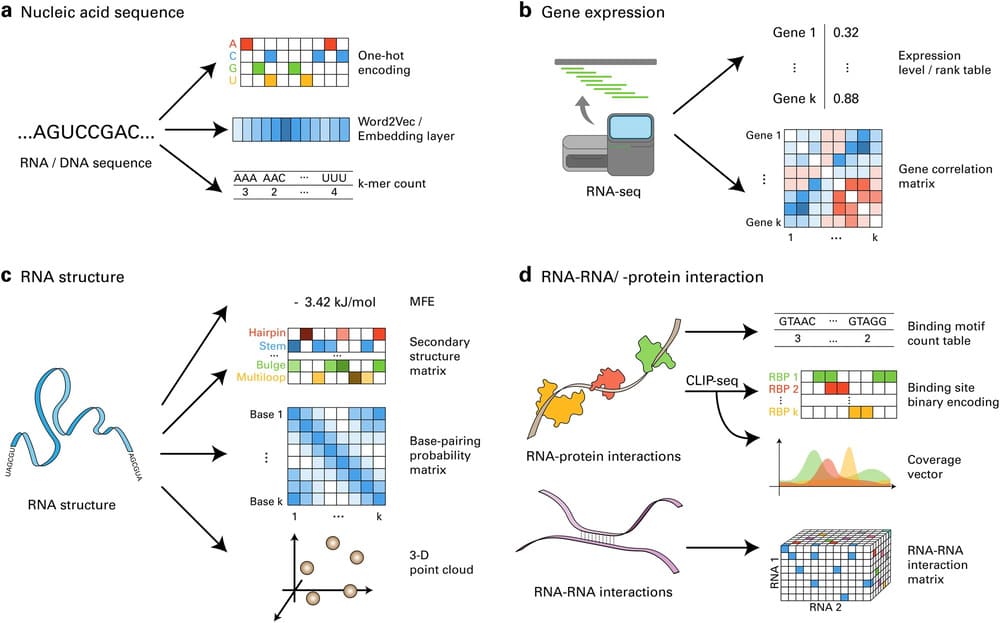
Source: https://www.nature.com/articles/s12276-024-01243-w
Vadim: Having so much precision in your professional field, do you feel that it helped you with Go? And do you think it is going to help you as EGF president?
Manja: On the Go board, different from chess — as far as I know, because I am not a chess player — you can actually feel the person and their character. This is something I appreciate a lot.
I also did this in kindergarten with children who had behavioral difficulties. I was teaching on the Go board, and it adapted to their personality. The reverse is also possible. So I think this is very important.
Go gave me a lot for my job, but the skills I learned in my job also gave me a lot for Go. It is really mutual.
(If you are interested in how games can support thinking, memory, and cognitive development, read our article: Games to Enhance Cognitive Skills and Memory)
Now, being the EGF president, I think the skills I learned in my job are also helping in my presidency. In my work, there are a lot of professors around, and everybody has their own ideas and habits. There are a lot of alpha people, of course. Bringing them together and making something constructive out of it is something I learned in my job.
Coming back to the Go community, it is very similar. We have different countries, different cultures, and everybody has their own ideas. Bringing that together is something I have learned very intensively over the last 10 years.
It is also one of my powers, I would say, that I am pretty good at solving very difficult situations. I think I have empathy to understand all sides and bring them together. Even where people say it may not be possible to solve something anymore, I usually find a solution that is happy for everybody.
But of course, it is very important that all sides want to commit to it. If one party does not commit, what can you do? You cannot do anything.
The Status of Russian and Belarusian Players
Vadim: Thinking of difficult solutions, and also having a Russian background myself, I could not help but include the question about Russia and the ban of Russian players — and Belarusian players as well. What is the status of this, and how could this situation develop in the future?
Manja: Currently, Russian and Belarusian players are suspended, as you said. They are not allowed to play in European tournaments. That is the current situation.
Maybe there will be a change in some far future, but I do not see it coming soon.
From the EGF point of view, as I mentioned earlier, we try to do what our members want. Currently, there is no movement among our members to change the current situation. So at the moment, it stays as it is.
How Go Became Part of Manja’s Life
Vadim: I remember reading somewhere that when you were younger, you liked things that were easy — things that came to you easily. And yet you came to a Go club, tried playing Go, and it did not really work at first. Somehow you still got hooked and stayed with the game. How did that happen? And when did you realize that this was going to be part of your life?
Manja: It is an interesting story, and it comes from a time when I was a different person. We always develop, right?
Back then, about 20 years ago, I was around 21 years old. I was very bad at speaking English. It was terrible. I could not even communicate the easiest things. Although I had English in school, I was kind of language-disabled — I do not know how to call it.
I went to Edinburgh to study there for a year, and I was so scared to go out of the house because there could be people, and they could ask me a question, and then I would be totally puzzled. So I just stayed at home.
Then my professor from Leipzig sent me an email out of the blue saying, “If you are bored, you may go there and study.” He never just wrote to me like that, so I thought: okay, this seems to be a sign, and I should follow this sign, whatever that is.
I went there, and it was a Go club.
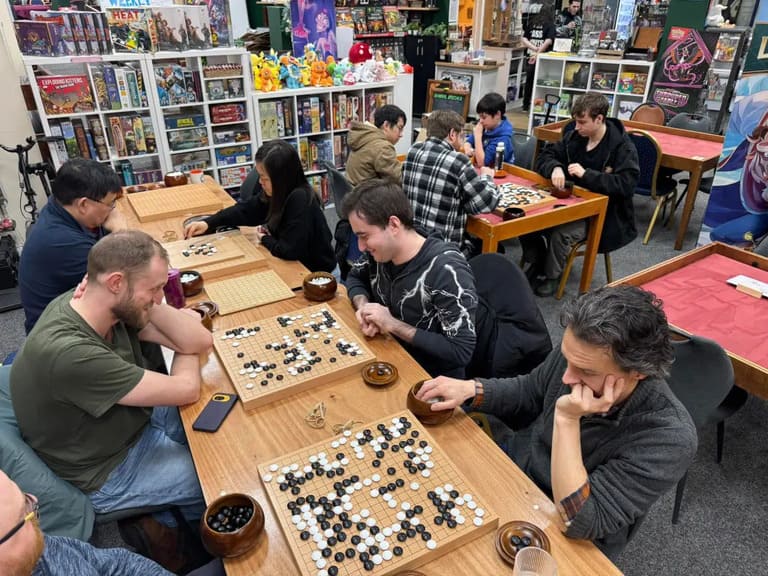
The good thing was: they did not talk to me, because they were playing. That was exactly what I needed. I was there learning the rules without exchanging words. They were just showing things on the board, and that was perfect because I did not have to speak English.
So I came back. They even gave me a lemonade, which was wonderful. For about half a year, we barely spoke. With time it got better, but I always came back. I did not have to speak English unless I asked a question — and then they were nice and answered. Also, the Scottish accent is sometimes difficult to understand.
It was one of the few moments in my life where I really sucked at something so much. I lost almost every game for half a year. And I still stayed.
I think it was the people. This is also what I experience nowadays: the community is so close. People are like a family. They embrace you. That is probably what made me stay.
At some point I understood: “Oh, I am actually good at this game.” I started winning games, and within one year I became 1 dan. It was very, very quick suddenly. That hooked me. Then I got the positive feedback I needed to move on and invest my time.
Vadim: Something does not connect here. You lost every game for half a year, and then within a year you were 1 dan. What?
Manja: It was exactly like that. It was crazy.
Vadim: So Go was the perfect tool to overcome social anxiety and communication awkwardness?
Manja: For me, absolutely. It shaped me. It made me a different person. It is great.
From Fuseki to Middlegame
Vadim: In an earlier interview, you compared the presidency to a game of Go and said that now it is fuseki — time to establish preparatory moves. What do you see as the beginning of the middlegame? Now that fuseki is over, what is the next logical big risky move?
Manja: I think I am still just sitting at the board and saying “onegaishimasu.”
In my eyes, we have only just started to play the game now.
We have some established fusekis from Martin, his legacy. We can look a little bit forward from that. But then the game gets more creative.
What we need is to establish structures, ideas, and a vision of where we want to go, and then very clearly follow this vision. I think it is the same as in a Go game. When you are in the middlegame, you need to have an idea of what you want to build and what you want to do, and then go straight for it.
Maybe it is not the best solution. Maybe it is only the second-best or third-best solution. But as long as you stick to it and clearly engage with that aim, I think you can win the game like that.
This is something we are also doing right now. We now have meetings every three months with our EGF members. We define our aims. We define what we want to do as a whole community, and then we make our steps toward these goals.
But we are just at the beginning. At the moment, we are defining our goals.
Can Europe Produce a World Go Champion?
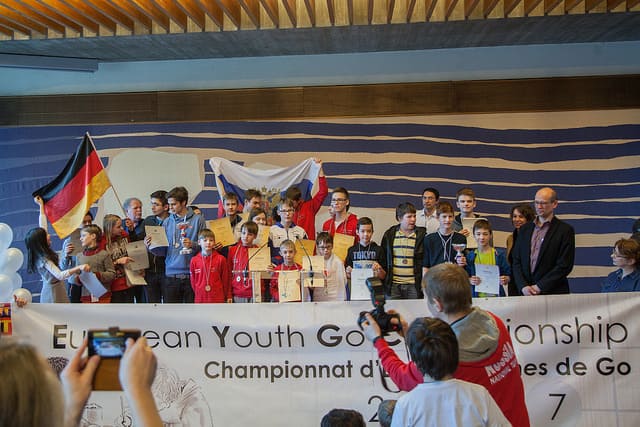
Source: https://www.eurogofed.org/index.html?id=104
Vadim: Final question. When I was at the Congress, I talked to Martin and a few other people, and they said they believe that within 10 years or so we might see the first European or Western world Go champion. Do you think it is possible?
Manja: What we observe is that the gap is getting smaller and smaller. I think that is a fact.
This also comes from the fact that now we can study with AI. Before, we lacked quite strong teachers. Now we have AI, so this helps. But of course Asian players also use AI.
At the end of the day, I guess the gap will be defined by how deep our commitment in Europe to Go really is. How much do we really want it? How many hours per day — not only one day a week, but every day — will we really spend on the game?
I think this will answer the question.
We do see quite a lot of young players nowadays who are really committed. If they get the food and the environment that allow them to develop in such a way, and I think we should give them that, then I think it is possible.
Let’s see. We can have a bet. I would say yes. I am going for yes.
Vadim: Ten years, you say?
Manja: If you also say yes, then it is not a bet.
Vadim: No, if it is 10 years, I will definitely say no. I will be the pessimist and say: no way. I have seen those people work. I do not think we can have that kind of commitment. Sorry.
Manja: Then the only question is what we bet about.
Vadim: We can decide later.
Manja: Okay. So it is our secret.
Vadim: Thank you so much, Manja. Thank you for the interview. I hope to ask you more questions again, maybe halfway through your presidency, when some things may be clearer.




Great stuff! Thanks for giving us an idea on where European Go is heading 🙂
Hehe. This one is not yet available for everyone.
Ah! :p