
Kitani vs Shusai: The Real Story Behind The Master of Go

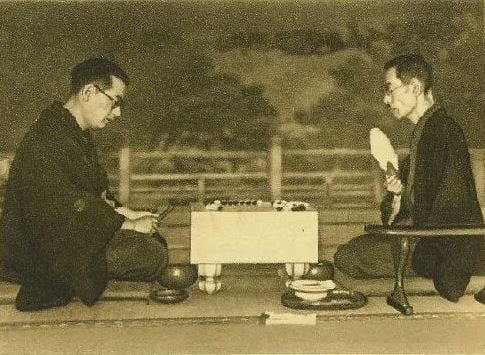
Adapted from our video essay, this article explores how Kawabata Yasunari turned a real 1938 Go match into one of the most haunting books ever written about the game — and why the history behind The Master of Go is even more dramatic than the novel itself. Watch the original video here: The Secrets Behind The Master of Go by Kawabata Yasunari.
A Novel, a Match, and the End of an Era
Kawabata’s The Master of Go is not a pure invention. It is a literary reworking of a real 1938 retirement game between Honinbo Shusai, the last hereditary holder of the Honinbo title and the last traditional Meijin, and Kitani Minoru, one of the central figures of modern Go.
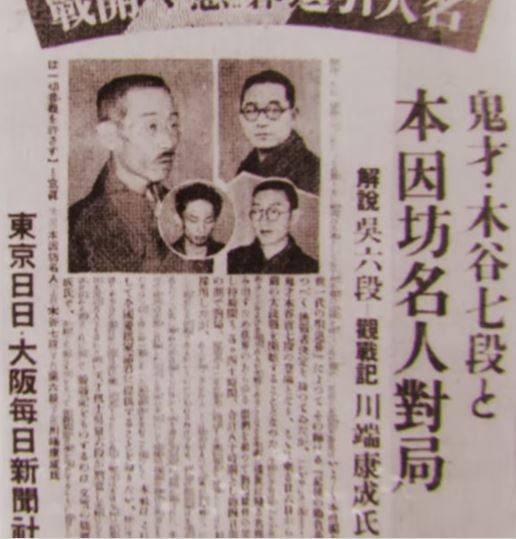
That alone would already make for a remarkable story. Kawabata covered the match for the Mainichi newspaper, later reworked that material into Meijin (The Master of Go), and would go on to become the first Japanese writer to win the Nobel Prize in Literature. The real game began on June 26, 1938, unfolded across multiple sessions over several months, and ended with Kitani winning by five points.
What makes the story exceptional, though, is the distance between Kawabata’s version and the harsher historical reality. In the novel, the match becomes the last shimmer of an older Japan: mountain inns, coastal ryokan, cigarette smoke hanging in still air, long pauses heavy with meaning, beauty expressed through silence and restraint.
History was less delicate. Behind the ceremonial surface stood professional politics, institutional conflict, bitterness over rank, and a younger generation that was no longer willing to let inherited prestige define the terms of play.
That tension is what makes The Master of Go so compelling even now. It is not just a novel about a game. It is a story about legacy, power, and who gets to represent Go at the moment one era gives way to another.
The Fiction: Kawabata’s Old Master
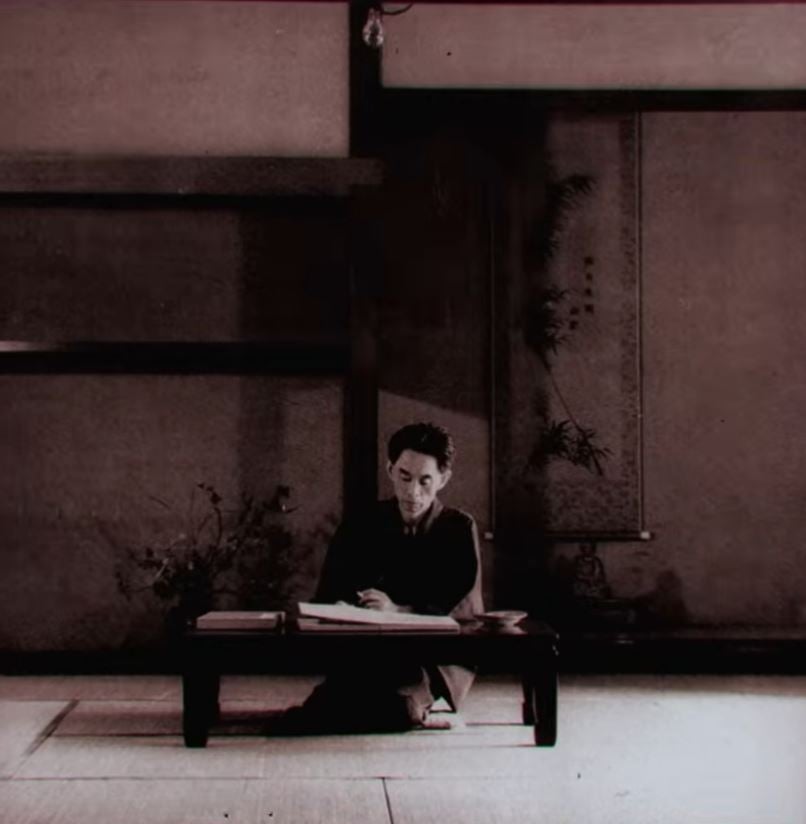
Kawabata’s version of Shusai is unforgettable because he is written as more than a man: a fading figure of refinement, moving stubbornly through cold weather, old etiquette, and failing strength.
Open the book and the match begins to feel eternal. The players move from place to place; each adjournment stretches the drama instead of interrupting it; every glance, every silence, every small bodily discomfort takes on symbolic weight. Kawabata does not just describe a contest. He turns it into a ritual of disappearance.
This is part of what makes the book so beautiful. Kawabata had an extraordinary ability to make stillness feel alive, and The Master of Go carries the same refined melancholy that would define so much of his mature work. He later said that after the war he could write only elegies, and this novel reads like one: not only for an old player, but for an entire way of seeing Japan.
But Kawabata’s beauty should not be mistaken for neutrality.
His Shusai is stylized. His Kitani is stylized. The game itself is stylized. The result is powerful precisely because it is selective. Kawabata wants the reader to feel that something irreplaceable is vanishing. He is less interested in giving us a full institutional history than in preserving a mood.
And if all we wanted were beauty, that might be enough.
The Reality: The Go Houses, Their Decline, and the Problem of Shusai
The trouble begins as soon as we step outside the novel.
To understand why the 1938 match carried so much tension, we have to go back to the structure of the old Go world itself.
For much of the Edo period, professional Go in Japan was organized around the Four Go Houses: Honinbo (Hon’inbō, 本因坊), Hayashi (林家), Inoue (井上家), and Yasui (安井家). These were not simply schools in the modern sense. They were hereditary institutions: part academy, part household, part political office. They trained disciples, preserved lineages of teaching, competed for prestige, and, most importantly, carried the authority to issue dan rankings.
That last point mattered enormously. In the old system, rank was not just a measure of playing strength. It was legitimacy, status, income, and place within the professional order. The houses did not merely produce strong players; they helped define who counted as one.
By the early twentieth century, however, this world had largely collapsed. The old house system had withered away, and by the time the Nihon Ki-in was founded in 1924, only one of the four houses still remained in any meaningful sense: the Honinbo house, with Shusai at its head.
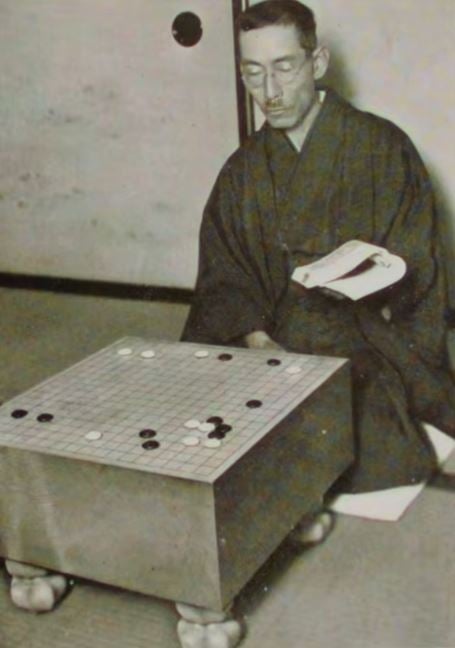
That left the modern Go world with a problem. A new central institution was trying to reorganize professional Go on modern lines, but the symbolic and historical authority of the old order had not vanished completely. It had narrowed down to a single surviving line, and that line was embodied in one man.
Shusai understood the value of that position perfectly.
Since the old houses had traditionally held the right to issue dan ranks, Shusai argued that this authority still belonged to him alone. From his point of view, this was not a ceremonial remnant. It was real power. If the Nihon Ki-in wanted to become the center of professional Go, it could not leave the most prestigious form of rank in the hands of the last hereditary master of a dying system. But neither could it simply ignore him.
The result was a standoff. The Nihon Ki-in introduced the kyu ranking system, familiar to modern players, but kyu did not yet carry the prestige of the old dan structure. Dan still mattered more. That meant the new institution still had to bargain with Shusai, and it took time before he effectively yielded the authority to issue dan ranks to the Nihon Ki-in.
This set the tone for everything that followed. The old world may have been dying, but modern Go still had to negotiate with it — and in practice that often meant negotiating with Shusai himself.
He was not merely a relic. He was a political inheritance.
That is what makes him so much more complicated than the noble, fading master of literary memory. Shusai was formidable, proud, and very conscious of status. He had spent years occupying a position in which people were expected to defer to him, and he did not give up that role gracefully. The conflict around him was never only aesthetic. It was institutional, personal, and bound up with authority.
Even his own rise to the top had been controversial.
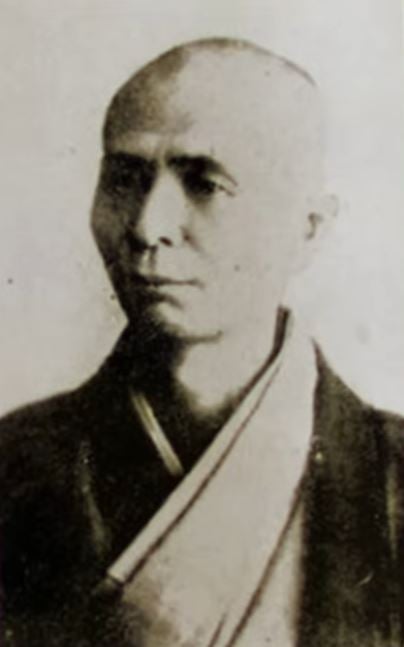
The previous head of the Honinbo house, Honinbo Shuei, was one of the greatest players in Go history. By many accounts, he was among the strongest ever to live, sometimes placed alongside — or even above — legendary names such as Shusaku and Shuwa. In his prime, he was considered vastly stronger than nearly everyone around him. Only one pupil, Shusai, could face him without handicap in Shuei’s old age.
Shuei’s style left an especially deep impression on later generations. He was associated with strong central shapes that did not look flashy at first, but gradually resolved into just enough territory to win. It was a style of quiet control, balance, and efficiency — the sort of strength that could look understated until the game was already slipping away.
And yet Shuei did not want the Honinbo title to pass to Shusai.
After Shuei’s death, Shusai claimed the title for himself on the grounds that he was the strongest pupil. On the surface, that argument was not absurd. There was indeed a tradition that the strongest pupil might become the next head of the house. But that tradition did not mean raw strength alone settled the matter. Normally, the successor was chosen by the current Honinbo and raised for the role, receiving the training and special attention needed to become the strongest. In other words, “the strongest pupil” was not supposed to mean whoever seized the claim most convincingly after the fact. It was supposed to mean the pupil shaped and designated to inherit.
That is what made Shusai’s succession so contentious. He was strong enough to make the claim plausible, but not unquestionable. The issue was never simply whether he could play. He could. The issue was whether he was the right heir to the line.
And according to later accounts, Shuei’s hesitation had as much to do with Shusai’s personality as with anything else.
That detail matters. It suggests that even before he became the last hereditary Honinbo and the last traditional Meijin, Shusai already carried a reputation for being difficult, domineering, and deeply attached to power. By the time modern professional Go was trying to reorganize itself, all of those traits had become part of the larger historical problem he represented.
This is the backdrop that gives the later drama its real shape.
In The Master of Go, the old order can seem like a world of pure ceremony and fading beauty. In reality, it was also a world of hereditary privilege, contested legitimacy, institutional bargaining, and one last surviving master who refused to disappear quietly.
The Retirement Match: Kitani Minoru, Go Seigen, and Old Scores
By the late 1930s, Shusai was heading toward retirement, but the story was far from over. His name still carried enormous prestige, yet his reputation had grown increasingly complicated. People muttered that he had sold the Honinbo title. Others questioned how strong he had really been. And among the younger generation, there were players who had not forgotten how thoroughly the old master had used status to control the terms of competition.
No younger player was more important here than Kitani Minoru.
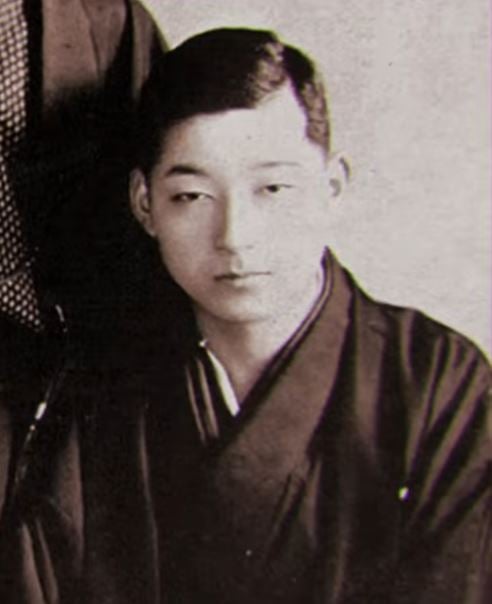
Kitani was not simply a strong challenger who happened to emerge at the right moment. He was one of the defining players of the new era, and one of the two great names most closely associated with the revolutionary new fuseki. Together with Go Seigen, he helped push professional Go away from older opening orthodoxy and toward something faster, stranger, and much more experimental. Their ideas shocked many established players. To admirers, they were brilliant. To critics, they were reckless. Either way, they made it impossible for the old world to pretend that nothing had changed.
That is why Go Seigen matters so much in this story.
He was not just another great player of the period. He was Kitani’s close associate in reshaping the game, and he had already faced Shusai in the famous 1933 match later remembered as the Game of the Century. For the younger generation, that match was supposed to be a test between the old master and the strongest forces of the new age.
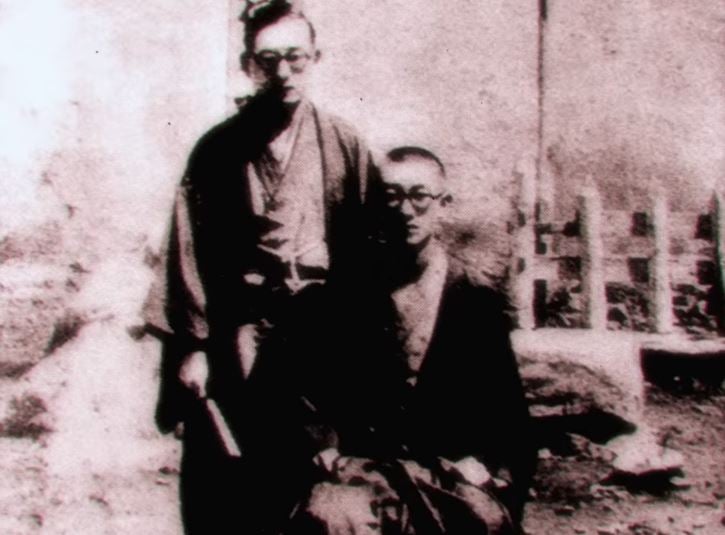
Instead, it became a source of resentment.
The problem was not simply that Shusai won. The problem was the way the match was conducted. Under the conditions then in use, Shusai was able to benefit from procedures that heavily favored the old master’s position. Most importantly, the game could be adjourned without the next move being sealed in advance. That meant the position could remain unresolved during a break rather than being fixed at the moment play stopped. To many younger observers, that was exactly the sort of ambiguity that let prestige interfere with fair competition.
This is what made Shusai so frustrating to his critics. He was not merely strong. He was strong and protected by status. Again and again, the modern Go world found itself forced to deal not just with his skill, but with the privileges attached to his titles as Honinbo and Meijin.
Kitani understood that perfectly. He had watched what happened to Go Seigen, and he did not intend to let the same pattern repeat itself.
So when the chance came to face Shusai in a retirement match, Kitani was not approaching the board as a neutral successor paying respects to an old legend. He was stepping into a contest that already had history behind it. He was one of the architects of the modern game. He was closely tied to the player who had already been drawn into a controversial match with Shusai. And he had every reason to insist that this time the old master would not control the conditions.
That is exactly what he did.
During negotiations, Kitani was firm. The total time limit would be forty hours. If play was adjourned, the next move had to be chosen and sealed before the players left. No unresolved positions. No procedural gray zone. No chance for status to blur the line between ceremony and competition.
It still took months of back-and-forth to get Shusai to accept even these terms.
By the time the match finally began, the old master had already lost something important: the right to dictate the world in which the game would be played.
The Match Itself: Kitani’s Opening and What It Suggested
When the game finally began, Shusai saw something unexpected.
This was Kitani Minoru, one of the leading architects of the new fuseki, a player who had helped shake professional Go out of its older opening habits. Shusai had every reason to expect something overtly modern from the start. Instead, Kitani opened in a way that looked surprisingly old-fashioned.
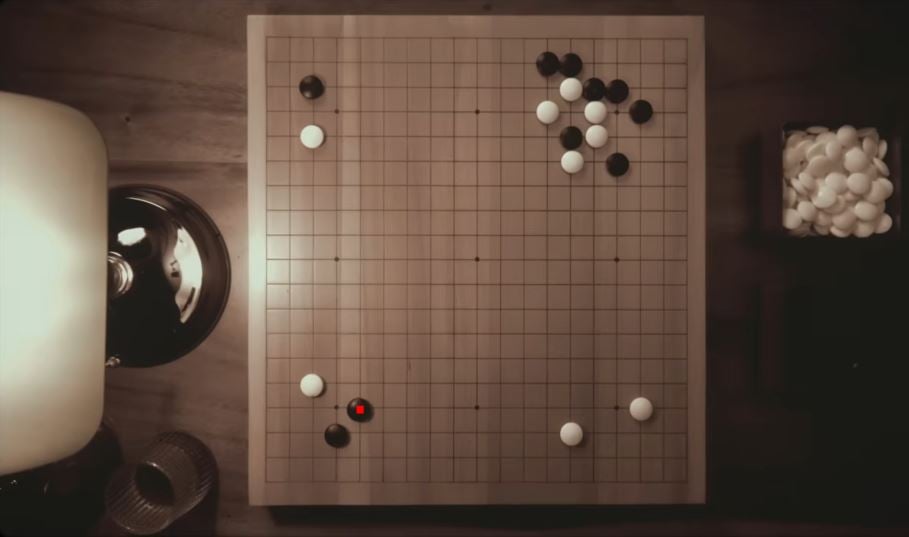
The clearest early example came on move five, when Kitani played a Shusaku-style kosumi. That choice mattered. Coming from a player so closely associated with opening innovation, it immediately changed the tone of the game. Rather than confronting Shusai with a loud declaration of the new style, Kitani began with a move strongly associated with the classical tradition.
That must have been striking to Shusai. He was not looking at a straightforward “new Go” challenge. He was looking at a younger player who could have played the modernist, but instead chose to begin in a language the old masters knew very well.
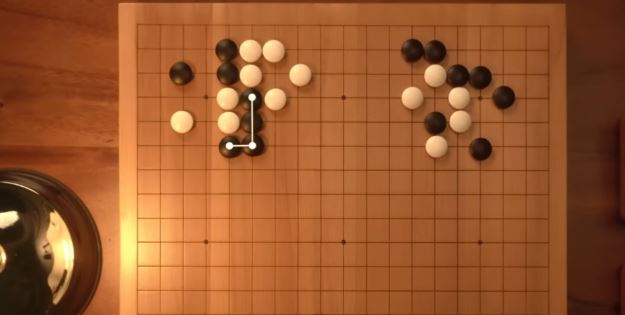
But the game did not remain purely classical for long. Soon another detail made the position stranger: a four-stone bent shape in the center.
This was one of the moments where the opening stopped looking simply old-fashioned and started looking pointed. The shape carried an echo of Honinbo Shuei, whose style was known for strong central formations that later resolved into just enough territory to win. That resemblance is important. It suggested that Kitani was not merely borrowing from old Go in a general sense. He was, at least visually and stylistically, touching something much closer to the deeper Honinbo tradition.
That gave the game a very different flavor from a simple old-versus-new clash. Kitani’s opening did not reject the past. It seemed to select from it.
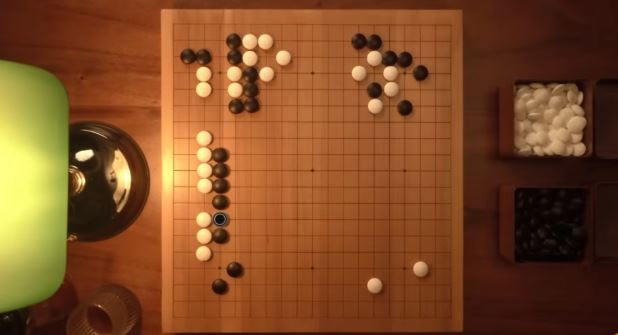
Then came the heavy-looking side move — a play that can easily strike the eye as greedy, even a little lumbering.
This matters because it adds to the sense that Kitani was deliberately refusing to give Shusai the game he expected. If the kosumi looked classical, and the bent shape suggested an older central style, this side move made the whole opening feel even less like a clean modern manifesto. It was thick, forceful, and somewhat awkward-looking on purpose. That awkwardness is part of what gave the opening its tension.
Taken together, these moves made Kitani’s plan unusually suggestive. He was not simply playing the new fuseki that had made his name with Go Seigen. He was presenting Shusai with something more unsettling: an opening that seemed to reach backward into the old tradition while still being controlled by a player of the new era.
And that is part of what makes this game so rewarding to study today. Even before the middle game, the board already carries more than one story at once: a formal retirement match, a contest between generations, and a subtle stylistic argument about what the legacy of the old masters really meant.
The result, of course, was not decided by symbolism alone. This was still a long, serious game between two of the strongest players in Japan, played under enormous public attention and historical pressure. But the opening is where the deeper mood of the match becomes visible. Before the game had fully unfolded, Kitani had already made one thing clear: he would not let Shusai define the terms of the encounter, either politically or stylistically.
To see how those ideas develop beyond the opening, it is worth going through the full game move by move. The complete record reveals how this early tension carries forward into the rest of the match — and how Kitani’s challenge to Shusai was expressed not just in isolated moments, but across the whole board.
When the game was finally completed, Kitani Minoru defeated Shusai by five points. In purely competitive terms, that settled the matter clearly enough. The retirement game had not ended in a last affirmation of the old master’s supremacy, but in a loss to one of the leading players of the new generation.
That result matters because it gives the historical story a firmer shape than Kawabata’s novel sometimes does. However elegant, mournful, or symbolic the match became in literary memory, the practical outcome was straightforward: the old order did not simply fade away — it was beaten on the board. Shusai remained one of the strongest players of his era, but against Kitani, as earlier against the larger forces reshaping Japanese Go, he could no longer hold back the future.
What Kawabata Understood
For all the political intrigue, bad feeling, and institutional struggle behind the match, Kawabata was not wrong about its deeper meaning. Shusai was more flawed than the novel sometimes allows. Kitani was more modern, more defiant, and more historically significant than a purely literary retelling can fully capture. But the sense of an era ending was real.
That is where history and literature finally meet. Shusai could not accept that his world was passing away. Kitani arrived as one of the players who would define what came next. And Kawabata, looking back on the match, turned that moment into something larger than a game record: an elegy for refinement, silence, tension, and beauty at the edge of disappearance.
More Than a Game Record
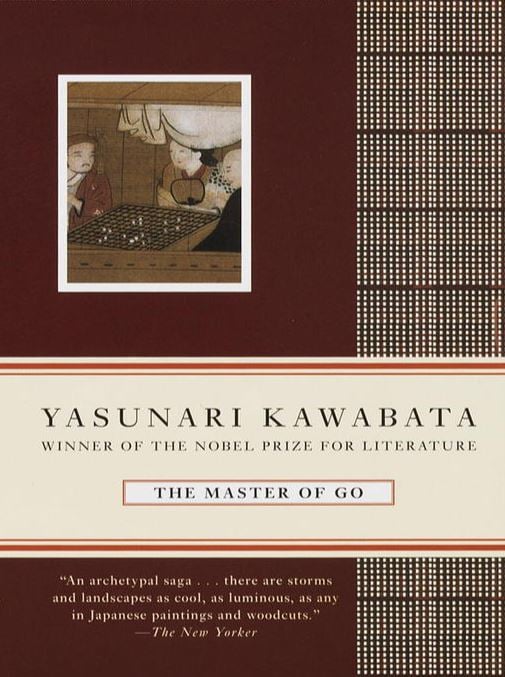
That is why The Master of Go still matters. Not because it gives us a perfectly objective account of Shusai and Kitani, but because it preserves something players still recognize immediately: the feeling that a move can mean more than its result.
A board, a room grown quiet, a hand hovering over the stones — Kawabata understood how much feeling can live inside that pause. In The Master of Go, more than a famous match is waiting. History is there too, reminding us that Go has always been played not only for victory, but also for beauty.



Comments