
Learning from Pro autobiographies #5: Do Not Covet Victory by Lee Changho

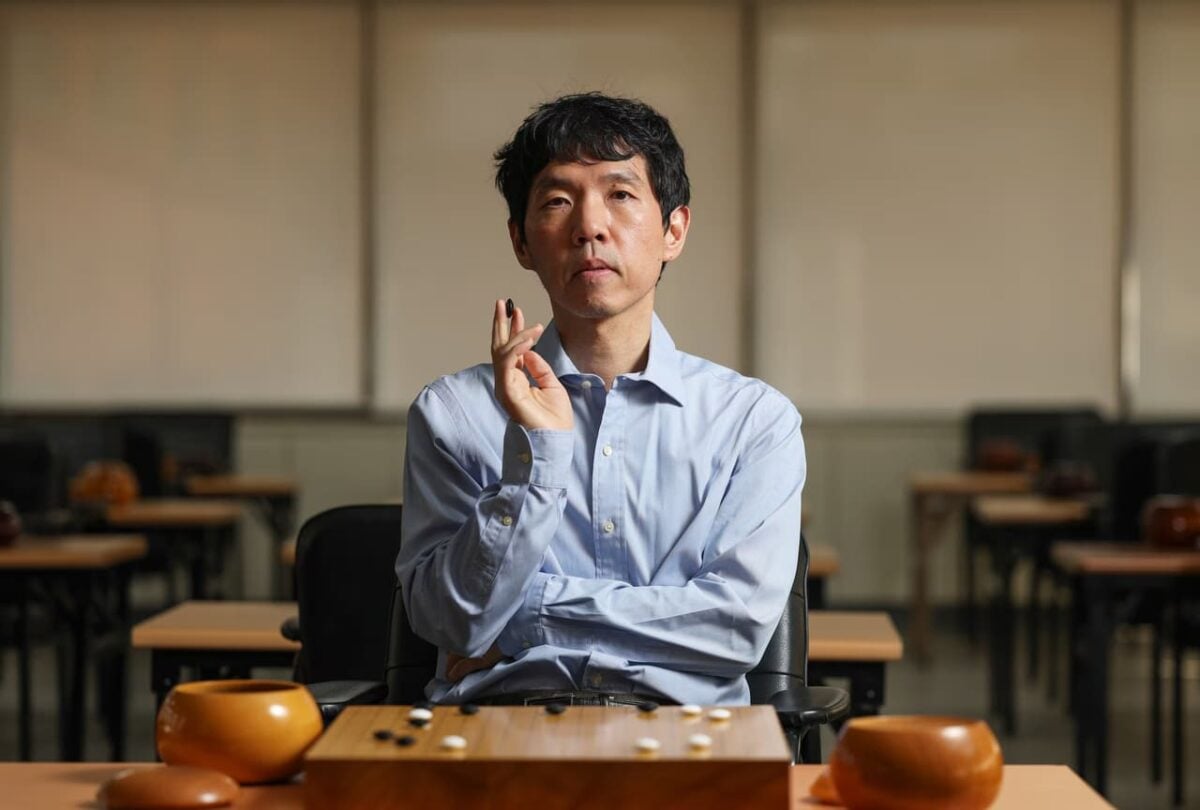
“No other game illustrates the meaning of the word “relative” as fully as Go. If you hold your course in the face of a headwind and keep to your own tailwind, then that tailwind becomes your opponent’s headwind. So sticking to your own rhythm without wavering can be considered the most brilliant defense and offense alike.”
Introduction
Lee Changho’s autobiography written by him with the help of Son Jongsoo (손종수) who interviewed him extensively and helped organize his thoughts into prose, is one of the most important autobiographies that are not yet translated into English.
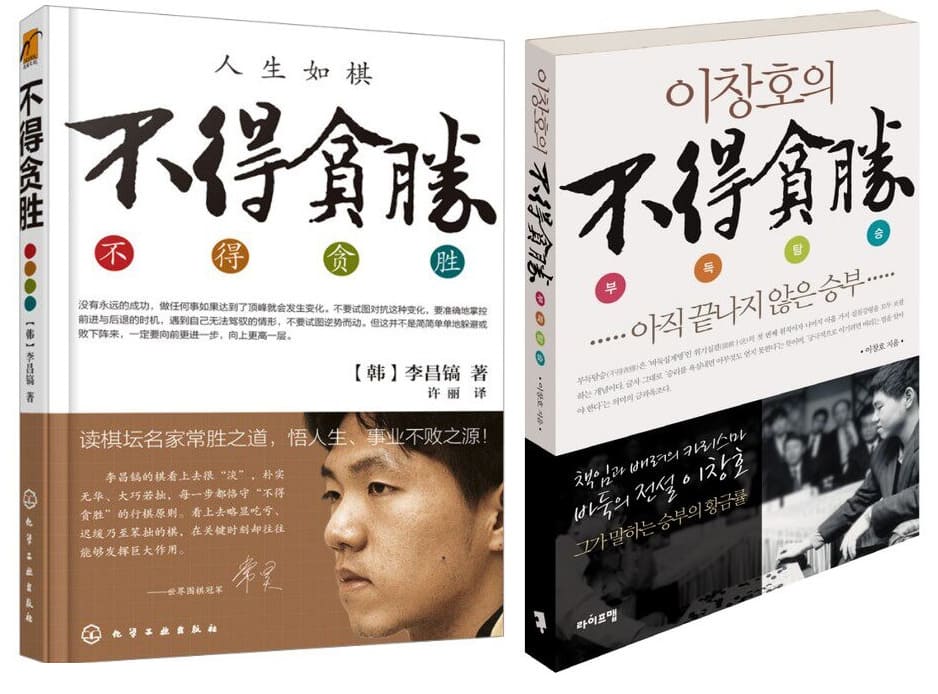
Do Not Covet Victory (i.e. do not be greedy for victory; Budeuktamseung 이창호의 부득탐승 in Korean, Bù dé tān shèng 不得貪勝 in Chinese) is the title of his autobiography and refers to the first of the Ten Golden Rules of Go — it is a proverb, not just a title, that organizes the whole book. From it stem the themes that make this memoir more than a record of wins by the most prolific player in Go’s 3000-year-old history.
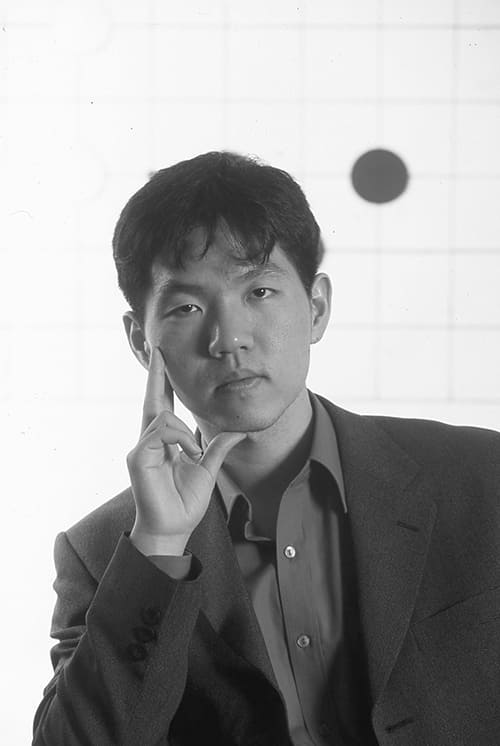
Lee Changho is the Stone Buddha: the boy who became a professional at 11 years and two days old, the youngest world champion at 16, the player who had the longest reign on top of the Go world and who recently became the first player in history to reach 2,000 career wins (on October 26, 2026).
Changho wrote his autobiography, he says, partly for his future children and “all the children of the world,” hoping it would become “part of the volumes that parents read aloud to their children.” The lessons inside are meant to be short and travel beyond the board. As he puts it, the wisdom of the Ten Commandments “has long since transcended the limitations of Go, encompassed all aspects of life, transcended the boundaries between the East and the West, the past and the present, and has had an everlasting vitality.” What follows are the themes that make this memoir more than a record of wins — a manual, in disguise, for how to think, how to lose, and how to keep playing.
The More You Want It, the Harder It Gets
“Don’t be greedy for victory” sounds like a piece of modest advice. Changho insists it is much more. The “victory” in the proverb is not just a win on the board — it is any goal you chase. And the warning is stark: “if one is too obsessed with the goal, one will achieve nothing.” Wanting it too much makes you impatient, narrows what you can see, and freezes your thinking into one track. The point is not to give up wanting to win. It is to keep a cool head, notice the temptations in front of you, and see yourself clearly enough that your real strength can come out. Changho calls this the “general program that leads the other nine rules of Go” — the operating system for everything else.
What it looks like when you break it? You will recognize this in your own games: the tournament you “have to” win, the rival you “must” beat — and suddenly your moves are tight and your reading is shallow. The desire for the result has quietly replaced attention to the position. In writing the preface to Lee Changho’s autobiography, his longtime rival and friend, Chang Hao provides the perfect example. Nie Weiping hoped that his disciple, Chang Hao, would eventually be the player to dethrone Lee Changho, but after being defeated, Chang Hao had to wait ten years to have a chance at revenge. Chang Hao was desperate for this rematch that would have taken place in the finals of the Fujitsu Cup. But that very fixation made him overreach on the way there, and he lost to Gu Li. The chance he had waited a decade for vanished because he wanted it too much.
What it looks like on the board? Once you realize you have an advantage, the temptations begin. Complications appear, and your instinct is to avoid them — to run away and finish the fight early, not because you fear your opponent, but because you want the result settled. Changho’s advice is the opposite: when things get messy, stay in them, keep a calm heart, and ignore the lure of a quick ending. His conclusion: victory belongs to the player who makes fewer mistakes.
The trap that catches you after you win. Changho has the most precise description of complacency I have read:
“Pride without self-awareness is the beginning of complacency. Unawareness while pretending to be humble is the process of complacency. And then further mistaking the pretense of humility for humility is the end — step by step, as in the opening of a game, the attack and defense in the middlegame, and ultimately, to defeat.”
He calls this the truth he realized after nearly thirty years and countless games — and “the truth that is the most alarming to me.” Read it as a sequence, because it is one. Stage one: you are proud but you do not notice it. Stage two: you do not notice, but you act humble — and you believe the act. Stage three: you mistake the act for the real thing. By then you are already losing; you simply do not know it yet. It is the psychological equivalent of a slow, quiet overplay that only becomes visible when the score is counted. He found it in himself after his shock loss to Rui Naiwei: “Although I have never admitted it in my heart or in my mouth, I have been underestimating my own rivals without realizing it.”
Complacency is not a feeling — it is a blind spot. You will almost never catch yourself feeling arrogant. You can, however, catch the behavioral fingerprints: you stop preparing as carefully for weaker opponents; you decide the game is won and start playing “safe” moves that are actually passive; you skip the review because the result seems obvious. When you notice any of those, treat it as a warning sign on the board. The antidote is not forced humility — it is self-awareness. See yourself clearly, and the pretense becomes unnecessary.
Changho’s grandfather and father were not particularly strong at Go — and yet they enjoyed it far more than he does. Why? Because they were completely free of winning and losing. And then the sentence that should be pinned above every Go club door: “This is what Go should be like — no matter how good or bad you are at it, no matter whether you win or lose, you should enjoy the game of Go with a relaxed and contented mind, and this is the realm of ‘not being greedy for victory.'” This is not a consolation prize for weaker players. Changho is arguing that the amateurs have access to something professionals often lose. If you cannot enjoy a game you lose, you have not yet reached the realm — no matter your rank. The joy is not a reward for winning; it is a discipline of its own.
Hard Work Beats Genius — It’s in the Review
Changho refuses the genius label. IQ 139 — smart, but not a reported prodigy. He reflects on his dull appearance and overweight figure as a child. He also laments his poor memory, lack of eloquence and panic at acceptance speeches. And, most embarrassing, an inability to review his own games — his teacher Cho Hunhyun could not understand how a near-professional could not replay a board.
Where he does find genius, it belongs to others: Wu Qingyuan and Kitani Minoru with the New Layout, and his teacher Cho Hunhyun and Lee Sedol, whose gift was to grasp the gist of a game and construct a line in the time it takes to blink. Changho says plainly that this is an intuition “no one can learn.” So he built his career on the other thing: “The only viable way for me to beat a player of extraordinary Go talent is to work hard. There is no shortcut other than concentrating and thinking more than others.” Persistence, unlike intuition, “can be achieved by anyone.” His own summary: “It’s not that I’m brainy, it’s just that I’m able to think longer than others when I have a problem.”
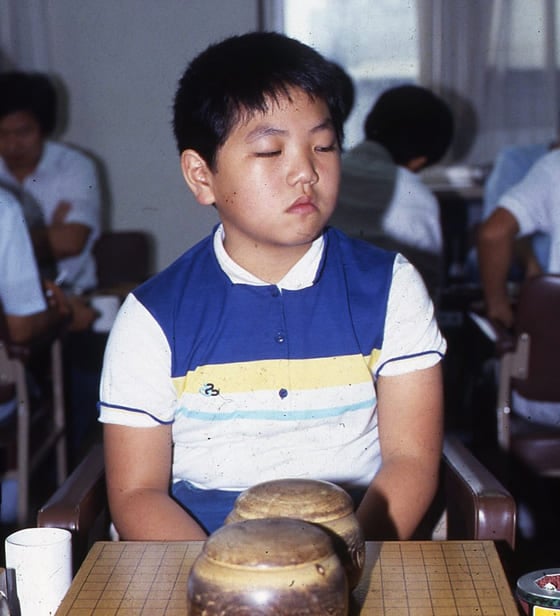
Changho’s highly impactful review. Shocked by his loss to Rui Naiwei, Changho replayed the game again and again, all night, until his mind grew dizzy and the fish belly of dawn whitened. He kept asking: Why couldn’t I use my own strengths? Why was I only passively following her pace? The answer he found was not technical — it was the underestimation of his rivals he had never admitted to himself. That is the review that changes a player: not the one that finds a better joseki, but the one that finds a better self-knowledge. As he puts it, “without hard work there will be no fruitfulness.”
So how to review? The format is a dialogue in stones: the loser plays a move and asks a question; the winner plays a move and answers. That is why outsiders watching two professionals review can barely follow — the pieces are not being played, they are being spoken. Changho calls this the “Zen Q&A” (禅问答). Borrow the shape: after every serious game, set the board and ask questions with stones. And do not just scan for blunders — hunt for the attitude that produced them.
Worry and Caution: The Slow, Solid Path that Wins
Strip away everything else Changho says about Go, and you find one sentence underneath it all: “Victory in Go belongs to the one who makes fewer mistakes.” Everything else in his style follows from that conclusion.
This is why he avoids extended killing fights — not because he fears the kill, but because he fears the many hidden changes a brawl creates. A fight is a factory for unforeseen mistakes. He quotes Sun Tzu’s Art of War: “Ultimate excellence lies not in winning every battle but in defeating the enemy without ever fighting.” He is not saying to be passive. He is saying: the strongest way to win is to make your opponent yield without you ever having to gamble.
Changho is blunt: “It is not a sign of courage to rush forward regardless of the dangers you know will meet you there.” Courage is restraining your impulse, refusing the temptations the position dangles in front of you, and following your own path in silence. He names the real enemy in one phrase: the decisive point is the loss of patience.
At every critical juncture, Changho repeats a self-reminder: be as careful as possible. When you must advance, advance thoughtfully and meticulously. When you must hold still, wait patiently. Never move just to feel like you are doing something. Every move should either improve your position or prepare the ground for the move that will.
Changho’s signature style revolves around thickness. Most players understand it as “strong shapes you can’t easily attack.” Changho’s definition is more useful: thickness is the scale of balance in Go. The “chanciness” that lurks in every game comes alive between the middlegame and the endgame. When territory is insufficient, thickness lets you replenish the supplement it. When your position is weak, thickness lets you reinforces by bolstering the influence. Thickness is not a goal; it is the reserve of strength you draw on when the game changes shape. It supports the variations you did not foresee.
But when people asked whether he preferred thickness or territory, his answer surprised them: the ultimate goal of thickness is to obtain territory — “so both are the same in the end.” And then he admits: “From this point of view, I actually prefer territory.” Thickness is a means.
The universal evaluation of Changho’s style was “sluggish thickness.” Yet Nie Weiping possessed the unique insight to spot and appreciate the hidden speed within his Go. His slowness is not absolute — it is slow only relative to the “fast, faster” rhythm of modern life. But it’s actually deliberate deceleration. The core of proper speed lies in maintaining the tempo that best fits the flow of the game — or as Changho likes to emphasize, it can simply be called balance.
Sincerity: Changho’s Signature
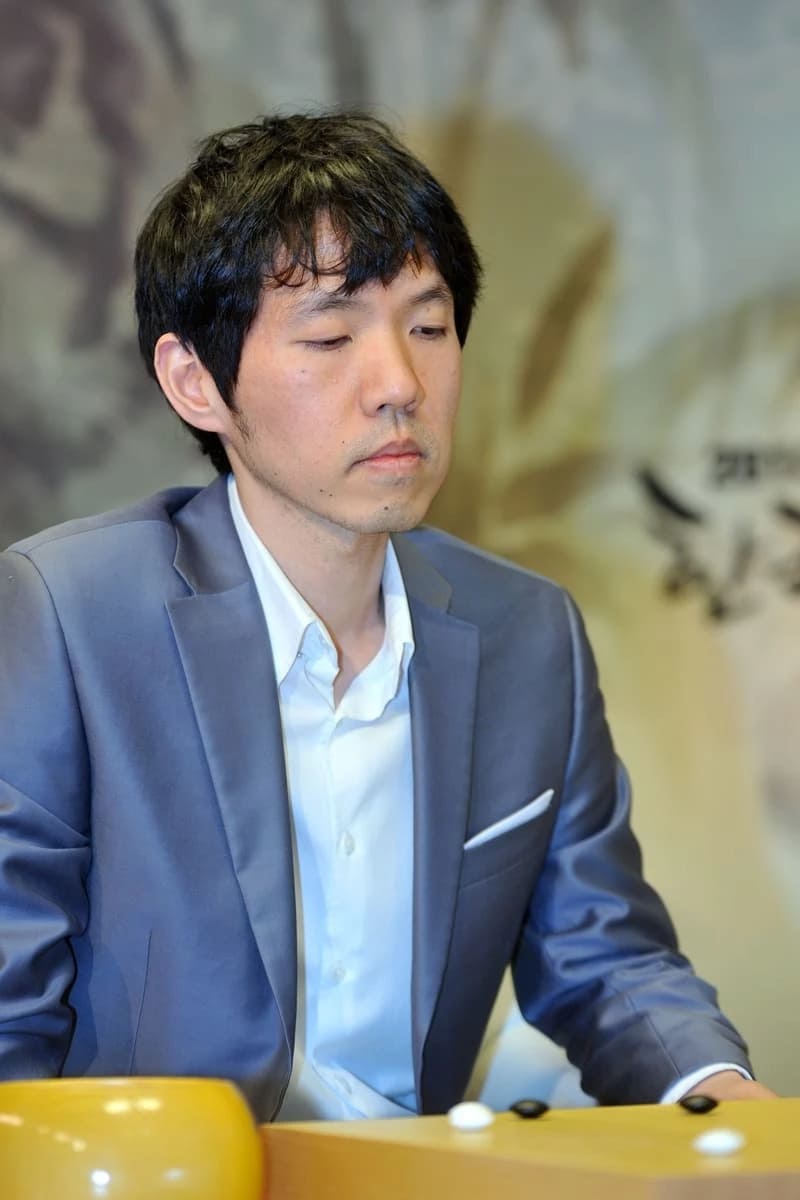
Changho once studied a fine line of calligraphy until one word caught his eye and he could look at nothing else: sincerity. He practiced it in his writing and concluded, wryly, that the characters stayed ugly — “it seemed I had no talent whatsoever in fields other than Go.” But the word is the key to him.
On the board, sincerity means refusing to play a move you do not believe in. It is why he respects Rin Kaiho (a.k.a. Lin Haifeng), who in defeat “consistently maintained his sincere pursuit of the Way, accepting defeat with openness and bowing humbly.” Changho calls him “a great man” and admits he was envisioning his own future self through him. His own standard: “I hope every game I play is beyond reproach—that has been my lifelong ambition.” Sincerity may be the remedy to psychological shortcomings, like temptation. Once you believe you are ahead in the game, the position starts offering you quick endings — all of them are a trap. Changho’s rule: the secret to success is to ignore all temptations and keep a calm mind throughout. You do not win by ending the game — you win by not losing it. This sincerity is probably the root of Changho’s development of his cautious style:
“If you are so eager to get out of an immediate predicament that you don’t reinforce your weaknesses in a timely manner, but cover them up or simply leave them behind, they will surely turn into a bigger threat later on. All the pieces on a Go board are related to each other. There is no doubt about what exists on the board alone, so to speak. Therefore, if you try to solve the problem in front of you by closing your eyes and making up for it, regardless of what happens, you may solve the problem at first, but later on you will realize that this is the move that will affect the whole game. This is precisely why I have always emphasized the need for “worry” on the chessboard. Many of the Go games I have played have ended in a half-point victory, which is the result of my extreme “worrying” nature.”
Off the board, sincerity means admitting weakness. In a tough period, when critics used to call him “the No. 1 player who could only win against his teacher,” the pain was severe enough that he thought of giving up Go — and he says so. When age dulled his calculation, he said that too. The book’s closing gesture is the same sincerity turned on himself: measuring himself against the Nine Ranks of Go (Weiqi Jiupin) presented in the Classic of Go (Qijing), authored by the Song Dynasty scholar Zhang Ni, he concludes, “Although I have officially attained the rank of 9th dan… I am at most at the level of 5th rank.” That is not false modesty. It is the same honesty he demands from himself on the board — and the model for how to look at your own game without flinching.
Game: 6th Nongshim Cup, round 11
Lee Changho’s autobiography doesn’t share any game kifus or go into technical discussions, but it does present the inner world of the author as his journey unfolds through tournaments and games. Lee felt more motivated by team competition than by individual tournaments. He notes that the “joy and honor I feel inside is unmatched by individual matches”, that among his most precious moments the Nongshim Cup World Go Team Championship weight more than the 140 national and international tournament titles he won, and that his constant participation for 12 editions of this cup is most important record of his Go career.
From 2000 to 2004, Korea won five consecutive Nongshim Cups, and in 2005 it could win its sixth consecutive title. Unfortunately, at the end of the ninth game, Lee Changho was the last Korean player left, the main general of the Korean team. Japan was left with two players, while China had still three.
The Japanese side had reasons for sending their strongest player, Cho U 9-dan (Zhang Xu, aNihon Ki-in professional from Taiwan), who was gaining momentum, to try to defeat Lee Changho, who was in the worst year of his Go career.
This is the most well detailed game in Lee’s autobiography and is now considered one of his masterpieces1.
On February 23, 2005, in Shanghai, Lee Changho was Black and had a 6.5-point komi.
This game somewhat atypical as, in broad strokes, Lee Changho picked up an early advantage in the opening, then kept for a while, Cho U persisted never giving up, Lee played several timesuji moves (to gain time to think) which gave Cho U a chance to reverse the game, but Lee’s brilliant moves ended the game before he could exercise his God level endgame.
Changho notes that he was pleased with himself having played the opening well, as this was against his usual pattern when facing high caliber players. Whenever he faced top players like his Sensei, Cho Hunhyun (you can also read about this colossus’ autobiography here) he fell behind in opening, and then rallied in the middlegame to make a comeback in the endgame, which is a pattern he laments:
“Losing points so easily during the opening phase and then having to catch up step by step from the middle game onward—this entire process was as painful as walking barefoot on a path of thorns. To be honest, I deeply envied players like Chang Hao, Cho Hanseung, Gu Li, and Kong Jie, who possessed an intuitive mastery of the opening. They could always navigate and control the opening phase with effortless poise, while maintaining top-tier, world-class strength through the middle game and beyond.”
Notes on the game1:
- Moves 10-32 can be considered a new joseki of the time as from a local perspective, neither side is dissatisfied (the popularity of branches from Black 15 onward dropped since AlphaGo, while White 18 choses one of the more complicated variations that is situational).
- Black 33 and 35 in the upper right corner have secured a very large area, Black still has a slight edge in the opening.
- Black 47 is a Lee Changho style move, slowly accumulating strength.
- If White’s 64 move cannot attack Black’s 2, White will be left with insufficient territory. Subsequently, Lee Changho’s Black 65 is a light and agile response.
- White 70 cuts, and Black 71-73 is the strongest response. Lee Changho’s more recent moves have been significantly different from his past style.
- Black’s moves 91 and 93 are excellent – the large White group has no chance of survival.
- Entering the endgame, Lee Changho played brilliantly. Although White had enclosed a considerable amount of territory in the center, Black maintained a lead of about 10 points.
- Finally, Black 135 was an exquisite, airborne placement into White’s center, imploding White’s central territory. By move 243, White’s center was breached.
Black won by resignation after 245 moves. In Lee Changho’s own words on the conclusion of the game:
“Cho U 9-dan was too hasty in the decisive moment. There were unexpectedly many gaps in the center, and it was very difficult to gain ground. If I had tried to defend the center, I would not have been able to claim victory if I had withdrawn just one small step. The situation was so delicate that the outcome of victory was as uncertain as if it were hidden in a fog. When Cho U 9-dan didn’t choose to retreat and kept filling up the center of the midsection, the openings for White were obvious to my eyes. The game came to an end with Cho U’s collapse in the center.”
Lee Changho went on to win the 6th consecutive Nongshim Cup for Korea.
Conclusion
Do Not Covet Victory is not a book about winning. Its first chapter is named after a rule against wanting the thing the professional world is built on, and its last is a confession that after twenty-two years, left without a title, Lee had become “as empty-handed as when I first started learning Go.” What he offers instead is a method you can use at any strength: notice your desire, review your defeats until they stop being wounds and start being answers, stay on guard rather than afraid, and treat every game the same while remaining humble in the face of any opponent. As he says of his own play, “I didn’t find the answer. My thoughts led me to it.” A fitting epitaph for a player who — on the board and off — tried to want the game more than he wanted the win. He calls this sincerity, and it links the Stone Buddha of the board to the man who tells us his brushstrokes are ugly and his eloquence poor. The paradox of his career is also its lesson: the player who wanted victory the least won the most.
1 Song Feng, ed., Li Changhao shengju ji 李昌镐胜局集 [Selected Winning Games of Lee Changho] (Shenyang: Baishan Press, 2009), [103-106].



Kommentare