
Playing the Long Game: How Turkey Hosted Its First European Go Congress

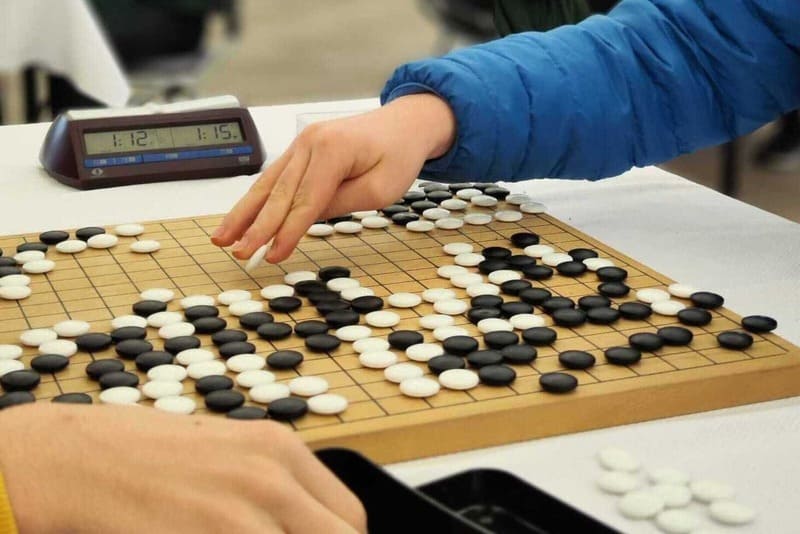
This summer, for the first time in history, the European Go Congress was held in Turkey — on the campus of Hacettepe University in Ankara. For the Turkish Go community, one of the largest in Europe yet long kept inside its borders by visa and economic barriers, the event was a matter of principle: if the players couldn’t go to the mountain, the mountain would come to them. We spoke with Ahmet Eren Kurter, President of the Turkish Go Association, about how the bid came together, what it took to turn a tournament sprint into a two-week marathon, why every sponsor meeting in Turkey started with the words “it’s not chess” — and how the congress finally completed a story left unfinished back in 2017.
The Beginning
1. Where did the idea to bring the EGC to Turkey come from — and do you remember the moment when it stopped being “wouldn’t it be nice” and became “we’re actually doing this”?
Turkish players often cannot attend tournaments abroad because of economic reasons and visa problems. This was holding us back in two ways. We could not gain experience and socialize, and European players never had the chance to get to know us. The interesting part is that Go is growing in Turkey every day, and we have one of the largest and most experienced communities in Europe. But all that energy stayed inside the country, and as the president of the Turkish Go Association this made me really sad. For example, Alper Sulak, one of the strongest young players in Europe, usually could not travel to competitions. That was our main motivation for hosting the European Youth Go Championship in 2023. If we could not go to the mountain, the mountain would come to us.
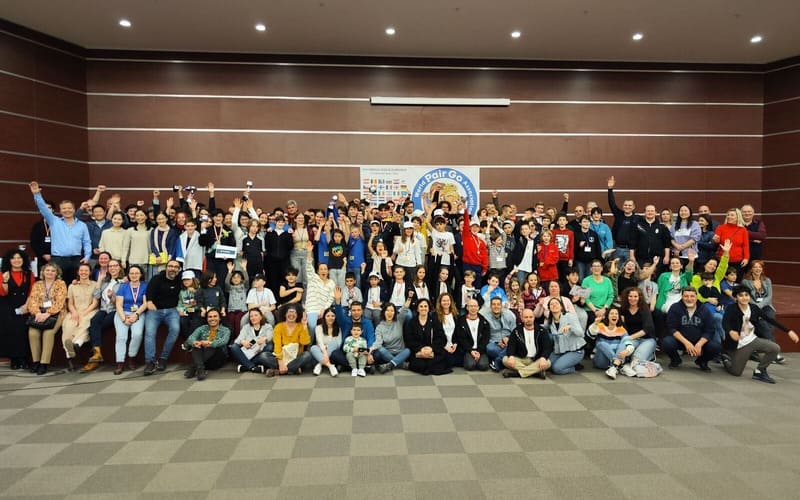
At that championship Alper became the champion in the under 12 category, which made us all very happy. The success of that event boosted our motivation, and our host, Hacettepe University, loved it too. We had actually planned to host the European Go Congress back in 2017, but we had to cancel it very close to the date. That unfinished story always stayed with us. For me, the moment it became real was our meeting with the rector of the university. When he said, let us not just be a venue for you, let us be your partner, things got serious and we submitted our bid.
2. What did you have to do to win the bid? What do you think ultimately convinced the EGF to choose Turkey — and was there a moment when you thought you might lose?
To be fair, it took longer than we expected. We gave two presentations to the federation, and our bid was approved six months later than planned. But we are Go people after all, taking a long time to think is not considered a flaw in our world. Being the only candidate helped too, of course. If you got a pairing like that in every round, nobody would complain. Still, I think what really convinced the EGF was that we had successfully organized the European Youth Championship in 2023, and the strong partnership we built with the university. There were moments when we thought this might fall apart. During the tense period in the Middle East we were sure the situation would not spread to our country, but both our foreign guests and we ourselves got nervous anyway. Luckily, everything is going well now.
The Kitchen
3. Tell us about your team: how many people are working on the congress, who does what, and how many are volunteers? How do you find and motivate volunteers for a two-week event?
The brain of the congress is a core team of five people. Around them we have an organizing team of about twenty, and with volunteers we go up to fifty. The core team manages the big picture: the tournament, the venue, accommodation, sponsorships and communication. The others handle everything on the ground, from the registration desk to setting up equipment and guiding our guests. We found our volunteers in every corner of Turkey.
They come from every age group and every social and cultural background. Half of them know Go, they understand that this event is a first for our country, and they carry that excitement. The other half do not know Go, but they clearly understand how big this event is. Their biggest motivation is meeting people from all over the world and practicing languages. Spending two weeks with hundreds of foreigners is like doing Erasmus without getting on a plane. We do not really struggle with motivation, because everyone knows they are part of a first.
4. What has turned out to be the hardest part of the preparation so far — the thing that took far more time, money or nerves than expected? And conversely, what turned out surprisingly easy?
The hardest part was this: Turkish players are really experienced at organizing tournaments, but a congress is a completely different story. A tournament is a sprint, a congress is a marathon, and this marathon lasts two weeks. For a job with this many details, planning and execution challenged us the most. The second surprise was the venue itself. The congress takes place in a very large congress center, and that size means everything else has to be big too. Arranging the space and designing and producing dozens of visual materials, from direction signs to backdrops, took far more time and effort than we expected.
Having Hacettepe University as our partner gave us a lot, but as a state institution some processes are bound by strict rules, procedures and regulations, and that can slow things down. Luckily the university administration stood by us at every step, and we are very grateful for that. I should also mention that the tension in the Middle East affected us in many ways. The most concrete effect was rising flight prices, which increased costs for participants coming from abroad. As for what turned out surprisingly easy, I thought about it for a long time and found nothing. It turns out this job has no easy part. That is what we learned.
5. The EGC lasts two weeks and gathers hundreds of players from dozens of countries. What are the two or three logistical puzzles that keep you up at night — visas, venues, accommodation, food, equipment? How are you solving them?
The short answer: I do not sleep. The long answer is not very different. The process has been so hard and we have run into so much bad luck that it is difficult to pick just one puzzle that keeps me up at night. They take turns, like night shifts. Visas, accommodation, food, equipment… in a congress that lasts two weeks, every topic is its own headache, and they do not arrive one by one, they all come together. Our solution is not very mysterious: patience, a good team, and solving problems one at a time. This is where playing Go actually helps. We are used to looking for the best move in a bad position without panicking. When the congress starts, I hope our guests will not notice any of these puzzles. For us, that would be the biggest success.
6. Every big event has a “crisis moment” during preparation — something breaks, someone cancels, a plan falls apart. Has this happened yet, and how did you handle it?
It is hard to pick a single crisis moment, because for us crisis was not a moment, it was a regular travel companion. We never had one big dramatic collapse, but almost every week brought a medium size surprise. Sometimes a plan changed at the last minute, sometimes something did not go the way we expected. My method in those situations was very simple: going over everything one more time myself. The price was sleepless nights and endless phone calls, but in the end it kept things on track. This process taught us something: you cannot prevent a crisis from happening, but you can choose how you respond to it. So every time, we took a deep breath and placed the stones again.
7. Roughly speaking, what does the budget side of a congress like this look like? Where does the money come from, what are the biggest expense items, and how hard was it to find sponsors for Go in Turkey?
Since Go is not widely known in our country yet, getting the attention of companies and the press was quite hard. So we built our strategy around that and focused on international companies, either Turkish companies known abroad or global companies operating in Turkey. Companies like Rönesans Holding, Oplist, Turkish Airlines and Europcar supported us. And I cannot skip this part: the support of the Chinese Weiqi Association, the Korean Baduk Association, the Korean Baduk Federation, the Nihon Kiin and the Kansai Kiin was extremely valuable for us. The Chinese and Japanese embassies in Ankara were always by our side as well. Since finding direct sponsors was more difficult, we turned to sponsors who could support us with products and services instead of money, and solving some of our needs that way gave us some breathing room.
A large part of the income comes from participation fees, so having fewer participants than we expected shook our budget a bit, but we are managing it. And I cannot ignore the support of Hacettepe University. Without them, I really do not know how we would have done this. The biggest expense items are accommodation and meals for VIP guests, officials from the EGF and the Asian federations, the congress team and the volunteers. Our biggest single expense is actually the one we are happiest to pay: the prize pool of 11,000 euros for the European Championship. After all, that money goes directly to the players. And then there is dressing up the congress center visually, which is not a small item either.
The Turkish Angle
8. Turkey is not (yet) widely known as a Go country. Does that make organizing harder — or does it actually help, because everything feels new and exciting? How did you explain to local partners, hotels and officials what Go even is?
Here is the funny part: Turkey actually has one of the largest Go communities in Europe. But in a country of 85 million, that number is a drop in the ocean. I do not know how it is in Europe or the Asian countries, but my observation over many years is that we Turkish Go players are not very social people, and we cannot say we use social media well. That is why Go never got the recognition it deserves in our country. From time to time there were newspaper articles, even Go documentaries on TV, but they all reached a limited audience.
So we had to start every sponsor meeting and every official meeting by introducing Go first. In Turkey, explaining Go always opens the same way: first you say that it is not chess. Of course this tired us and took extra time and energy. But being new has a nice side too. People get excited about being part of a first. Looking back, every one of those meetings served our real goal. We also gained many connections and long-term partnership opportunities that will help us after the congress. So I am very happy about where we are. I believe with all my heart that Go will grow much faster in our country after the congress.
9. What do you hope the congress will change for Go in Turkey itself? Is there a “day after” plan for using this momentum?
My biggest hope is that Go finally breaks out of its shell in Turkey. For years, our biggest missing piece was corporate partnerships, and the congress has already started to change that. Some companies have already promised long-term support. This will make us much stronger, both financially and morally. We also had many official meetings at the state level, and I believe we will see their positive impact in the coming period. And there is the human side. Thanks to the congress, some of our volunteers and visitors are meeting Go for the first time, and I hope some of them will join us as players. In short, our day after plan is clear: use every door the congress has opened, all the way. The energy that stayed inside our borders for years will finally flow outward.
10. What uniquely Turkish experiences are you preparing for the participants — things they wouldn’t get at any other EGC?
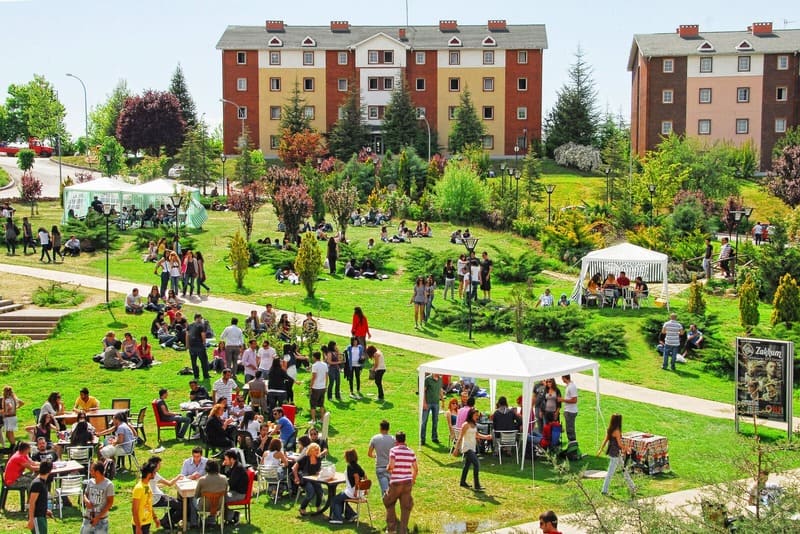
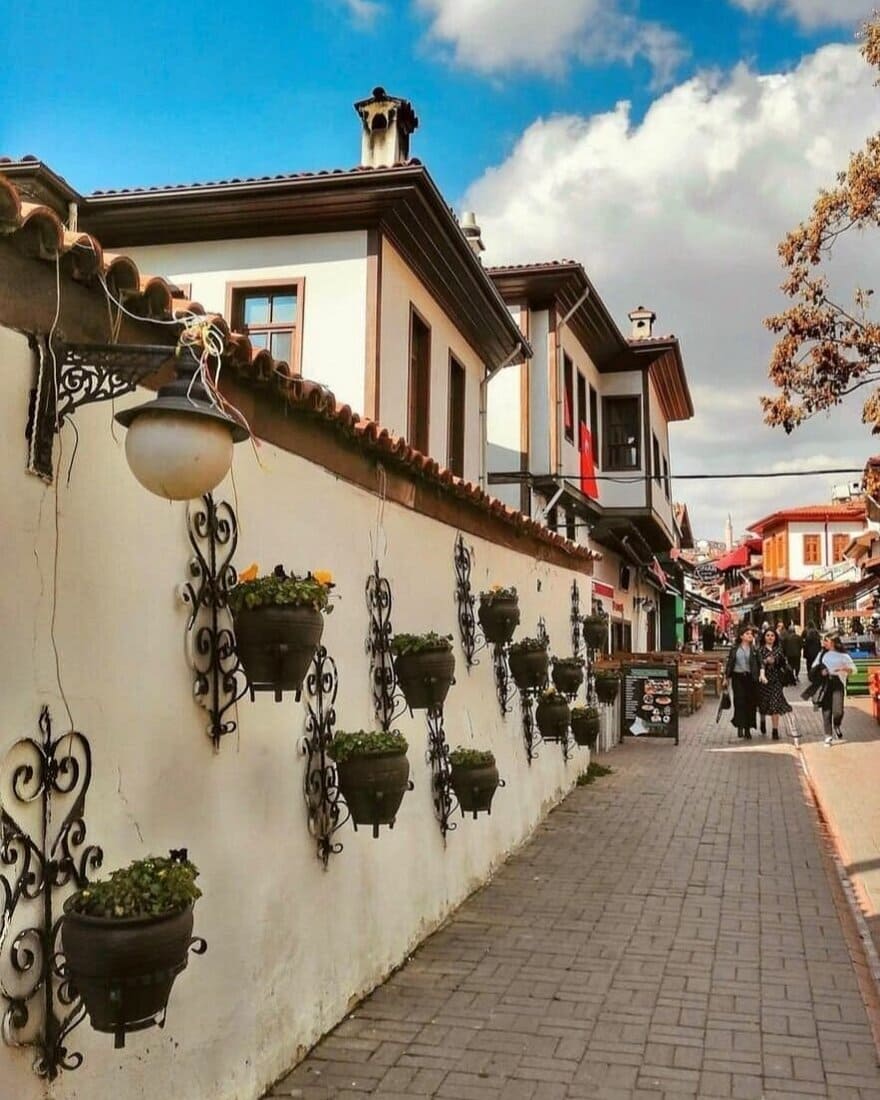
The first thing I should say is this: the congress takes place across an entire university campus, so for two weeks we are offering our guests a real Go village experience. Everything happens on the same campus, from tours in the morning to casual games late at night. Imagine a small town where everyone you pass knows Go. That is the place. Food in Turkey is an event of its own. It is impossible to finish Turkish cuisine in two weeks, but I am sure our guests will try.
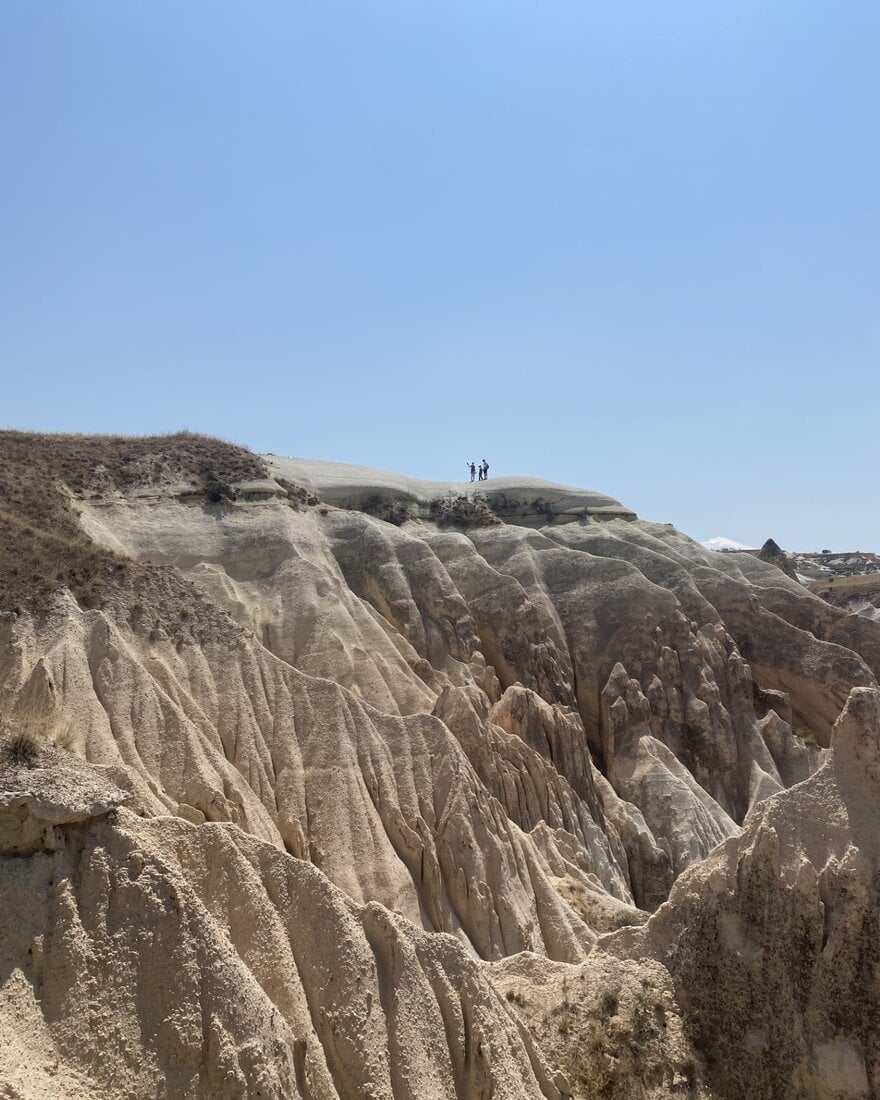
We have cultural tours, and we have planned a Cappadocia trip for after the congress. Turkey has been the cradle of many civilizations, and the number of historical places to visit is enough for several congresses, not just one. Guests who come early or stay after the congress can also see the Aegean coast and the natural beauty of the country. And let me add the hamam (Turkish bath) experience to the list. For those brave enough to try the traditional scrub, it is unforgettable.
Personal
11. What has organizing the EGC taught you personally? If you could go back to day one of the preparation and give yourself one piece of advice, what would it be?
It taught me one thing above all: how to ask directly. I used to walk into meetings with my head slightly down, saying things like, we need any kind of support, whatever you give is a win. Over time I realized that the people across the table want to hear a clear request. When you ask for something concrete, they can comfortably say yes or no, and interestingly, yes comes much more easily that way.
Knowing what you want and saying it openly is not a weakness. It is a kindness that makes things easier for the other side. If I could go back to day one, that is what I would tell myself: do not be shy, do not talk in circles, ask for what you want. And I would add one more thing: do not try to carry every load alone, or you will be finished before the two weeks of the congress even begin.
12. Imagine the congress is over and it went perfectly. What does that picture look like — what would make you say “it was all worth it”?
When I close my eyes, this is the picture I see: the closing ceremony is over, but nobody wants to leave. Games are still being played on the campus grass, people speaking different languages are making promises to each other, saying see you next year. One of our volunteers who joined us without knowing Go, is in a corner, explaining to someone they just met what atari means.
Our young players have spent two weeks playing the best players in the world in their own home, and European players now know Turkish players by name. Seeing the energy that built up inside for years finally meet the world, feeling that the story left unfinished in 2017 is now complete… that is what would make me say it was all worth it. And if years later, someone comes up to me and says, I started Go at the congress in Ankara, that day I will say it was worth it a second time. I will admit, if everything goes perfectly, first I will turn off my phone and sleep for two days. But then I will come back to the board, because for us this congress is not the end of the game. It is the opening.





Comments