
Cho Yeonwoo: The Go Pro Who Took the Game into Entertainment


On 9 November 2005, a high-school student named Cho Mi-kyung was playing in a league of eight where only one player would become a professional. She had won her first six games. With one still to play, the place was already hers. She was 16.
Today she’s known as Cho Yeonwoo, and her two YouTube channels, Korean (@proyeonwoo) and English (@goproyeonwoo), have more than 220,000 subscribers and more than 118 million views, as of this writing. In between came years in Singapore, a competitive record that never quite took off, and a decision to treat Go as entertainment at a time when that was still unusual.
From a Go class to a dojo
Cho’s Go story started in third grade, when a friend took her along to a Go class. She was hooked, and from that day onwards she started playing every day. After a year at the Go class, she had run out of opponents, so the director recommended that she go to a neighbourhood club instead. The usual route for aspiring professionals is a training dojo, but he argued that the tricks and unorthodox moves of club players would prepare her for any situation. She stayed about a year and a half and came out as the strongest 1-kyu player there, according to Economy21.
After the neighbourhood club, she became a pupil of the professional Kim Won, 9-dan, but when his dojo moved to Incheon, she transferred to Gangdong Myeongin, where she lived in the dormitory for about a year. Her teacher at the time she turned pro was Kim Jong-su, 5-dan. A Cyberoro report from the day she qualified described her style as practical but combative. Asked about her goals, she said she’d go for a domestic women’s title first.
Turning professional
On 9 November 2005, Cho Mi-kyung qualified through the 28th Women’s Entrance Tournament. She was in her second year at a high school in Seongnam and entered the professional ranks as a 1-dan, at the age of 16.
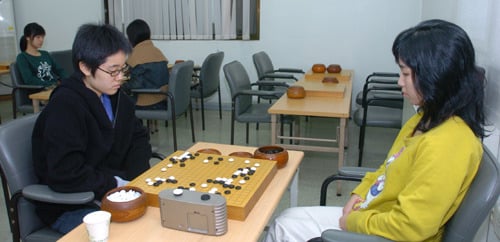
For a 16-year-old, winning one of only two places open to women that year was a major achievement.
To put her achievement into perspective, you must know that in Korea, professional status is awarded by the Korea Baduk Association, and aspiring players have to win a place through its entrance process.
Cho took this second route. In its main stage, eight players played a league for that single place. She won her first six games, and a win over Kim Sin-young on 9 November clinched it, because the other seven had already lost at least twice.
Cho’s entry brought the KBA’s women professionals to 35, out of 206 professionals in all, according to Tygem News (9 November 2005). Today, as of 9 July 2026, the KBA counts 467 professionals, 93 of them women.
Cho spent about a year after becoming a professional studying hard, as she told Seoul Shinmun in 2019, but good tournament results proved difficult to get. Her record shows main-draw appearances in the 14th Women’s Guksu in 2008 and the 15th Garglin Cup Pro Women’s Guksu in 2009.
Yet her professional career would not follow the conventional trajectory of a player steadily climbing the competitive ranks.
Economy21 later noted that Cho was promoted from 1-dan to 2-dan only on 1 August 2020, nearly fifteen years after her debut, and that she had played and won relatively few tournament games. Much of her prime playing career had instead been spent abroad, promoting Go and studying.
Years in Singapore
In 2010, Singapore’s Go association asked the Korea Baduk Association to send a professional who could teach and promote the game. Cho applied and went to Singapore, where she worked on expanding Go’s reach beyond Korea.
The Singapore government paid her a salary, but food and lodging were her own problem. Teaching in a language she barely spoke made every lesson stressful, and studying English on top of it was, in her own words to Economy21, miserable. Eventually the English came, the friendships followed, and in her third year there she also enrolled at a local university. She graduated in financial engineering. She managed to balance her studies with her work promoting Go, an experience that took her beyond the world of professional tournaments and gave her a chance to introduce the game to people who had never played it before.
Her time abroad gave her a different perspective on what it takes to introduce Go to new audiences. Promoting the game is not simply a matter of explaining its rules or demonstrating professional techniques. It requires finding ways to make the game approachable and engaging for people who may never have encountered it before. That lesson would later become central to her online career.
Returning to Korea: an unconventional next step
When she returned, Economy21 reports, there was little work waiting. She went around meeting people, and jobs trickled in: promotion work at military bases, teaching at kindergartens and culture centres.
So, what happens when a professional discovers that her greatest contribution to the game may not come from winning tournaments? For Cho, the answer was to step outside the conventional world of professional Go and into online entertainment.
Then she began hosting an English-language programme on Baduk TV, and that led her to start streaming.
Then she started streaming
In 2015, when solo Go broadcasting was still an unfamiliar concept, she began producing online broadcasts with the aim of making Go entertaining as well as educational.
In July 2015, she also legally changed her name from Cho Mi-kyung to Cho Yeonwoo. Why did she do that? This is a mystery that she hasn’t explained; we can only speculate that it might have been because of her branding intentions of going into entertainment, but we do not have any confirmation of that.
It was uncomfortable. She told Seoul Shinmun that the first six months were hard, because hardly anyone was watching. Professionals are usually treated with respect, as teachers, and she had to drop some of that dignity to connect with viewers. She danced and did things that felt silly, which embarrassed her at first. Negative comments, by her estimate one or two per hundred, were manageable, but she stopped reading comments at night, so they wouldn’t cost her sleep.
The night 30,000 people watched
In March 2016, Cho commentated live on her own channel while AlphaGo played Lee Sedol. By her own count, she told Seoul Shinmun, between 30,000 and 40,000 people were watching at the same time. She described it as a thrilling moment for a broadcaster, and it came after months of talking to a handful of viewers.
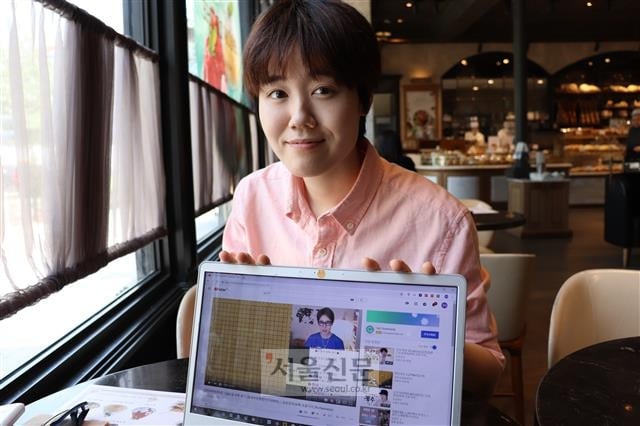
The match itself drew attention far beyond the Go world. AlphaGo won four of the five games. What happened to Cho’s audience once the games ended is the harder part of the story.
But attracting a large audience for a historic event was one thing. Building a sustainable channel was another.
By 2019, her regular live broadcasts ran for two hours every Friday and Saturday, with around 100 to 200 viewers online at a time. The challenge was turning the attention generated by AlphaGo into an audience that would keep coming back.
Making the game accessible
In online entertainment, the numbers tell most of the story. In mid-2019 Cho had about 30,000 subscribers on YouTube and another 22,000 followers on AfreecaTV (today rebranded as SOOP), a South Korean live-streaming platform where individual broadcasters stream to viewers in real time, in the same way as Twitch or YouTube Live, so roughly 52,000 in all. The Korea Baduk Association’s 2020 year-end review put her YouTube channel at around 50,000. By December 2022, Economy21 had her second among Korean Go channels by subscribers. Electronic Times counted more than 158,000 in December 2024, and ZDNet Korea more than 170,000 four months later. As of this writing, her Korean channel (@proyeonwoo) has passed 200,000, with over 2,000 videos.
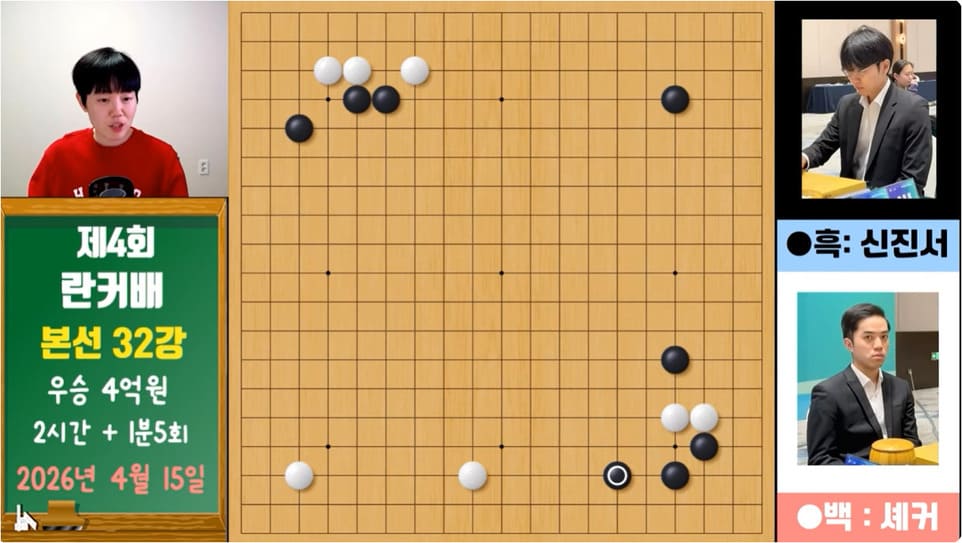
The videos build a small story around the board: a professional drops in on a neighbourhood Go club; another plays an AI with a handicap. There are compilations of blunders, the kind that happen even at pro level. You don’t have to follow every move to enjoy any of it. ZDNet Korea described her as having taken off on Go prank videos, and Electronic Times noted that some of her videos drew hundreds of thousands of views.
Teaching is part of it too: beginner lessons, and online games with elementary-school kids. In 2019 she told Seoul Shinmun that many of her viewers were in their twenties and thirties, and that a few had learned Go from her videos. She also said that an English-language YouTube channel was a long-term goal.
Four months later, around mid-October 2019, she finally launched her English-language channel, Goproyeonwoo. It has about 19,800 subscribers and 225 videos as of this writing, much smaller than the Korean one. Economy21 says foreign viewers have taken to it.
It’s not a big studio operation. In 2022 she told Economy21 that she had a manager and someone to help with editing, though not full-time, and that income had been improving. She was wary of the platform, though: nobody could know where YouTube would be in a year. Whatever happened to it, she said, she intended to stay in Go.
The competitive years
From a December 2022 profile in the same Korean business and economics publication, Economy21, written by reporter Lee Jae-sik, we found out that during her streaming years she also continued playing as a professional in different competitions.
Her profile on KBA shows that after her return to Korea, some of her achievements were:
- In 2016 she reached the main draw of the 10th GG Auction Cup and of the 1st Flower than Baduk Queen’s Cup.
- In 2019, she reached the round of eight (the quarter-finals) of the 6th Daeju Cup, after beating Yang Jae-ho 9p, winner of the first Tongyang Cup, in the round of 16.
Cho Yeonwoo (Black) vs Yang Jae-ho 9p, 6th Daeju Cup, round of 16, 11 March 2019. Black won by 3.5 points, the win that took her to the quarter-finals.
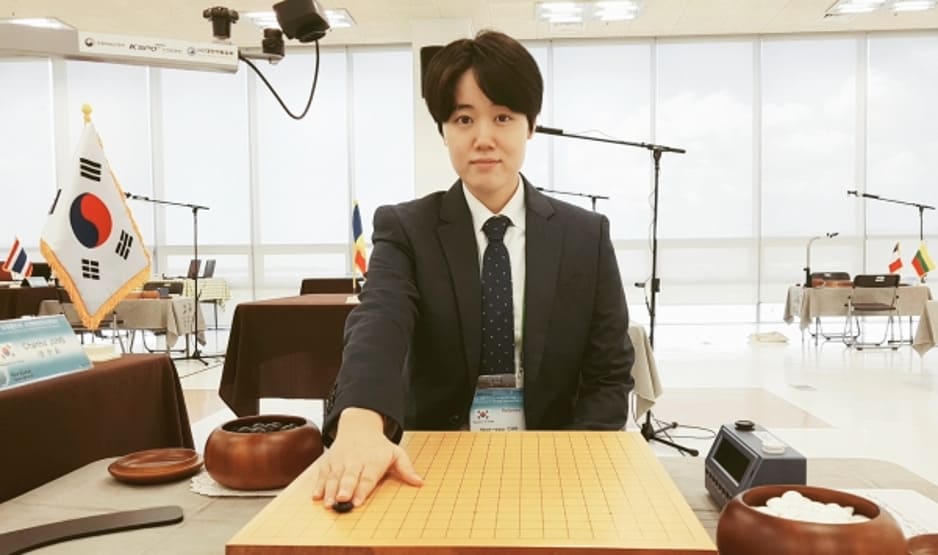
When AI joined the game
Artificial intelligence became part of modern Go after AlphaGo, and Cho incorporated it into her content, from handicap games against AI to taking an AI Go machine to a neighbourhood club.
In 2025, ZDNet Korea reported that she was promoting SenseRobot Go, a robot capable of playing physical stones against a human opponent. Its playing strength can be adjusted from 18-kyu to professional 9-dan, and it can operate offline.
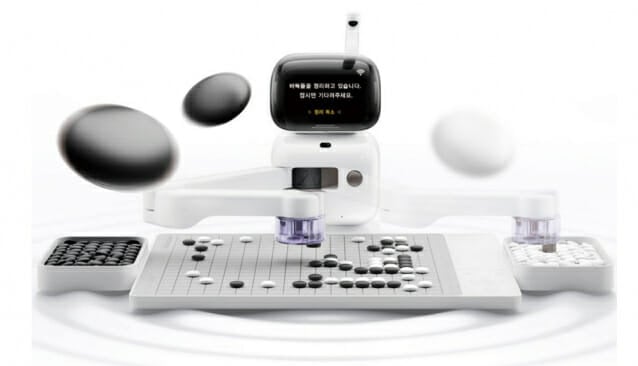
Cho sold the device through YouTube’s shopping tools, with buyers also able to receive coaching games from her. The report explained that her established YouTube audience gave her the confidence to enter hardware sales, despite having no previous experience in that business.
It was another example of how her professional identity had expanded. Go was no longer just the game she played or taught; it had become the foundation for a broader media and commercial enterprise.
Beyond the board
Cho’s career has never been limited to streaming. In her 2019 interview with Seoul Shinmun, she said she had served as manager of the EDGC team in the Korean Women’s Baduk League and continued to make occasional appearances on Baduk TV, although solo broadcasting had become her main occupation.
Her professional background also gave her a role in one of the more consequential developments in modern competitive Go: the arrival of AI-assisted cheating.
According to Economy21, Cho was the referee who caught the first AI-assisted cheating case in the Korea Baduk Association’s history, identifying the violation on the spot.
On 14 January 2020, Cho was serving as referee at the Korea Baduk Association’s 145th entrance tournament in Seoul, the event that selects new professionals. Word had reached her that one competitor was behaving oddly. A belongings check found nothing, but a staff member’s remark about Wi-Fi, an earphone case holding only one earbud, and a bandage on the player’s left ear made her suspicious. She paused his game and searched him again, finding a camera-linked battery in his coat and a wireless earphone under the bandage.
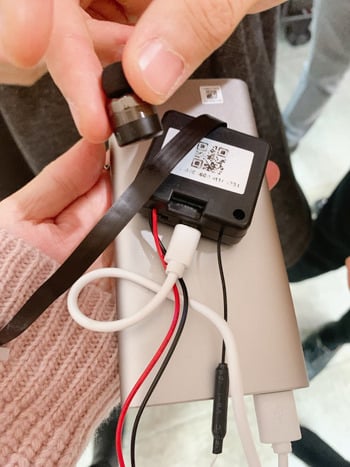
The player, a 21-year-old former yeongusaeng identified in reports only as K, later admitted that an outside helper had been using AI software to feed him moves. He was disqualified, and the association decided to file a criminal complaint. It had relied on players handing in their devices voluntarily. Afterwards it added metal detectors and a second referee.
The incident illustrated a different side of her professional expertise. Beyond entertaining audiences and teaching beginners, she remained involved in protecting the integrity of competitive play as technology changed the game.
The Devil’s Plan
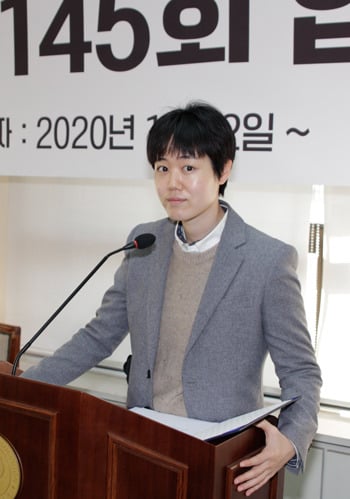
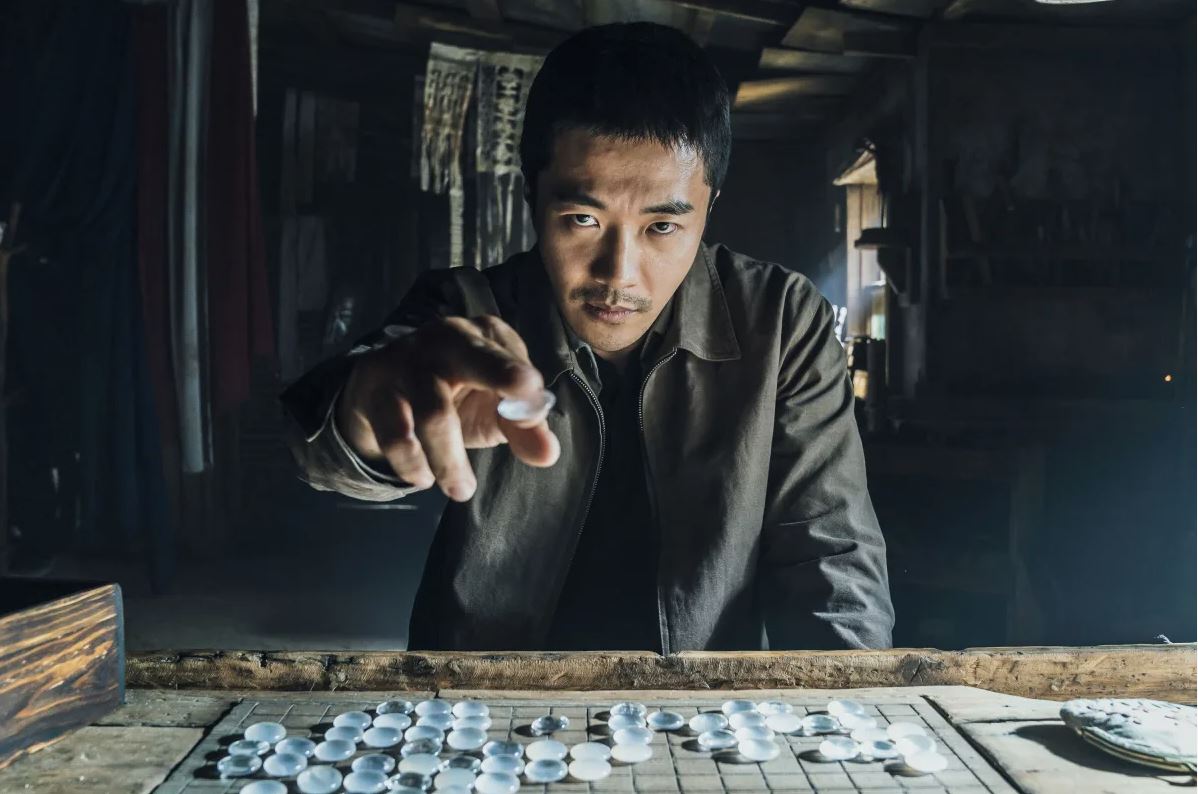
Probably, consistent with her idea of promoting the game and building her personal brand as a content creator, in 2023, Cho took part in Netflix’s The Devil’s Plan, a South Korean reality game. Twelve contestants from very different backgrounds, among them actors, a lawyer, a doctor, a professional poker player and a K-pop singer, spent a week together solving puzzles, playing strategy games and forming alliances, competing for a prize of up to 500 million won (roughly US$390,000 at the time). Each player began with a limited number of pieces, won or lost them in daily matches, and was out once none were left.
When Netflix announced the cast in July 2023, it introduced Cho as a professional Go player who had qualified as a high-school student and graduated from one of Singapore’s top universities, and the director said he expected sharp game skills from her. The series premiered on 26 September 2023. Cho was eliminated on the fifth day, finishing ninth of twelve, in a season won by the actor Ha Seok-jin.
Go came back to the show in its second season in 2025, when Lee Sedol, the player at the centre of the 2016 AlphaGo match she had commentated on, joined the cast.
Two Careers, One Game
Nearly twenty-one years after that November day in 2005, Cho is still a professional and still plays. In July 2026 she won two qualifying rounds of the Suhyup Bank Women’s Championship before losing the qualifying final. By the Korea Baduk Association’s count, her record is modest: 42 wins in 156 official games, a 26.92% win rate, and a 2-dan rank reached nearly fifteen years after her debut.
Cho’s story isn’t that of a prodigy collecting trophies. What the record does show is a player who qualified at sixteen, found tournament success hard to come by, and built a second career explaining the game to people who had never played it. The association she joined had 206 professionals in 2005 and has 467 now. Few of them have built a Go audience anywhere near this size.
Go still has its champions. Cho has shown it has room for a different kind of professional. The moves are still played on a wooden grid, but the ways people discover the game are changing. Cho Yeonwoo has made it her business to be part of that change.




Comments